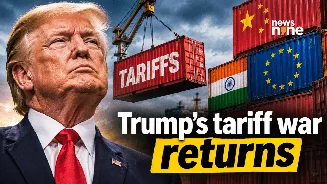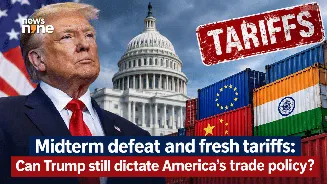








US President Donald Trump is preparing another wave of tariffs targeting China, the European Union, India, and several other major trading partners. According
to the Associated Press, the administration is proposing an additional 20% tariff on Chinese goods, citing excessive manufacturing output and government subsidies that Washington argues hurt American businesses.
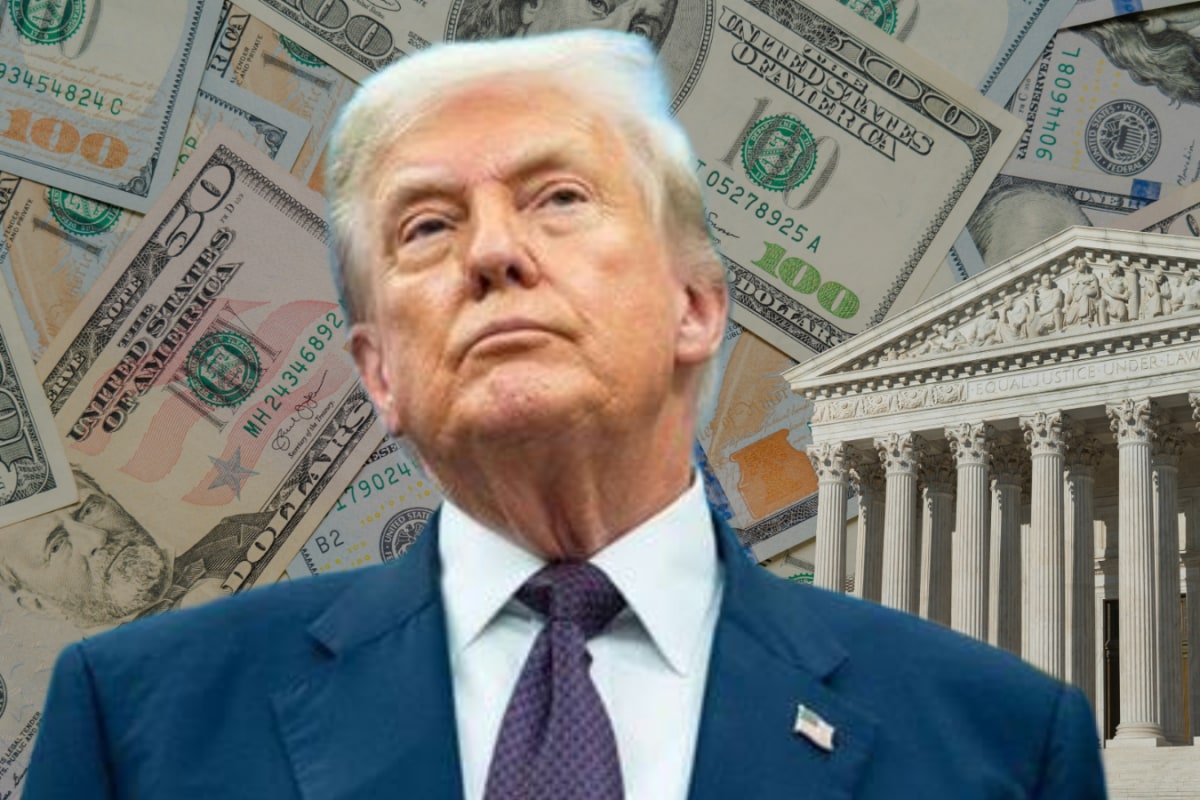
The timing is particularly interesting. Trump’s Republican Party suffered a major defeat in the November 3 midterm elections, with Democrats winning control of both the House of Representatives and the Senate. The US Supreme Court had already struck down Trump’s use of emergency legislation to impose sweeping tariffs in February 2026. So, can the President still go ahead with another round of import taxes?
Read more: US proposes tariffs of up to 25% on Indian goods after eight-month trade probe
Does Trump need congressional approval to impose tariffs?
Under Article I, Section 8 of the US Constitution, Congress holds the authority to impose taxes and regulate foreign trade. Over the decades, Congress has delegated some of this authority to the President through various trade laws.
Trump is now relying on Section 301 of the Trade Act of 1974, which allows his administration to respond to foreign trade practices considered unfair to American businesses.
This route does not ordinarily require a fresh congressional vote. The US Trade Representative must follow the investigation and decision-making procedures prescribed under the law.
Read more: US plane crash off Mississippi coast kills 6, including two children aged 8 and 10
How does Trump’s midterm defeat complicate things?
Republicans retain control of the outgoing Congress until January 3, 2027, when newly elected lawmakers take office. Democrats will then control both chambers, giving them several options to challenge Trump’s tariff agenda.
- Introduce legislation restricting presidential tariff authority.
- Hold congressional hearings and investigate tariff decisions.
- Use congressional control over federal spending to influence trade policy.
Trump can veto legislation seeking to restrict his authority. Overriding that veto would require a two-thirds majority in both chambers, meaning Democrats would need substantial Republican support.
Read more: Majority of US voters want immediate end to Iran war regardless of terms, poll finds
Can the Supreme Court stop Trump again?
On February 20, 2026, the Supreme Court ruled that the International Emergency Economic Powers Act (IEEPA) did not authorise presidential tariffs. The latest proposals rely on a different law.
Affected businesses could still challenge the new tariffs in court if the administration exceeds its statutory authority or fails to follow required procedures.
Read more: America’s cybersecurity nightmare worsens as CIA, ODNI and US Treasury face breaches
Can Trump really go ahead with the new tariffs?
Yes, provided his administration meets the legal requirements under Section 301. The midterm defeat does not automatically cancel existing presidential trade authority. The proposed tariffs could face greater congressional scrutiny, fresh legal challenges and diplomatic retaliation, making Trump’s next tariff offensive considerably more complicated.