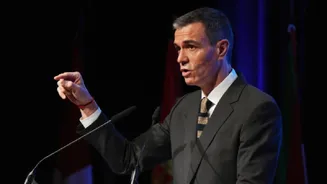







New Delhi: Spanish Prime Minister Pedro Sanchez on Monday announced a snap general election for November 29, days after his minority government suffered
a major defeat in Parliament over emergency measures to tackle the country’s housing crisis.
Sanchez made the announcement in a televised address, saying it was now up to Spanish voters to decide the country’s political direction. The election was originally due to be held next year.
The decision came after Parliament on Friday rejected two housing decrees proposed by Sanchez’s Socialist-led government. The measures were aimed at protecting vulnerable tenants and improving access to affordable housing amid growing public anger over soaring rents and home prices.
Why did Sanchez call a snap election?
The housing measures were voted down after the conservative People’s Party (PP), far-right Vox and Catalan pro-independence party Junts opposed them.
The proposed measures included restrictions on evictions until 2030 and tighter regulation of temporary and room rentals. The PP argued that Spain needed to build more homes rather than introduce further regulations to control the housing market.
The parliamentary defeat came as Sanchez faced mounting pressure over the housing crisis. The issue gained national attention after the eviction of 87-year-old Maricarmen Abascal from her Madrid home, where she had lived for around seven decades.
Abascal said she was unable to afford a 230 per cent rent increase demanded after an investment fund acquired the building. Her eviction triggered protests and became a symbol of the wider housing crisis.
Mass protests put housing at centre of election
Thousands of people have taken to the streets across Spain demanding government action on housing. In Madrid alone, authorities estimated that around 70,000 people joined Saturday’s demonstration, while organisers claimed the turnout was as high as 500,000.
Protesters have demanded lower rents, stronger tenant protections and greater government intervention in the housing market. Demonstrations were also reported in dozens of other Spanish cities, with clashes between police and protesters in Valencia.
Sanchez is taking a political risk by calling an election now. His Socialist Party is trailing the PP in opinion polls, while support for Vox has also been rising.
However, Sanchez may be hoping that the housing issue will mobilise left-wing voters and allow him to frame the election as a choice between his progressive agenda and a conservative alternative.
The November 29 election could therefore determine not only Sanchez’s political future but also the direction of one of Europe’s few remaining left-leaning governments.