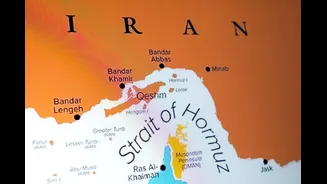








New Delhi: Iran has blocked the Strait of Hormuz after being attacked by the United States and Israel, resulting in a global gas shortage. Amid such a scenario,
a cargo vessel that was heading towards Pakistan has been diverted towards India after it did not get the permission to pass through the important strait.
Ship changes course
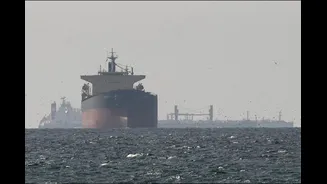
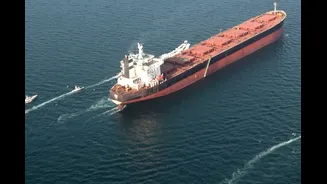
The vessel, identified as Selen, departed from Sharjah Anchorage on March 23 and was going to Karachi. However, according to Marine Traffic, AIS tracking data has shown that the ship suddenly changed its course after being at the Hormuz chokepoint and is now en route to Mumbai. It is a small feeder container ship flagged in St. Kitts and Nevis and managed by Dubai-based Exceed Oceanic Trading LLC.
Earlier, Iran’s Islamic Revolutionary Guard Corps Navy confirmed that it had indeed denied the ship to pass through through the strait due to a lack of prior approval. Rear Admiral Alireza Tangsiri said the vessel did not follow “legal protocols” and lacked the required clearance.
A global energy crisis
The incident has taken place amid the chaos in the Middle East and shows how Iran is managing traffic through the Strait of Hormuz which it has blocked since the outbreak of the war, with vessels requiring the permission of Tehran to transit the waterway. Iran blocking the Strait of Hormuz has resulted in an energy crisis around the world as around 20 per cent of world oil passes from the Strait. The block has led to a global energy crisis with many countries bearing the brunt of the fallout and Trump has been giving Tehran repeated threats to life the blockade.
The development is bound to affect Pakistan which had offered to mediate between the US and Iran. The country is already grappling with energy crisis. Petrol prices were reportedly hiked by PKR 137.24 to PKR 458.4 per litre. However, after protests in several Pakistani cities, the petrol prices will be cut by 80 rupees, bringing them down to PKR 378. The holidays in schools have been extended, online classes encouraged and government offices will work for four days a week.