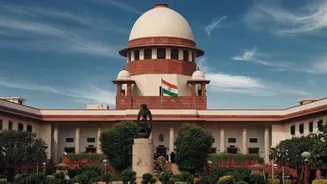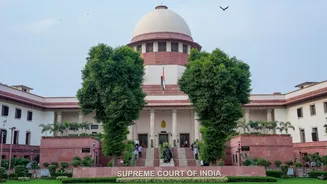






New Delhi: The Supreme Court on Monday directed the Karnataka government to comply with the Cauvery Water Management Authority’s (CWMA) directions on releasing
water to Tamil Nadu. The court also decided to hear the matter again on August 24 when an updated report on the water release can be presented.
A bench of Justices Vikram Nath and Sandeep Mehta was hearing Tamil Nadu’s plea seeking enforcement of the CWMA’s directions. The State has sought 4.536 TMC of water, equivalent to a release of 3,500 cusecs per day for 15 days.
The bench said, “Let this matter be posted after a week so that further status regarding the release of water can be reported. In the meantime, the respondent to ensure compliance of CWMA directions.”
Tamil Nadu’s claim
Senior advocate CS Vaidyanathan, appearing for Tamil Nadu, told the court that Karnataka had not followed the CWMA’s directions. He said Tamil Nadu had received only around 14 TMC of water against the 64 TMC it was entitled to under the Cauvery Water Disputes Tribunal award.
Vaidyanathan also pointed to Karnataka’s reservoir levels, saying they were around 76 per cent of live storage capacity on Monday morning. He argued that Tamil Nadu faced a significant shortfall even after accounting for reduced water availability during a distress year.
Karnataka cites water shortage
Senior advocate Shyam Divan, representing Karnataka, disputed Tamil Nadu’s allegations. He said the State had faced “extremely severe distress” in the Cauvery basin and had already met, and even exceeded, the earlier requirement of releasing 3,500 cusecs for 15 days.
Divan said the flow had risen to 12,607 cusecs on Monday morning and that Karnataka had opened reservoir gates. He added that the State would endeavour to maintain the CWMA-directed flow of 12,000 cusecs despite the difficult conditions.
Tamil Nadu had moved the Supreme Court on August 3, seeking enforcement of the CWMA’s July 30 order concerning releases from the Kabini and Krishna Raja Sagara reservoirs.
The Cauvery dispute has remained a longstanding issue between Karnataka and Tamil Nadu, with both States continuing to contest the sharing and release of the river’s water.