




New Delhi: A photograph from the BRICS Business Summit in New Delhi has drawn attention to India’s diplomatic approach at a time of growing tensions between
major global powers.
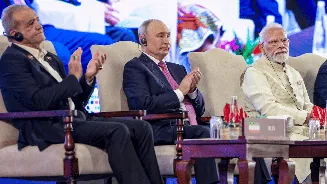
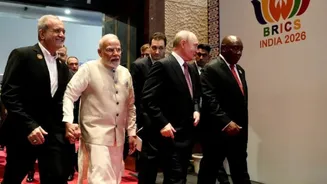
Prime Minister Narendra Modi was seen holding hands with Iranian President Masoud Pezeshkian, while Russian President Vladimir Putin and South African President Cyril Ramaphosa stood alongside them. The photograph offered a glimpse of how India is engaging with countries that have very different positions on global issues.
The timing of the picture also made it significant. Iran remains at the centre of the conflict in West Asia, which has affected energy supplies and maritime trade. Russia, meanwhile, continues to face wide-ranging Western sanctions over its war in Ukraine.
India’s message On West Asia
India has maintained working relations with both countries while also continuing its strategic partnership with the United States and other Western nations.
During his meeting with Pezeshkian, Modi called for an end to hostilities in West Asia through dialogue and diplomacy. He also stressed the need to protect civilians, commercial vessels and seafarers and said that freedom of navigation and commerce should not be disrupted.
The Prime Minister also held separate talks with Putin, where the two leaders discussed defence, energy, trade and strategic cooperation. Modi reiterated India’s position that the Ukraine conflict should be resolved peacefully.
India avoids geopolitical camps
New Delhi has repeatedly said that its foreign policy is guided by its commitment to peace rather than passive neutrality. India has avoided joining rival geopolitical blocs and has continued talking to countries on different sides of major international disputes.
That position was also visible in India’s handling of the BRICS Summit, where cooperation remains a key focus.
The photograph of Modi with Pezeshkian, Putin and Ramaphosa therefore carried a wider diplomatic message. It showed India engaging with countries across geopolitical divides while keeping its own relationships and interests in focus.
As global tensions continue to shape international relations, New Delhi is seeking to keep communication open with different powers rather than being confined to one side of the emerging global divide.