



New Delhi: After ceasefire talks between the US and Iran in Pakistan ended without an agreement, US President Donald Trump has now said the US will begin
a blockade of the strait of Hormuz. The effective closure of the Strait of Hormuz, a global critical maritime chokepoint, by Iran has been one of the most contentious points of the current war that continues to stay unresolved between the two parties. Trump’s latest ploy to circumvent Iranian closure of the Strait is now a blockade of it.
How would it work?
As several reports have indicated since the failed talks between the US and Iran in Pakistan, that the reopening of the strait as expected was one of the major sticking points in the negotiations between the two warring parties.
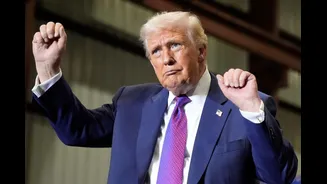
After the failed talks, US President Donald Trump took to social media with his latest comments on the war, this time talking of a blockade of the vital Strait of Hormuz from the US. He wrote, “The United States Navy, the Finest in the World, will begin the process of BLOCKADING any and all Ships trying to enter, or leave, the Strait of Hormuz.” Accusing Iran of “WORLD EXTORTION”, Trump threatened said any person who attacked the US vessels would be “BLOWN TO HELL!”
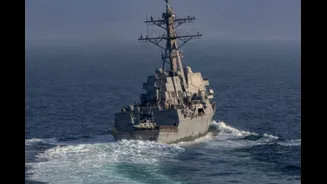
Trump’s initial threat to blockade “any and all” ships was subsequently watered down, as the US Central Command (Centcom) said that the blockade would be confined to vessels transiting through Iranian ports, and would permit passage of ships headed to ports belonging to America’s Gulf allies.
As to how the US military will actually go forward with this task of blocking the Strait of Hormuz remains unclear. Not much details have been released in terms of what military tactics or equipment would be employed by the US to enforce the blockade and who will be the other parties, both regional and global, assisting it in this task.
What can be the repercussions?
With the breakdown of the peace talks, US President Donald Trump has come up with a new bid to combat the Strait of Hormuz issue, as pressure builds regarding the Strait and its impact on the global economy. The continued closure of the Strait is likely to lead to even more aggravated oil prices, which can have major effects for other sectors of today’s interconnected global economy as well.
Now by closing the strait to vessels carrying Iranian oil Trump could cut off one of the regime’s major sources of funding. While this might be one of the goals behind Trump’s blockade decision, this can have disastrous short-term negative effects on global prices.
The Indian aspect
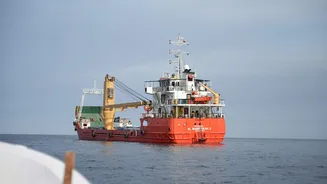
As to the specifics, about 100 tankers have transited the strait since the beginning of the war and Iran’s subsequent decision to block the Strait of Hormuz. Most of them carry Iranian oil products bound for China and India. Thus it is likely that for India as well, Trump’s latest dictate may have consequences.
During earlier phases of the conflict, when shipping risks rose and insurance premiums for tankers spiked, Indian refiners faced higher import costs. India was also forced to diversify sourcing which often led to more expensive routes. This could continue with the US blockade, even if it is restricted to a limited fleet.
In the short term, Indian oil companies may again see freight and insurance costs rise, which could also for a while see domestic fuel prices rise. While much depends on how the US goes about the blockade and the overall logistics of the situation, if it is intent on a longer game in the Strait, the effects are sure to reach India as well, be it directly ot indirectly.