



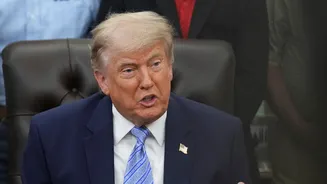



New Delhi: A peace agreement between the United States and Iran, announced by US President Donald Trump, has the potential to ease one of the biggest sources
of uncertainty in global energy markets in recent times. The war between the US-Israel alliance and Iran, and the ensuing essentially closing of the pivotal Strait of Hormuz, has put global markets in a frenzy for quite some time now.
Some respite is already being seen, as stock markets across the Asia Pacific surged following the announcement of a framework to end the United States-Israel war on Iran. Brent crude, the primary benchmark for global oil prices, fell about 4.5 percent to below $83.40 per barrel.
Uncertain peace, uncertain markets
The path to the now-announced peace deal has also not been a clear one, with both rhetoric and military action going up and down as both sides tried to come to a mutual agreement. Throughout all this, any uncertainty on the ground or the diplomatic table was mirrored by global markets as well.
Finally, as a wider peace deal comes after months of tensions that had raised fears of a wider conflict in the Middle East, global markets and prices of crude oil can finally see some stability.
While full details of the agreement and its implementation remain to be seen, markets are likely to view the development as a step toward greater stability. Meanwhile as to the larger picture, it will depend on how well and for how long the deal will hold, particularly as ceasefire and peace deals in the region are notoriously weak and fickle.
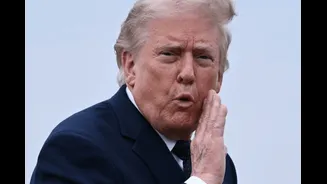
Apart from announcing the peace pact with Iran, US President Donald Trump also declared that the Strait of Hormuz would open on Friday. He wrote on social media platform, Truth Social, “The Deal with the Islamic Republic of Iran is now complete. Congratulations to all! I hereby fully authorize the toll free opening of the Strait of Hormuz, and, simultaneously herewith, authorize the immediate removal of the United States Naval blockade. Ships of the World, start your engines. Let the oil flow!” This is another added bonus, which is expected to ease market worries and be a good heralder of news in relation to oil prices around the world.
How tensions with Iran pushed up uncertainty
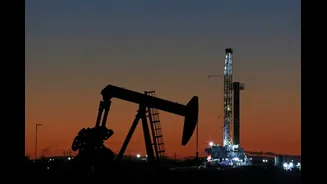
For months, concerns over a possible military confrontation involving Iran and the US-Israel alliance had weighed heavily on global markets. Traders feared that any escalation could disrupt oil production or shipping routes in the Persian Gulf, particularly through the Strait of Hormuz, one of the world’s most important energy corridors.
Whenever tensions rise in the region, oil markets typically build in a ‘risk premium’, an additional cost reflecting fears of future supply disruptions. During the current conflict, this was acute and ever-shifting. Even if actual oil production remains unaffected, the possibility of attacks on energy infrastructure, shipping vessels or export terminals can push prices higher.
With the ever uncertain rhetoric of Donald Trump, Israel following its own military action plan in Lebanon that frequently waylaid the peace process, and Iran’s insistence on not giving in to an easy stalemate, the ‘risk premium’ was always fluctuating and markets anxieties remained on peak.
The uncertainty was not limited to crude oil. Higher energy prices often raise concerns about inflation, increase transportation and manufacturing costs, and complicate economic planning for businesses and governments alike. Investors therefore remained cautious as tensions persisted, leading to volatility across commodity, equity and currency markets around the world.
How markets could react now
A successful peace agreement that has now been announced could gradually reduce the much feared and touted ‘risk premium’ in oil prices. If investors become confident that the threat of conflict has diminished, crude prices may come under downward pressure or at least stabilize after months of volatility.
Lower or more stable oil prices would generally be welcomed by major oil-importing countries, including India, as they help reduce import bills and ease inflationary pressures. Industries heavily dependent on fuel costs could also benefit from such a move.
Financial markets often respond positively when geopolitical risks decline, especially long-running ones in West Asia. Improved investor confidence may soon come in if the peace situation remains but a large market participation is likely to come only when greater clarity on the framework of the peace deal comes about and significant progress in its implementation is reflected on ground amongst all parties.