




New Delhi: What if August 15 was not originally supposed to be India’s Independence Day? Or if the first Tricolour associated with Independence Day was raised
not at the Red Fort, but at 5:30 am in Fort St George, Madras? And perhaps most surprisingly, while Delhi erupted in celebrations, Mahatma Gandhi spent August 15, 1947 fasting and praying in Calcutta. Nearly eight decades later, the story of India’s Independence Day still contains fascinating details that rarely make it into the standard textbook narrative.
Interesting facts about Independence Day 2026
1. India’s Independence was originally planned for 1948
August 15, 1947 was not the original deadline. Britain’s plan under the earlier timetable envisaged the transfer of power by June 30, 1948. Lord Mountbatten, however, brought the date forward dramatically amid mounting political tensions and the rapidly deteriorating situation in British India.
2. The choice of August 15 had a surprising connection to Japan
Mountbatten personally selected August 15. Why? He later explained that the date was the second anniversary of Japan’s surrender in 1945. The connection was particularly significant to Mountbatten, who had been the Allied Supreme Commander in Southeast Asia.
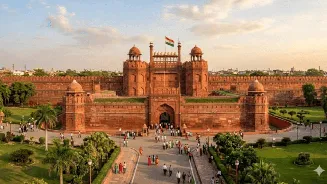
3. Nehru’s famous Red Fort flag-hoisting actually happened on August 16
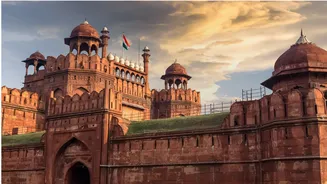
This is perhaps the most fascinating myth-buster. The image most Indians associate with August 15, 1947 can be misleading. According to the Press Information Bureau, Jawaharlal Nehru unfurled the national flag at the Red Fort for the first time on August 16, 1947. His speech there, The Honour of the Flag, is dated August 16 in the Nehru Archive.
4. The first Independence Day Tricolour was raised at 5:30 in the morning in Madras
A surviving silk Tricolour at Fort St George Museum in Chennai was among the flags raised on August 15, 1947. According to the Ministry of Culture, it was unfurled at 5:30 am that morning. The enormous flag measures approximately 12 by 8 feet and is made of pure silk.
5. Gandhi did not celebrate Independence Day in Delhi
While the Constituent Assembly celebrated freedom in Delhi, Gandhi was in Calcutta, working to prevent communal violence. On August 15, he observed a long fast and spent the day in prayer. Gandhi Heritage Portal records his activities in Calcutta and his decision to mark independence through fasting rather than celebration.
6. India did not become a republic on August 15, 1947
Independence did not immediately mean the birth of the Republic of India. The Indian Independence Act, 1947 established India and Pakistan as independent Dominions from August 15. India became a republic only on January 26, 1950, when the Constitution came into effect.
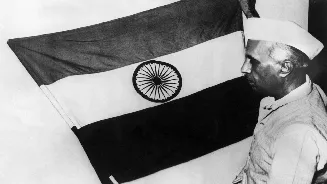
7. The Tricolour was adopted barely three weeks before freedom
The national flag in its present form was adopted by the Constituent Assembly on July 22, 1947, just 24 days before Independence. The Ashoka Chakra replaced the earlier spinning-wheel symbolism, with its 24 spokes representing the Dharma Chakra.
8. August 15 was not India’s original “Independence Day” date
Years before actual independence, the Congress had observed January 26, 1930 as Purna Swaraj Day, following the demand for complete independence. That historical association is one reason January 26 was eventually chosen for the commencement of the Constitution and celebrated thereafter as Republic Day.
9. The national anthem wasn’t India’s anthem when freedom arrived
Jana Gana Mana had already been written by Rabindranath Tagore, but it was not officially India’s national anthem in August 1947. The Constituent Assembly formally adopted it as the national anthem on January 24, 1950, two days before India became a republic.
10. The legal document actually named August 15 as the date for both India and Pakistan
The Indian Independence Act, 1947 explicitly designated August 15 as the “appointed day” on which the two new Dominions, India and Pakistan, would come into existence. Pakistan subsequently began observing August 14 as its Independence Day. Historical accounts note that the change is associated with the timing of the Karachi transfer-of-power ceremonies and other considerations.
These details reveal why August 15 is more than a ceremonial date. India’s freedom emerged through an extraordinarily compressed transfer of power, accompanied by Partition, communal violence and enormous uncertainty. The familiar Red Fort ceremony became the enduring symbol, but the real story of August 15, 1947 was unfolding simultaneously in Delhi, Calcutta, Madras and countless towns and villages across a newly independent, deeply divided country.