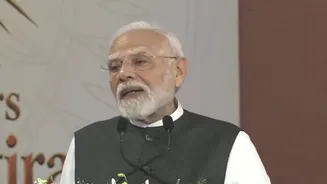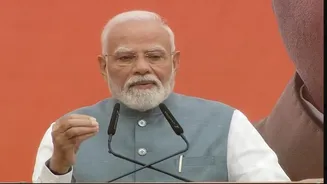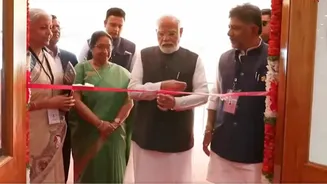







New Delhi: Prime Minister Narendra Modi on Friday inaugurated the COSMOS-Mysuru Planetarium in Karnataka, giving a major boost to science education and
astronomy outreach in the country. The facility is among the world’s first LED dome planetariums and is designed to offer visitors an immersive experience of the universe with visuals exceeding 8K resolution.
Developed by the Indian Institute of Astrophysics (IIA) in partnership with the University of Mysore, the planetarium has been supported by the Department of Science and Technology, the Department of Atomic Energy and the Office of the Principal Scientific Adviser to the Government of India.
Union Finance Minister Nirmala Sitharaman had announced the project on November 12, highlighting that Rs 5 crore was contributed through her Members of Parliament Local Area Development Scheme (MPLADS) funds. She had also laid the foundation stone in 2022.
VIDEO | Karnataka: Prime Minister Narendra Modi inaugurated the COSMOS-Mysuru Planetarium in Mysuru, marking the launch of India’s first LED dome planetarium.
(Source: Prime Minister Youtube)
(Full video available on PTI Videos – https://t.co/d8jp61yd2p) https://t.co/wFcPnLdUYf
— Press Trust of India (@PTI_News) November 13, 2026
What makes COSMOS-Mysuru Planetarium special?
The main attraction is a 15-metre tilted LED dome inside the Sky Theatre which can accommodate around 160 visitors. Unlike conventional planetariums that use projectors to display images on a dome, COSMOS-Mysuru uses 6,148 LED panels powered by approximately 42.7 million pixels.
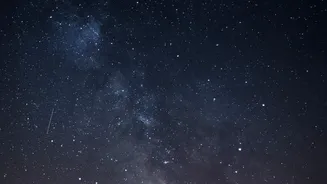
The technology allows the dome itself to function as a display, producing detailed visuals of celestial objects and astronomical events. The facility is designed to make science learning more interactive and accessible to visitors.
Films, exhibitions and other attractions
The planetarium will screen a specially produced 12-minute introductory film titled ‘Our Home, Our Cosmos’, which explores Mysuru’s cultural heritage and its connection with science and astronomy.
Other programmes include ‘Cosmos Odyssey’ which traces humanity’s understanding of the universe, and ‘Voyager’, based on historic space missions. Shows will be available in English, Kannada and Hindi.
The complex also houses two interactive exhibition halls, a lecture hall with seating for more than 150 people, a training centre and a recording studio. A museum will display artefacts from IIA observatories, along with geological and biological specimens. Outdoor attractions include astronomy models inspired by Jantar Mantar, ISRO exhibits and an open-air amphitheatre.
Focus on science education and students
The centre plans to organise astronomy programmes, telescope observation sessions, teacher-training workshops and science outreach activities, particularly for students from rural areas.
Officials expect the facility to strengthen Mysuru’s position as a centre for science education while attracting students, researchers and tourists interested in astronomy.