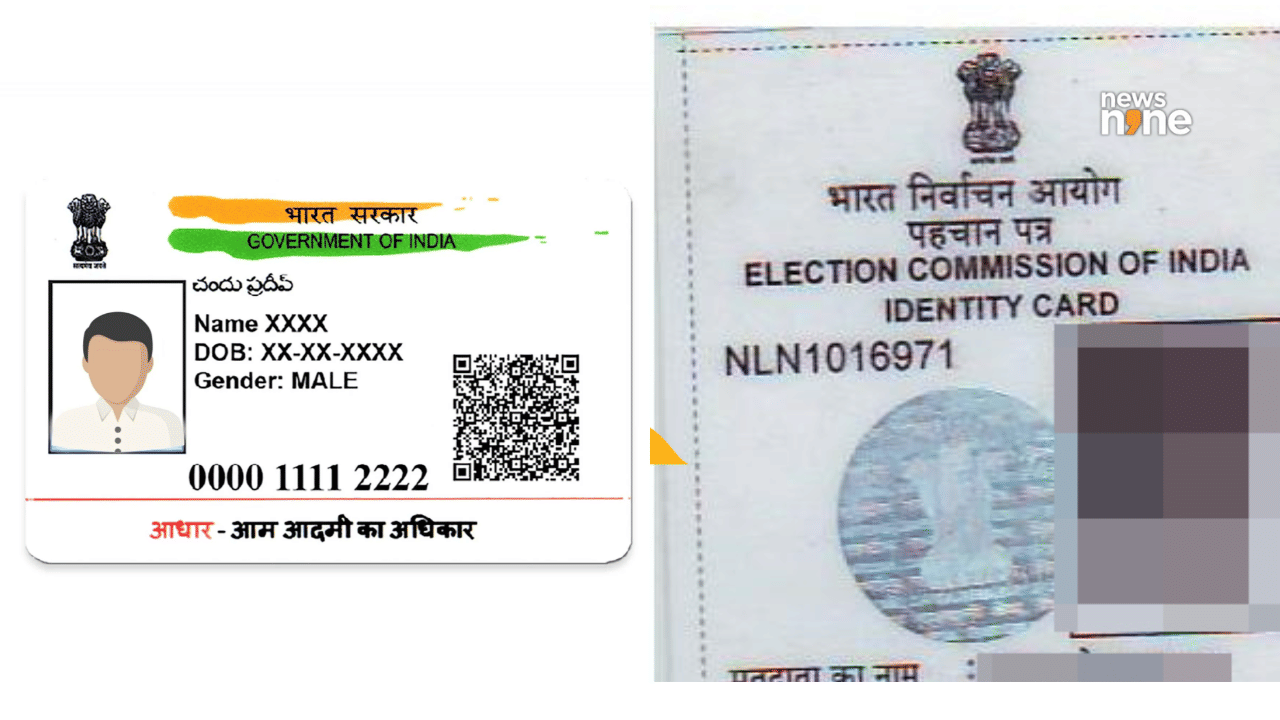









The way millions of Indians receive government benefits could change. Union Minister Rajiv Ranjan Singh, popularly known as Lalan Singh, has said that
voter ID numbers and biometric verification will replace Aadhaar as the basis for identifying beneficiaries and processing certain welfare payments. The statement has raised questions about what happens to Aadhaar and whether people without voter IDs could face difficulties.
The minister made the remarks during the National Workshop on People’s Plan Campaign 2026-27 on October 30. According to The Indian Express, Singh suggested that Aadhaar was no longer reliable enough for beneficiary verification, citing how easily people could obtain cards. The government has yet to clarify which schemes will come under the proposed system or when it will begin.
Read more: ‘Could smell alcohol on him’: Rahul Gandhi attacks Bhagwant Mann during Punjab campaign, AAP reacts
What exactly did the minister say?
Singh, who handles Panchayati Raj, Fisheries, Animal Husbandry and Dairying, said Aadhaar would no longer form the basis for beneficiary payments.
He said, “Aadhaar card, ab Aadhaar card banane wali jo sansthayen hain, woh har gali mein uplabdh hain.”
He went on to say that biometric details and the Elector’s Photo Identity Card (EPIC) number would be used for identifying beneficiaries.
Does this mean Aadhaar is being discontinued?
No such nationwide decision has been announced. Aadhaar continues to serve as an identity document and remains linked to several government welfare programmes.
Schemes such as PM-Kisan, rural housing assistance and social security pensions currently use Aadhaar-linked payment arrangements.
The minister has not explained whether these programmes will be affected.
Read more: Delhi-NCR pollution: Several areas record severe AQI ahead of Diwali – Check air quality near you
Why are people worried about voter ID replacing Aadhaar?
The proposal raises concerns about people who do not have voter IDs, particularly those whose names are missing from electoral rolls.
The timing has attracted attention amid the Special Intensive Revision (SIR) of voter lists and concerns about eligible voters being excluded.
There are questions about biometric verification failures, particularly among elderly beneficiaries and people whose fingerprints are difficult to scan.
What happens next?
The government has not released detailed guidelines, an implementation date or a confirmed list of affected schemes.
Until formal rules are issued, beneficiaries should continue following existing identification and payment requirements. The biggest unanswered question is how the proposed system will protect people who depend on government assistance but cannot produce a valid voter ID.