



New Delhi: Sawan brings with it the joy of rain-soaked mornings, temple bells, green landscapes and kitchens filled with seasonal delicacies prepared only
during this time of the year. While Rajasthan’s ghevar has become synonymous with the holy month, many regions celebrate Sawan with traditional sweets that rarely make it beyond their local borders.
Made with ingredients such as coconut, jaggery, rice flour and milk, these recipes have been preserved through generations and are often prepared as festive offerings before being shared with family and friends. If you are looking to savour flavours beyond the familiar, these regional Sawan sweets deserve a place on your festive table.
Regional sweets to celebrate Sawan
Ghevar, Rajasthan
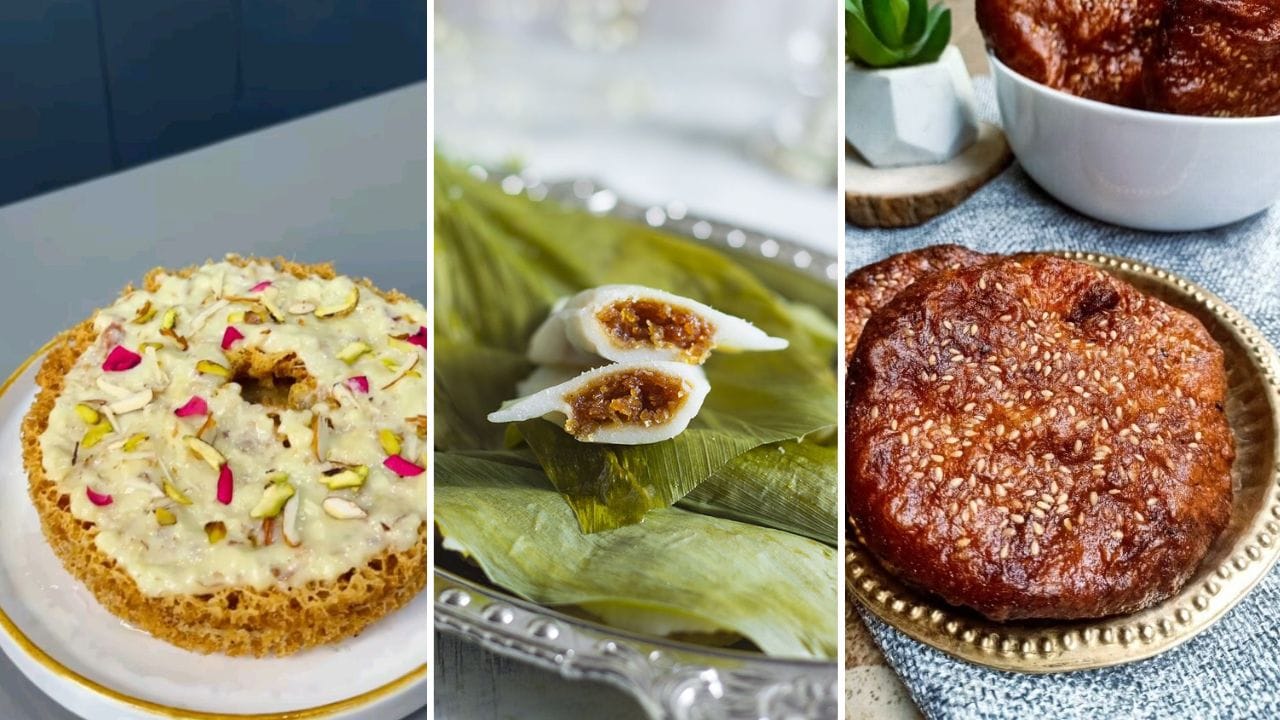
Ghevar is one of Rajasthan’s most recognisable festive desserts and remains closely associated with Sawan, Hariyali Teej and Raksha Bandhan. Made from a thin batter of refined flour, ghee and chilled water, the sweet is deep-fried to create its signature honeycomb texture before being soaked in sugar syrup. It is often finished with rabri, saffron and chopped pistachios, giving it a rich flavour and festive appearance.
Patoli, Goa and coastal Maharashtra
Patoli is a seasonal delicacy prepared during Sawan and festivals such as Nag Panchami in Goa and coastal Maharashtra. A smooth rice flour paste is spread over fresh turmeric leaves before being filled with grated coconut, jaggery and cardamom. Once folded and steamed, the turmeric leaves infuse the sweet with a distinctive earthy fragrance that makes it unique to the monsoon season.
Arisa pitha, Odisha
Prepared with rice flour and jaggery, arisa pitha has been a cherished festive sweet in Odisha for generations. The dough is shaped into flat discs and gently fried in ghee until crisp on the outside while remaining soft and chewy inside. Some families also add sesame seeds for extra texture, while jaggery lends the sweet its characteristic caramel-like flavour.
Ela ada, Kerala
Ela ada is a traditional steamed delicacy enjoyed in Kerala during the rainy season. Rice flour dough is filled with a mixture of grated coconut, jaggery and cardamom before being wrapped in banana leaves and steamed. The leaves impart a delicate aroma while keeping the filling moist, resulting in a naturally sweet dessert prepared with simple, minimally processed ingredients.
Payesh, West Bengal
Payesh holds a special place in Bengali celebrations and is commonly prepared as an offering during religious occasions. Made by slowly simmering Gobindobhog rice with full-fat milk, sugar or jaggery, cardamom and bay leaves, the dessert develops a creamy texture without the need for artificial thickeners. It is then garnished with chopped nuts before being served to family and guests.
These regional sweets reflect how every part of India celebrates Sawan in its own way, preserving recipes that combine seasonal ingredients, local traditions and festive customs through generations.