






New Delhi: Red chunari, sindoor and shringar hold a special place in the worship of Maa Durga during Navratri. Devotees offer a red chunari as a mark of reverence,
while sindoor, flowers, jewellery and other adornments form part of the Goddess’s traditional shringar. These offerings carry symbolic meanings associated with Shakti, auspiciousness, devotion and the loving act of welcoming the divine feminine into the home or temple. The customs differ across regions, but the underlying sentiment remains one of respect and surrender.
As Shardiya Navratri 2026 begins on October 11, understanding the significance of these familiar ritual offerings can help devotees connect with the traditions behind their daily puja.
Why Is Red Chunari Offered to Maa Durga During Navratri?
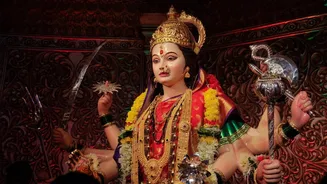
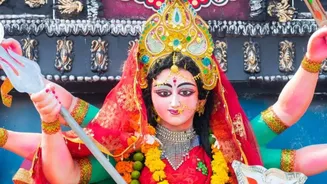
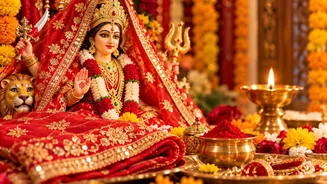
A chunari is a traditional veil or scarf that devotees offer to Maa Durga as part of her adornment. In many households, it is placed over the Goddess’s idol or image during worship. Red is a particularly popular choice because it is associated with Shakti, the dynamic power of the divine feminine, as well as strength and auspiciousness in many Hindu traditions.
Offering a chunari is also an expression of personal devotion. Just as people welcome an honoured guest with care and respect, devotees adorn Maa Durga as an expression of reverence and affection. Some offer a chunari while beginning Navratri puja, while others present it on Ashtami, Navami or another important day according to their family tradition.
Although red is commonly associated with the Goddess, the exact colour and style of the chunari can vary with regional customs and the form of worship.
What Is the Significance of Sindoor in Maa Durga’s Worship?
Sindoor, or vermilion, is an important ritual substance in several Hindu traditions. During Devi worship, it may be offered to the Goddess or used as part of her shringar, alongside kumkum, flowers and other puja materials.
Its significance is connected with auspiciousness, Shakti and established devotional customs. In Bengal, sindoor also has a distinctive place in Sindoor Khela, a ritual associated with Vijayadashami in which married women apply vermilion to Maa Durga and exchange it with one another as the festival concludes. This regional custom is distinct from the daily offering of sindoor during Navratri puja.
The precise method of offering sindoor differs between traditions. Devotees can follow the practices of their family or temple rather than assuming that every community observes the ritual in the same way.
What Does Shringar Mean in Navratri Puja?
Shringar refers to adorning the deity with appropriate clothing, jewellery, flowers and other decorative or ritual items. During Navratri, Maa Durga’s shringar may include a chunari, sindoor or kumkum, flower garlands, ornaments, perfume and other materials used according to the established puja procedure. These items also appear among the traditional materials prepared for Navratri worship.
The practice is not simply decorative. For devotees, carefully adorning the Goddess is a way of honouring her presence and expressing devotion through ritual action. In temples, shringar may be performed by priests, while families may carry out a simpler form of adornment at home.
There is no single universal list of shringar items. The arrangement depends on the deity’s form, local traditions and the family’s method of worship.
Can You Offer a Red Chunari on Any Day of Navratri?
Yes. Devotees commonly offer a red chunari on different days of Navratri, including during the opening puja and the Ashtami or Navami observances. The particular day may depend on a family vow, temple custom or personal devotional practice.
A red chunari is not compulsory for every form of worship, nor does every ritual require all shringar items to be offered together. A simple prayer, flowers and sincere participation in the puja can also form part of a family’s Navratri observance.
Final Thoughts
The significance of these offerings lies in the meanings devotees attach to them. The red chunari expresses reverence for Shakti, sindoor reflects established auspicious and devotional traditions, and shringar allows worshippers to honour Maa Durga through adornment.
As Navratri 2026 approaches, these rituals offer an opportunity to understand the symbolism behind familiar puja practices. Their details may differ across India, but they share a central purpose: expressing devotion to Maa Durga with care, respect and faith.
Written by: Tanya Singh of Astropatri.com. For feedback, please write to hello@astropatri.com.