






New Delhi: By the time the first rays of sunlight hit the rugged mountains of Dras, the silence across these towering peaks tells a story that every Indian
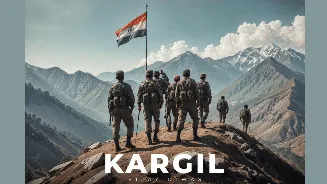
should know. Nearly three decades after the Kargil War, the winds sweeping through Tiger Hill, Tololing and the Kargil War Memorial still carry echoes of one of India’s toughest military victories. Every July 26, as the nation observes Kargil Vijay Diwas, these icy heights transform into more than just tourist destinations—they become sacred reminders of extraordinary courage, sacrifice and determination. For visitors, standing here is not merely about witnessing breathtaking Himalayan landscapes; it is about walking through the very terrain where young Indian soldiers fought impossible odds to reclaim every inch of the nation’s territory during the 1999 Kargil War.
The Kargil War, fought between May and July 1999, began after Pakistani soldiers and armed infiltrators occupied strategic heights on the Indian side of the Line of Control (LoC) in the Kargil sector. India responded with Operation Vijay, while the Indian Air Force launched Operation Safed Sagar to support ground operations. After weeks of intense combat in some of the world’s highest battlefields, India successfully regained control of the occupied positions. The conflict officially concluded on July 26, 1999, a day now commemorated annually as Kargil Vijay Diwas in honour of the 527 Indian soldiers who laid down their lives for the nation.
Dras War Memorial: The heart of Kargil remembrance
Nestled against the dramatic backdrop of the Tololing range, the Kargil War Memorial in Dras is the emotional centrepiece of India’s remembrance of the conflict. Built by the Indian Army, the memorial is instantly recognisable by its iconic pink sandstone structure and the Wall of Heroes, where the names of every soldier who died during Operation Vijay are engraved.
The memorial also houses a museum showcasing battle maps, captured Pakistani equipment, photographs, personal belongings of soldiers and detailed accounts of the operations that unfolded across Kargil, Dras, Batalik and Mushkoh. Visitors can also view the towering peaks – including Tololing and Tiger Hill – from the memorial grounds, offering a powerful perspective on the sheer difficulty of the missions undertaken by Indian troops.
Every year on July 26, senior military officials, veterans, families of martyrs and civilians gather here for wreath-laying ceremonies, military tributes and commemorative events marking India’s victory. The memorial has become a symbol not only of sacrifice but also of national unity and resilience.
Tiger Hill: The battle that changed the course of the war
Standing at over 16,700 feet, Tiger Hill remains one of the most recognisable landmarks of the Kargil War. The peak overlooked the strategically vital National Highway 1 (NH-1) linking Srinagar and Leh, allowing enemy forces to observe and target Indian military movements.
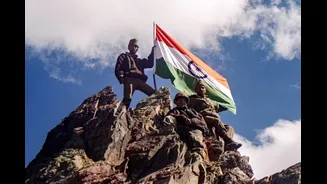
Recapturing Tiger Hill became one of Operation Vijay’s defining objectives. In an operation that has since become part of Indian military history, soldiers undertook near-vertical night climbs across icy cliffs while facing continuous enemy fire. After days of fierce combat, Indian forces successfully recaptured Tiger Hill in early July 1999, delivering a major strategic and psychological blow to Pakistani positions.
The victory demonstrated the exceptional endurance and tactical brilliance of Indian soldiers, many of whom fought in freezing temperatures, low oxygen levels and treacherous terrain. Military historians widely regard the capture of Tiger Hill as one of the decisive turning points that accelerated India’s overall success in the conflict.
Tololing: Where the tide first began to turn
Before Tiger Hill, there was Tololing.
The Battle of Tololing marked one of the earliest and most significant victories for the Indian Army during Operation Vijay. Located above the Dras sector, the ridge dominated NH-1, making it strategically indispensable.
Indian troops launched repeated assaults against heavily fortified enemy positions, battling steep gradients, exposed approaches and relentless firing. After weeks of determined fighting, the Indian Army successfully recaptured Tololing in June 1999, marking the first major breakthrough in the campaign.
Military experts often describe the victory at Tololing as the moment that shifted momentum decisively in India’s favour. It boosted troop morale and paved the way for subsequent operations targeting Tiger Hill, Point 5140 and other crucial heights across the region.
Batalik and Mushkoh: The lesser-known but equally crucial sectors
While Tiger Hill and Tololing dominate public memory, the battles fought in the Batalik and Mushkoh sectors were equally critical to India’s victory.
The Batalik sector witnessed intense engagements as Indian troops worked to reclaim strategically located ridgelines overlooking the LoC. Meanwhile, the Mushkoh Valley saw sustained military operations in extremely rugged terrain, where soldiers had to navigate narrow mountain passes under constant threat.
Together with Dras, these sectors formed the principal theatre of Operation Vijay, underscoring the scale and complexity of the military campaign across multiple fronts.
Today, these battlefields have become sites of national remembrance, attracting tourists, defence enthusiasts, students and families from across India. Travelling through Dras and Kargil offers visitors an opportunity to understand not only the geography that shaped the conflict but also the immense physical and emotional challenges faced by the soldiers who fought there.
Many travellers include the Kargil War Memorial as part of the Srinagar–Leh road journey, stopping to pay tribute before continuing through landscapes that once witnessed artillery fire and intense combat.