
New Delhi: In a response to a question posed at the Lok Sabha, the State Minister for Space, Jitendra Singh noted that the first Gaganyaan mission is nearly
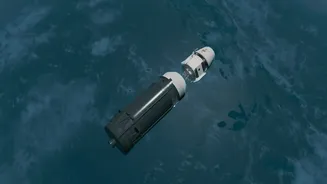
ready to fly, “Major infrastructure such as the Orbital Module Preparation Facility, Gaganyaan Control Centre, Crew training facility have been established. Second launch pad modifications have been incorporated. Precursor missions such as TV-D1 and IADT-01 have been successfully accomplished. Ground tracking networks, terrestrial links and IDRSS-1 feeder stations have been established. Crew Module Recovery plan as well as assets to be deployed have been finalized. For the first uncrewed mission (G1), all HLVM3 stages and CES motors are ready. Crew and Service Module systems have been realized. Assembly and integration activities are nearing completion.”
ISRO actually began launch campaign for the first Gaganyaan flight in December 2024. ISRO was aiming to launch the flight by December 2025 itself, but is now looking to launch the highly anticipated mission in January 2026. The Gaganyaan G1 flight is the first of eight planned missions as part of an expanded programme cleared by the Union Cabinet last year with a total budget of Rs 20,193 crore. Initially, the programme was envisioned with two developmental flights followed by a crewed flight, with a budget of Rs 9,023 crore. There are now two crewed flights in the revised campaign, with ISRO aiming for the first crewed flight in 2027-28.
ISRO cannot afford any more delays
This is the first time in official communications hinting that the first crewed flight could be pushed to 2028. The Gaganyaan programme cannot afford any more delays to stay on track for India’s ambitious space roadmap. As the spaceship is carrying humans, the testing requirements are more stringent than the hardware used to launch satellites. ISRO has completed testing of the propulsion elements on the crew and service module, the launch vehicle and the parachute-based deceleration system. ISRO is working on the indigenous life support and environmental control systems. ISRO has realised the crew escape system and the stages for the Human-Rated LVM3 rocket for the first crewed Gaganyaan flight, as well as the Crew and Service modules, and is integrating the spaceship for the first crewed mission.