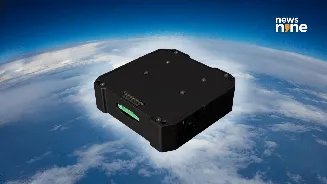








New Delhi: An Indian-made satellite battery has completed its first mission in orbit, giving Hyderabad-based TakeMe2Space an entry into the small but demanding
market for space-qualified components. The company said its PowerBank-50 battery powered an experimental payload built by Cosmoserve Space during Skyroot Aerospace’s Vikram-1 Mission ‘Aagaman’.
The rocket launched from the Satish Dhawan Space Centre in Sriharikota on July 18, 2026. According to TakeMe2Space, the battery operated aboard the rocket’s Orbital Adjustment Module at an altitude of 450 km. The flight turned the product from a ground-tested battery into a component with actual flight experience.
Why a flight-tested battery matters
Space companies are careful about using new parts. A minor fault in one battery, sensor or circuit can affect a satellite costing several crores of rupees.
Batteries face a rough start. They must handle heavy vibrations during launch, then work in vacuum, radiation and repeated temperature changes in orbit.
“Every satellite mission lives or dies by its power system, which is why nobody wants to be the first to fly a new battery. We are grateful that Cosmoserve trusted PowerBank-50 on a mission of this significance. Flying on the first private Indian rocket to reach orbit, and performing flawlessly at 450 km, is the strongest validation a product can earn. PowerBank-50 is now space proven, made in India, and ready for every satellite builder in the world,” said Ronak Kumar Samantray, founder and CEO of TakeMe2Space.
What does a satellite battery actually do?
Satellites often move through Earth’s shadow, where sunlight cannot reach their solar panels. During that period, onboard batteries keep communication systems, computers and scientific instruments running.
Think of it as the backup battery on a phone, except there is no charging cable floating nearby if something goes wrong.
Such systems support services people use every day, including:
- Weather forecasts
- Navigation and maps
- Cyclone alerts
- Television broadcasts
- Crop and water monitoring
How small is PowerBank-50?
The company says the unit stores more than 50 Wh of energy and weighs about 380 grams, close to the weight of a large smartphone. It includes lithium-ion cells, heaters and a battery management system that checks battery health.
Multiple packs can be joined for CubeSats and larger microsatellites. TakeMe2Space claims the unit can support missions lasting up to five years in low Earth orbit.
The company has listed the battery at ₹1,04,900. Its main claim is that Indian satellite makers can buy it locally rather than waiting for imported systems.