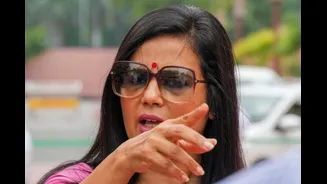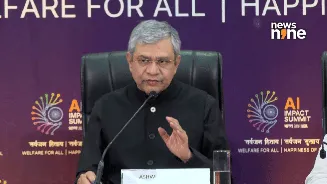










New Delhi: Union Electronics and IT Minister Ashwini Vaishnaw on Tuesday dismissed allegations that the government is targeting genuine content creators
or removing protest-related videos from social media platforms. He explained that takedown requests are only for deepfake content and content related to other forms of misinformation that can mislead the public.
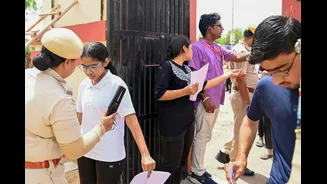
The minister’s statement comes on the heels of reports of the removal of videos from independent creators and from channels that were based on the platform YouTube after requests from the government. Among those raising concerns was Cockroach Janata Party leader Abhijeet Dipke, who alleged that a video supporting a student affected by an incorrect CBSE assessment had been taken down. However, Vaishnaw insisted that the government’s move is only applicable to content that is used for spreading false information using deepfake technology.
Government denies censorship allegations
In an interview with PTI, Vaishnaw said the attempt is not being made to stifle the voices of the people and protests on the internet.
“Wherever these fake videos are, it is our responsibility to ensure that deepfake content spreading false information is removed,” he said.
The minister says people must be capable of finding the difference between real information and processed information. He emphasised the importance of confidence in digital content, noting that technological solutions are being developed to enhance that confidence and ensure that deceptive information is not spread.
The amount of content that is targeted for removal is small in proportion to the amount of content that is produced online and that is targeted at harmful deepfakes, Vaishnaw added.
Centre pushes for stronger laws against fake news
The minister also expressed the government’s stance that fake news should not be allowed to be shared on social media platforms, even by the victims themselves.
On queries regarding proposed changes in the Information Technology (IT) Rules, Vaishnaw said it does not matter where the misinformation is coming from if it is actually misinformation.
“If fake news is generated by a newspaper or by any other person, it must be taken out,” he told PTI.
The suggested changes would allow the Ministry of Information and Broadcasting to cover and withdraw news and current affairs being shared or published online without requiring it to register as a publisher.
New AI law may be needed, says Minister
Vaishnaw further suggested that India could need specific legislation to tackle AI’s challenges.
He told PTI that the existing IT Act was passed in 2000, and that was before generative AI and other technologies came into existence.
“This is a vastly different world of AI than the one in which the IT Act was introduced in 2000,” Vaishnaw said, noting that stakeholders from industry are being consulted on how best to go about the regulation.
‘Striking a balance between encouraging innovation and protecting public safety is the government’s aim,’ he said.
India tightens rules on AI-generated content
Governments around the world are facing similar challenges to address deepfakes, misinformation, online harms, and more, while India has been beefing up its regulations on AI-generated content.
The Centre has recently tightened rules on online platforms, imposing a deadline of three hours for removal of AI-generated or synthetic content after it is marked by a competent authority or court. All the changes are done through amendments in the Information Technology (Intermediary Guidelines and Digital Media Ethics Code) Rules, 2021.
The updated rules formally define AI-generated and synthetic content while excluding routine editing, accessibility enhancements and legitimate educational or design-related uses.
The government has also made more stringent disclosure obligations, which could see AI-generated content labelled clearly and continuously throughout its user experience, making it easier to spot manipulated media.