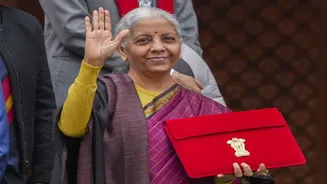








Chennai: In a transformative infrastructure announcement in the Union Budget 2026-27, Finance Minister Nirmala Sitharaman has proposed developing dedicated
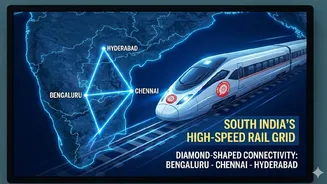
high-speed rail corridors, with a major focus on creating a “triangular” or “diamond-shaped” high-speed rail network in South India. The project, connecting Chennai, Bengaluru, and Hyderabad, aims to revolutionize regional connectivity, slash travel times, and spur economic integration across the southern states.
South India’s High-Speed Rail Triangle: Routes and Travel Times Unveiled
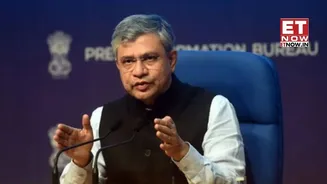
Union Railway Minister Ashwini Vaishnaw detailed that the triangular network comprises three key routes announced in the budget. The travel time from Chennai to Bengaluru will be reduced to approximately 73 minutes. Commuting from Bengaluru to Hyderabad is estimated to take 120 minutes, while the journey from Hyderabad to Chennai is projected to be 150 minutes.
This interconnected network will seamlessly link Tamil Nadu, Karnataka, Telangana, Andhra Pradesh, Kerala, and the Union Territory of Puducherry, covering a total high-speed rail span of about 4,000 kilometers across the seven national corridors announced, at an estimated cost of ₹16 lakh crore.
IT Corridor Boost and Urban Transformation: Catalyzing Next-Level Growth
The project is strategically designed to connect three of India’s premier IT and economic hubs. By enabling rapid sub-2.5-hour connectivity between these megacities, the network is expected to facilitate unprecedented business integration and attract new investments. It will drive the development of new satellite cities along the routes, decongesting existing urban centers.
The initiative is also anticipated to spark a surge in real estate and commercial development near proposed stations, leading to new residential, hospitality, and commercial hubs. Furthermore, it will provide a competitive alternative to air travel, significantly boosting cultural, spiritual, and business tourism across the region.
National High-Speed Rail Vision: Seven Corridors Aim to Decongest Networks
Beyond the Southern triangle, the Budget outlined a national vision with high-speed rail corridors on seven routes, including Mumbai-Pune, Hyderabad-Pune, Delhi-Varanasi, and Varanasi-Siliguri. The overarching goals are to reduce logistics costs, decongest existing rail networks, and strengthen economic integration pan-India.
The Southern triangle, however, stands out as a ready-made cluster with the potential to create one of the world’s most dynamic urban economic regions, reshaping mobility and growth in South India for decades to come.