
Dehradun: The Archaeological Survey of India, Dehradun Division, has restarted excavation at the Ashvamedha Yagya site in Jagatgram Barwala, Vikasnagar,
nearly 73 years after the last major dig.
The site, linked to the 3rd‑century Kuninda dynasty, is considered one of Uttarakhand’s most important historical and cultural landmarks.
Historical background
The site was first excavated between 1952 and 1954 by archaeologist T.N. Ramachandran, who unearthed evidence of an Ashvamedha Yajna (horse sacrifice) performed by King Shilavarman of the Kuninda dynasty in the 3rd century AD. Excavations revealed three brick structures shaped like flying eagles, believed to be yajna altars. These discoveries confirmed the site’s ritual and cultural significance.
Resumption of excavation
On December 1, 2025, the ASI’s Dehradun Circle resumed trial excavations to search for a fourth altar and to better understand the cultural sequence of the site. Superintendent Archaeologist Mohan Chandra Joshi explained that the excavation aims to answer key questions like when did the earliest human activity occur here? Who were the people who lived in this region? Could there be cultural layers beneath the current level?
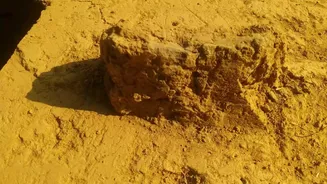
So far, the team has dug about two to three meters deep. During this process, archaeologists discovered burnt coal remains and a clay pot, along with two to three other small objects. These findings have been sent to laboratories for testing.
Scientists from the institute will collect soil samples
Joshi confirmed that the ASI has contacted the Wadia Institute of Himalayan Geology. Scientists from the institute will collect soil samples to determine the age of the deposits and date the pottery. This scientific analysis will help establish the timeline of human activity at the site and provide clarity on its cultural significance.
Importance of the Site
The Ashvamedha Yagya site is not only a historical treasure but also a cultural symbol. The yajna was considered one of the most important Vedic rituals, performed by kings to demonstrate sovereignty and divine approval. Discoveries here provide rare insights into the religious practices and political authority of the Kuninda dynasty.
The trial phase will continue through January
Excavation work is being carried out under the supervision of a team of experts. The trial phase will continue through January, with hopes of uncovering more artifacts and possibly confirming the existence of the fourth altar.
Uttarakhand is known for its religious and historical sites, and the Ashvamedha Yagya site adds to this rich heritage. The renewed excavation after 73 years highlights the importance of preserving and studying ancient remains. Findings here could reshape understanding of the region’s cultural history and attract greater academic and public interest.