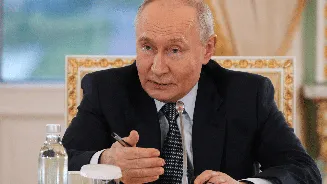







New Delhi: Russia has withdrawn its ambassador to the United Kingdom, Andrey Kelin, amid a sharp deterioration in relations between Moscow and London over
Britain’s military and political support for Ukraine.
Kelin, who had served as Russia’s ambassador in London for more than seven years, left his post on July 21. Moscow has not yet nominated a replacement, with the Russian embassy in London currently being headed by a chargé d’affaires. The absence of a new ambassador could effectively amount to a downgrading of diplomatic ties, although Russia and the UK have not formally severed relations.
The Russian embassy said Kelin had made ‘considerable efforts to preserve contacts and channels of communication’ with the British government. It accused London of choosing a “path of confrontation” with Moscow.
The embassy spokesman said Kelin left Britain in the hope that ‘a more constructive and respectful dialogue could eventually be restored’ if the UK changed its policies towards Russia.
Why are Russia and the UK relations deteriorating?
Relations between Moscow and London have been strained for some time now, with the Russia-Ukraine war pushing them to their lowest point in decades. Britain has been among Kyiv’s strongest European supporters, providing military assistance, sanctions and diplomatic backing to Ukraine. The UK government has repeatedly said it will continue supporting Kyiv against Russia.
Tensions escalated further this month after reports that British-made drones supplied to Ukraine had been used in long-range attacks on targets inside Russia. Moscow accused London of becoming increasingly directly involved in the conflict and warned that Britain could face unspecified ‘consequences’. Russian Foreign Minister Sergei Lavrov also said Moscow could consider Britain a party to the war because of its alleged military involvement.
British Prime Minister Andy Burnham, however, rejected the Russian warning and said Britain would continue to support Ukraine “100%”. The UK has committed to supplying Kyiv with 150,000 drones by the end of 2026 as part of a £752 million military aid package.
The diplomatic tensions have also been accompanied by repeated expulsions of diplomats and reciprocal measures. In April, Britain summoned Russia’s ambassador after Moscow expelled another British diplomat, calling the move part of a wider campaign of ‘aggressive behaviour towards the UK’.
In June, Britain again summoned the Russian ambassador following Russian strikes on Ukraine and a violation of NATO airspace after a drone hit a residential building in Romania. London said it stood firmly with Ukraine, Romania and its NATO allies.
The latest move over Kelin’s departure comes as communication between the two countries has weakened further. Russia’s withdrawal of its ambassador does not formally break diplomatic ties, but the failure to appoint a successor could make high-level political communication between Moscow and London even more difficult.