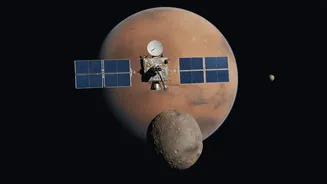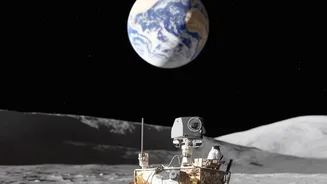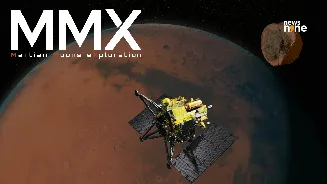





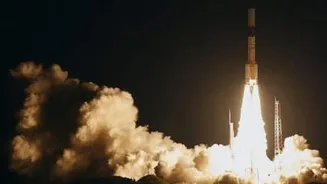

Japan has launched the Martian Moons eXploration spacecraft, or MMX, on a journey to study Mars’ two small moons and bring material from Phobos back to Earth.
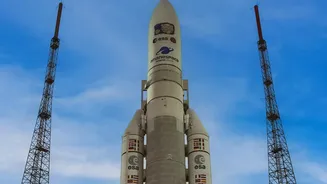
The uncrewed spacecraft lifted off on an H3 rocket from the Tanegashima Space Center before dawn on October 20 in Japan.
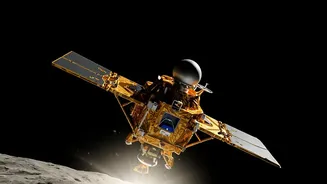
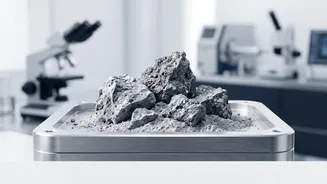
MMX is expected to reach Mars in August 2027 and spend about three years studying Phobos and Deimos. JAXA plans two landing operations on Phobos and aims to collect more than 10 grams of rock and sand before sending a return capsule to Earth in 2031.
Why Phobos though?
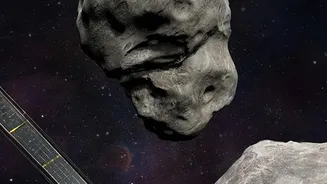
Scientists still debate how Mars acquired its moons. One idea says Phobos and Deimos are asteroids captured by Mars’ gravity. Another says they formed from debris thrown into orbit after a large object struck Mars. The chemistry and structure of returned grains could help researchers distinguish between those explanations.
The samples may also contain material that was blasted off Mars by ancient impacts. Studying it could reveal how water and organic compounds moved through the early solar system and how the Martian environment changed. JAXA says the work should improve understanding of the Mars system and the formation of rocky planets.
An international sample-return effort
MMX carries 11 scientific instruments and includes contributions from NASA, France’s CNES, Germany’s DLR and the European Space Agency. NASA supplied the MEGANE gamma-ray and neutron instrument and a pneumatic sampler. It will also provide Deep Space Network support and receive about 15 per cent of the returned sample for curation and research.
The launch is the first interplanetary mission for Japan’s H3 rocket. The launcher failed on its debut in 2023 when its second-stage engine did not ignite, but later flights rebuilt confidence. MMX still faces difficult phases, including Mars arrival, low-gravity landings, sampling, departure and capsule recovery in Australia. If successful, it would return the first samples ever collected from the Martian system.