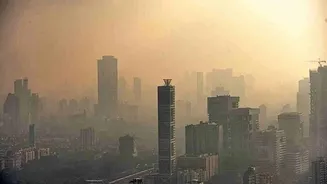







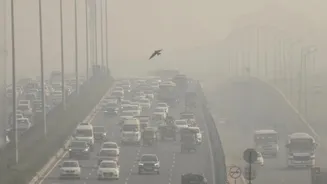
Mumbai: Mumbai is set to expand its air quality monitoring network with five new Continuous Ambient Air Quality Monitoring Stations (CAAQMS). However,
the Brihanmumbai Municipal Corporation’s (BMC) decision to install all five stations in public gardens has sparked concerns among environmental experts about whether the locations will accurately capture the city’s worst pollution levels.
The Rs 22-crore project will cover civic gardens in Mulund, Dadar, Goregaon, Charni Road and Santacruz, The Indian Express reported. According to civic officials, the stations are intended to provide a broader picture of air quality across surrounding neighbourhoods. The facilities are expected to become operational within six months.
However, atmospheric scientists have questioned whether monitoring pollution exclusively from open green spaces will provide a representative assessment of Mumbai’s air quality. Gardens generally have fewer immediate emission sources than congested roads, traffic junctions and densely populated urban areas.
This raises concerns that the new monitoring network could overlook localised pollution hotspots, particularly those affected by vehicle emissions, construction activity and heavy traffic.
Mumbai currently has 29 monitoring stations
Mumbai currently has 29 Continuous Ambient Air Quality Monitoring Stations operated by the BMC, Maharashtra Pollution Control Board (MPCB) and the Indian Institute of Tropical Meteorology (IITM). Their readings are shared on the Central Pollution Control Board’s (CPCB) Sameer dashboard, which provides public access to air quality information.
The report further said that the proposed locations could address existing monitoring gaps. Dadar, Charni Road and Mulund currently lack dedicated monitoring stations, with their nearest facilities in Worli, Mazgaon and Bhandup, respectively. These stations are approximately five kilometres away.
BMC places order for new facilities
The BMC has already placed the order for the new facilities. The Rs 22-crore allocation also includes five years of operation and maintenance.
While expanding Mumbai’s air quality monitoring network is an important step, experts’ concerns highlight the need for a balanced approach. Combining measurements from gardens, traffic corridors and densely populated neighbourhoods could offer a more comprehensive picture of the pollution residents actually breathe.