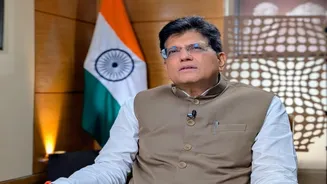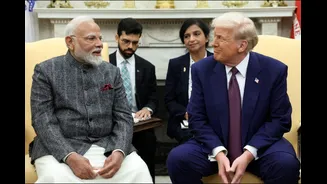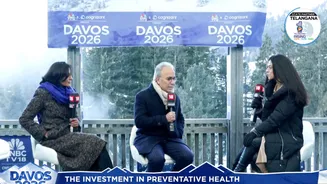

Rajiv Memani, President of the Confederation of Indian Industry (CII), said global markets stabilised after US President Donald Trump withdrew the proposed 10% tariff over Greenland, easing investor concerns.
“People for the moment are happy that this is not going to become a big flashpoint,” he said.
Speaking to CNBC-TV18’s Shereen Bhan, Memani noted that geopolitical uncertainty dominated discussions, while AI and its applications featured prominently in private meetings.
“If you walk through the promenade on one-to-one meetings, I think AI was the big thing, and how the application of AI is becoming more and more important,” he said.
Memani added that countries are increasingly focused on building new trade ties, creating opportunities for India to expand partnerships. He pointed to the India–EU Free Trade Agreement (FTA), expected to conclude on January 27, as a way to open the European market and attract investment.
“It opens up the entire EU market,” he said. On the US trade front, Memani noted that timelines remain uncertain, though President Trump has indicated a “good deal” is possible.
On domestic policy, Memani called for Budget 2026 to accelerate reforms and boost domestic manufacturing. He suggested a bold disinvestment push, targeting ₹750 billion to ₹1 trillion, to fund capital expenditure and improve competitiveness.
Meanwhile, Suneeta Reddy, Managing Director of Apollo Hospitals, highlighted healthcare challenges and opportunities. She called India’s goods and services tax (GST) structure for healthcare “complicated” and noted it may not feature in Budget discussions.
Reddy said AI is now unavoidable for businesses, particularly in healthcare. “AI is mainstream. There’s no walking away from AI,” she said, emphasizing the need to reskill India’s workforce.
She also highlighted preventive healthcare as a key investment area, warning that non-communicable diseases could cost India $4 trillion, and pointed to opportunities in medical manufacturing, citing India’s potential to supply other emerging markets at scale and lower cost.