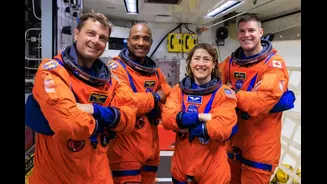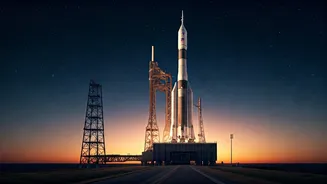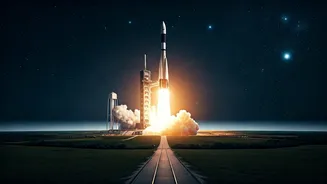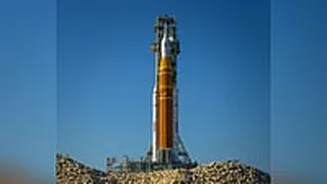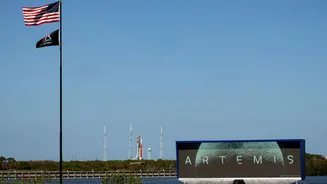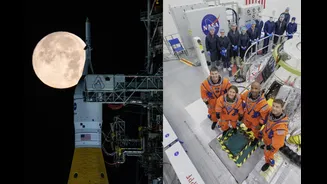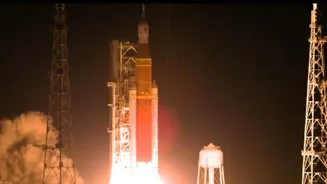

The mission is carrying NASA astronauts Reid Wiseman, Victor Glover and Christina Koch, along with Canadian Space Agency astronaut Jeremy Hansen. Shortly after liftoff, the rocket’s umbilicals disconnected, allowing the spacecraft to transition to autonomous flight as it began its journey into deep space.
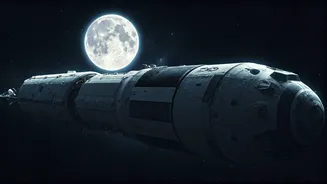
Artemis II is expected to last around 10 days and will test critical systems and hardware needed for future missions. It marks the first crewed flight under NASA’s Artemis programme and is seen as a key step toward sustained lunar exploration and eventual human missions to Mars.
ARTEMIS
II HAS LAUNCHED ???? GODSPEED. ???????? pic.twitter.com/vwICOVrcAt
— The White House (@WhiteHouse) April 1, 2026
Earlier, Artemis II Launch Director Charlie Blackwell-Thompson conducted the critical go/no-go poll ahead of terminal count, with all teams giving a unanimous “go” for Artemis II. The decision clears the mission to proceed into the final 10 minutes before liftoff, marking the culmination of years of planning and intensive pre-launch preparations.
Also Read: Artemis 2: Why did it take 50 years to go back to the Moon