







What is the story about?
Iranian drone strikes targeted Kuwait’s major oil infrastructure early Friday, March 20, triggering a fire at the Mina Al-Ahmadi Refinery, while explosions were reported over Tehran following renewed Israeli attacks.
The developments come as the conflict between Iran and Israel entered its third week, raising concerns about regional security and global energy supplies.
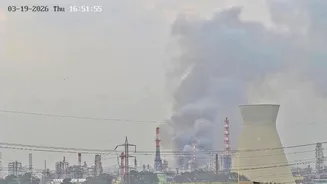
Kuwaiti authorities confirmed that Iranian drones struck the Mina Al-Ahmadi Refinery, igniting a fire that emergency crews were attempting to control, as per news agency The Associated Press (AP).
The facility, capable of processing roughly 730,000 barrels of crude oil per day, had already sustained damage in a similar attack a day earlier.
The refinery is one of three key processing facilities in Kuwait, a Gulf state heavily reliant on oil exports.
Also Read: Iran US Israel War Live Updates
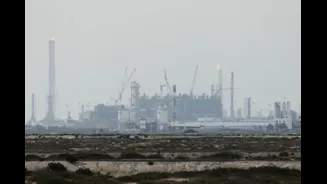
Iran has intensified strikes on energy infrastructure across Gulf nations after Israel bombed the massive South Pars Gas Field. The field, located in the Persian Gulf and jointly owned with Qatar, is the largest natural gas field in the world.
Regional tensions escalate across Gulf
The escalating conflict has affected several countries across the Gulf. Loud explosions were heard in Dubai as air defence systems intercepted incoming projectiles during celebrations marking Eid al-Fitr.
Authorities in Bahrain said debris from an intercepted projectile caused a warehouse fire, while Saudi Arabia reported shooting down multiple drones aimed at its oil-rich Eastern Province, as per AP.
Iran has also launched multiple missile barrages towards Israel, with warning sirens sounding in Jerusalem and northern parts of the country. No immediate casualties were reported from those attacks.
Global energy fears and mounting casualties
The conflict has also triggered anxiety in global energy markets, particularly due to Iran’s influence over shipping through the strategic Strait of Hormuz, a passage used for transporting nearly a fifth of the world’s oil.
International benchmark Brent crude surged above $119 per barrel before easing to around $107 in Friday trading, AP reported.
Also Read: EU urges moratorium on strikes on West Asia energy, water facilities
Israeli Prime Minister Benjamin Netanyahu said Israel would temporarily pause further strikes on the South Pars field following a request from US President Donald Trump after oil prices spiked.
The war has already caused significant casualties. More than 1,300 people have been killed in Iran, while missile attacks have killed 15 people in Israel. Strikes involving the Iran-backed militant group Hezbollah in Lebanon have displaced over one million people, as per AP.
The developments come as the conflict between Iran and Israel entered its third week, raising concerns about regional security and global energy supplies.
Kuwaiti authorities confirmed that Iranian drones struck the Mina Al-Ahmadi Refinery, igniting a fire that emergency crews were attempting to control, as per news agency The Associated Press (AP).
The facility, capable of processing roughly 730,000 barrels of crude oil per day, had already sustained damage in a similar attack a day earlier.
The refinery is one of three key processing facilities in Kuwait, a Gulf state heavily reliant on oil exports.
Also Read: Iran US Israel War Live Updates
Iran has intensified strikes on energy infrastructure across Gulf nations after Israel bombed the massive South Pars Gas Field. The field, located in the Persian Gulf and jointly owned with Qatar, is the largest natural gas field in the world.
Regional tensions escalate across Gulf
The escalating conflict has affected several countries across the Gulf. Loud explosions were heard in Dubai as air defence systems intercepted incoming projectiles during celebrations marking Eid al-Fitr.
Authorities in Bahrain said debris from an intercepted projectile caused a warehouse fire, while Saudi Arabia reported shooting down multiple drones aimed at its oil-rich Eastern Province, as per AP.
Iran has also launched multiple missile barrages towards Israel, with warning sirens sounding in Jerusalem and northern parts of the country. No immediate casualties were reported from those attacks.
Global energy fears and mounting casualties
The conflict has also triggered anxiety in global energy markets, particularly due to Iran’s influence over shipping through the strategic Strait of Hormuz, a passage used for transporting nearly a fifth of the world’s oil.
International benchmark Brent crude surged above $119 per barrel before easing to around $107 in Friday trading, AP reported.
Also Read: EU urges moratorium on strikes on West Asia energy, water facilities
Israeli Prime Minister Benjamin Netanyahu said Israel would temporarily pause further strikes on the South Pars field following a request from US President Donald Trump after oil prices spiked.
The war has already caused significant casualties. More than 1,300 people have been killed in Iran, while missile attacks have killed 15 people in Israel. Strikes involving the Iran-backed militant group Hezbollah in Lebanon have displaced over one million people, as per AP.