






What is the story about?
A growing number of countries on Saturday (December 27) rejected Israel's recognition of Somalia’s breakaway region of Somaliland as an independent nation a day earlier, the first by any country in more than 30 years.
It wasn't known why Israel made the declaration on Friday (December 26) or whether the country was expecting something in return.
Somaliland declared independence from Somalia in 1991 during a descent into conflict that continues to leave the east African country fragile. Despite having its own government and currency, Somaliland had never been recognised by any nation until Friday (December 26).
A joint statement by more than 20 mostly Middle Eastern or African countries and the Organization of Islamic Cooperation on Saturday (December 27) rejected Israel's recognition “given the serious repercussions of such unprecedented measure on peace and security in the Horn of Africa, the Red Sea and its serious effects on international peace and security as a whole.”
Somaliland, which is arid, lies on the Gulf of Aden across from Yemen and next to small Djibouti, which hosts military bases for the US, China, France and several other countries.
Read more: Trump–Zelenskyy meeting: What to expect from high-stakes peace talks as Putin intensifies strikes
The joint statement also noted “the full rejection of any potential link between such measure and any attempts to forcibly expel the Palestinian people out of their land.” Syria in a separate statement also rejected Israel's recognition.
Earlier this year, US and Israeli officials told The Associated Press that Israel had approached Somaliland about taking in Palestinians from Gaza as part of US President Donald Trump’s plan at the time to resettle the territory’s population. The United States has since abandoned that plan.
The US State Department on Saturday (December 27) said that it continued to recognise the territorial integrity of Somalia, "which includes the territory of Somaliland.”
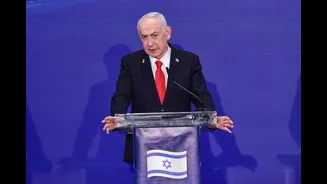
Netanyahu’s office said on Friday (December 26) that he, Israeli Foreign Minister Gideon Saar and Somaliland’s president, Abdirahman Mohamed Abdullahi, signed a joint declaration “in the spirit of the Abraham Accords.”
That initiative, which started in 2020, established commercial and diplomatic ties between Israel and several Arab and Muslim-majority countries. Trump sees it as key to his plan for bringing long-term stability to the Middle East.
Somalia’s federal government on Friday (December 26) strongly rejected what it described as an unlawful move by Israel, and reaffirmed that Somaliland remains an integral part of Somalia’s sovereign territory.
Read more: Guinea votes in presidential election expected to cement Doumbouya's rule
African regional bodies also rejected Israel's recognition. African Union Chairperson Mahmoud Ali Youssouf said that any attempt to undermine Somalia’s sovereignty risks peace and stability on the continent.
East African governing body IGAD said in a statement that Somalia’s sovereignty was recognised under international law and any unilateral recognition “runs contrary to the charter of the United Nations” and agreements establishing the bloc and the African Union.
It wasn't known why Israel made the declaration on Friday (December 26) or whether the country was expecting something in return.
Somaliland declared independence from Somalia in 1991 during a descent into conflict that continues to leave the east African country fragile. Despite having its own government and currency, Somaliland had never been recognised by any nation until Friday (December 26).
A joint statement by more than 20 mostly Middle Eastern or African countries and the Organization of Islamic Cooperation on Saturday (December 27) rejected Israel's recognition “given the serious repercussions of such unprecedented measure on peace and security in the Horn of Africa, the Red Sea and its serious effects on international peace and security as a whole.”
Somaliland, which is arid, lies on the Gulf of Aden across from Yemen and next to small Djibouti, which hosts military bases for the US, China, France and several other countries.
Read more: Trump–Zelenskyy meeting: What to expect from high-stakes peace talks as Putin intensifies strikes
The joint statement also noted “the full rejection of any potential link between such measure and any attempts to forcibly expel the Palestinian people out of their land.” Syria in a separate statement also rejected Israel's recognition.
Earlier this year, US and Israeli officials told The Associated Press that Israel had approached Somaliland about taking in Palestinians from Gaza as part of US President Donald Trump’s plan at the time to resettle the territory’s population. The United States has since abandoned that plan.
The US State Department on Saturday (December 27) said that it continued to recognise the territorial integrity of Somalia, "which includes the territory of Somaliland.”
Netanyahu’s office said on Friday (December 26) that he, Israeli Foreign Minister Gideon Saar and Somaliland’s president, Abdirahman Mohamed Abdullahi, signed a joint declaration “in the spirit of the Abraham Accords.”
That initiative, which started in 2020, established commercial and diplomatic ties between Israel and several Arab and Muslim-majority countries. Trump sees it as key to his plan for bringing long-term stability to the Middle East.
Somalia’s federal government on Friday (December 26) strongly rejected what it described as an unlawful move by Israel, and reaffirmed that Somaliland remains an integral part of Somalia’s sovereign territory.
Read more: Guinea votes in presidential election expected to cement Doumbouya's rule
African regional bodies also rejected Israel's recognition. African Union Chairperson Mahmoud Ali Youssouf said that any attempt to undermine Somalia’s sovereignty risks peace and stability on the continent.
East African governing body IGAD said in a statement that Somalia’s sovereignty was recognised under international law and any unilateral recognition “runs contrary to the charter of the United Nations” and agreements establishing the bloc and the African Union.