






What is the story about?
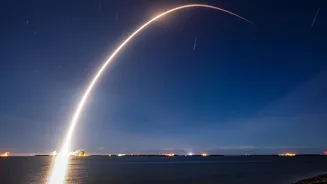
SpaceX on Friday launched a Falcon 9 rocket carrying 29 Starlink satellites into low Earth orbit from Florida. The rocket lifted off from Launch Complex 40 at 11:52 am IST. The mission deployed 29 satellites identified as Starlink Group 6-101.
Another launch took place earlier, on Thursday, 29 January, from the US West Coast. A Falcon 9 rocket lifted off from Space Launch Complex 4 East at Vandenberg Space Force Base in California at 10:23 pm IST. During that mission, the rocket successfully deployed 25 Starlink satellites into low Earth orbit, belonging to Starlink Group 17-19.
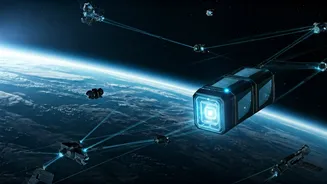
The Starlink network provides high-speed internet to regions around the world where conventional internet services are weak, unreliable or unavailable. Instead of relying on underground cables or mobile towers, Starlink uses a constellation of satellites to deliver connectivity from space.
Starlink is also being used to provide in-flight Wi-Fi on some airlines. In addition, the service now supports direct-to-mobile connectivity, allowing people to make calls or send text messages via satellites on select mobile networks, even in areas without terrestrial mobile coverage.
With the launches conducted on Thursday and Friday, the total number of Starlink satellites in orbit has crossed 9,600, according to satellite tracker Jonathan McDowell.
Friday’s launch marked SpaceX’s 13th mission of the year and the 596th Falcon 9 flight since the rocket’s debut in 2010.
SpaceX used a reusable Falcon 9 booster, designated B1082, for the mission. This was the 19th flight for this particular booster. It has previously supported missions including USSF-62, NROL-145 and OneWeb Launch 20.
Around 8.5 minutes after lift-off, the booster successfully returned to Earth and landed on the drone ship Of Course I Still Love You, stationed in the ocean. This marked the 174th successful landing on this vessel and SpaceX’s 565th booster landing overall.
Another launch took place earlier, on Thursday, 29 January, from the US West Coast. A Falcon 9 rocket lifted off from Space Launch Complex 4 East at Vandenberg Space Force Base in California at 10:23 pm IST. During that mission, the rocket successfully deployed 25 Starlink satellites into low Earth orbit, belonging to Starlink Group 17-19.
Falcon
9 launches 29 @Starlink satellites from Florida pic.twitter.com/CZmkk0fHKO
— SpaceX (@SpaceX) January 30, 2026
The Starlink network provides high-speed internet to regions around the world where conventional internet services are weak, unreliable or unavailable. Instead of relying on underground cables or mobile towers, Starlink uses a constellation of satellites to deliver connectivity from space.
Starlink is also being used to provide in-flight Wi-Fi on some airlines. In addition, the service now supports direct-to-mobile connectivity, allowing people to make calls or send text messages via satellites on select mobile networks, even in areas without terrestrial mobile coverage.
With the launches conducted on Thursday and Friday, the total number of Starlink satellites in orbit has crossed 9,600, according to satellite tracker Jonathan McDowell.
Friday’s launch marked SpaceX’s 13th mission of the year and the 596th Falcon 9 flight since the rocket’s debut in 2010.
SpaceX used a reusable Falcon 9 booster, designated B1082, for the mission. This was the 19th flight for this particular booster. It has previously supported missions including USSF-62, NROL-145 and OneWeb Launch 20.
Around 8.5 minutes after lift-off, the booster successfully returned to Earth and landed on the drone ship Of Course I Still Love You, stationed in the ocean. This marked the 174th successful landing on this vessel and SpaceX’s 565th booster landing overall.