




What is the story about?
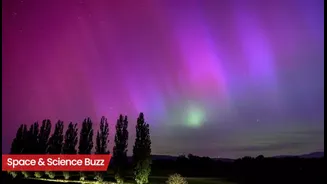
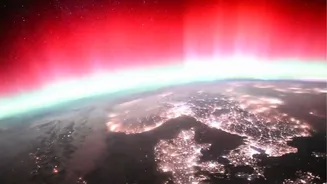
Japanese astronaut aboard the International Space Station (ISS) captured a stunning video of the Aurora Borealis from the space.
In the video shared by Japan Aerospace Exploration Agency's (JAXA) astronaut Kimiya Yui, the northern lights are seen as earth's and space particles interplay with each other.
"Good morning! I'm continuing to take photos during breaks at work. Knowing that I would soon return, the sun must have tried its best, as I was able to capture a very beautiful aurora," Yui said in a post on X (formerly Twitter) while sharing the video.
"I was happy to have captured it, but above all, imagining everyone smiling with joy upon seeing the footage, I smiled to myself with a laugh," he added, according to a rough translation from his original tweet in Japanese.
Watch the video here:
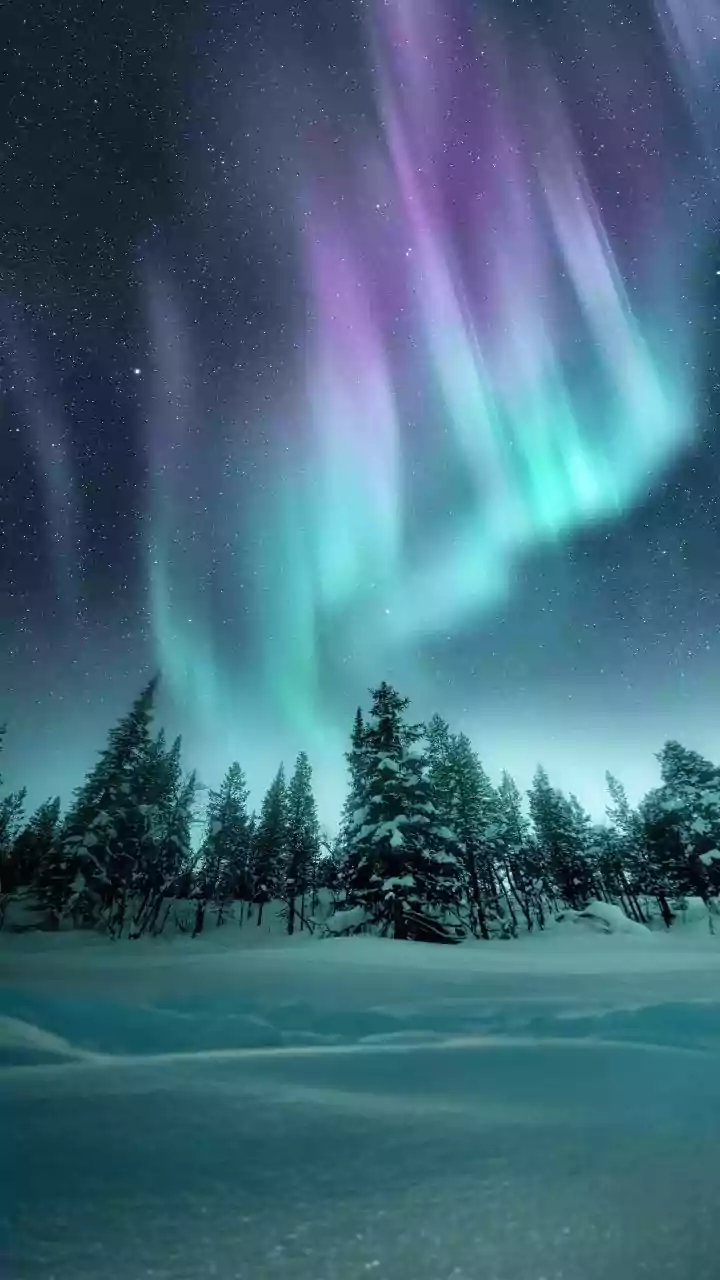
The Aurora Borealis are also known as the Northern Lights. They are an effect of energetic particles, which can speed out from the sun both in a steady stream called the solar wind and due to giant eruptions known as coronal mass ejections or CMEs.
Yui is part of the SpaceX Crew-11 mission and is set to return to Earth on January 14-15. The crew will begin undocking on January 14 and is expected to make a splash down off the coast of California on January 15.
Other astronauts returning to the earth include NASA's Zena Cardman and Mike Fincke, and Roscosmos cosmonaut Oleg Platonov. The crew is returning to Earth earlier than the original schedule due to a "medical concern".
"NASA announced its decision to return the agency’s SpaceX Crew-11 mission to Earth from the space station earlier than originally planned as teams monitor a medical concern with a crew member currently living and working aboard the orbital laboratory, who is stable," NASA said in a statement on its website on January 13.
"Due to medical privacy, it is not appropriate for NASA to share more details about the crew member," it added.
In the video shared by Japan Aerospace Exploration Agency's (JAXA) astronaut Kimiya Yui, the northern lights are seen as earth's and space particles interplay with each other.
"Good morning! I'm continuing to take photos during breaks at work. Knowing that I would soon return, the sun must have tried its best, as I was able to capture a very beautiful aurora," Yui said in a post on X (formerly Twitter) while sharing the video.
"I was happy to have captured it, but above all, imagining everyone smiling with joy upon seeing the footage, I smiled to myself with a laugh," he added, according to a rough translation from his original tweet in Japanese.
Watch the video here:
おはようございます! 仕事の隙間を狙っての撮影が続いています。 私がまもなく帰還するのを知って、太陽さんが頑張ってくれたのか、とても美しいオーロラを撮影する事が出来ました。 撮影できた事も嬉しかったですが、何より映像を見て皆さんが喜んでくださる様子を思い浮かべ、1人で微笑みました笑。 pic.twitter.com/qQJDpqlq1U
— 油井 亀美也 Kimiya.Yui (@Astro_Kimiya) January 11, 2026
The Aurora Borealis are also known as the Northern Lights. They are an effect of energetic particles, which can speed out from the sun both in a steady stream called the solar wind and due to giant eruptions known as coronal mass ejections or CMEs.
Yui is part of the SpaceX Crew-11 mission and is set to return to Earth on January 14-15. The crew will begin undocking on January 14 and is expected to make a splash down off the coast of California on January 15.
Other astronauts returning to the earth include NASA's Zena Cardman and Mike Fincke, and Roscosmos cosmonaut Oleg Platonov. The crew is returning to Earth earlier than the original schedule due to a "medical concern".
"NASA announced its decision to return the agency’s SpaceX Crew-11 mission to Earth from the space station earlier than originally planned as teams monitor a medical concern with a crew member currently living and working aboard the orbital laboratory, who is stable," NASA said in a statement on its website on January 13.
"Due to medical privacy, it is not appropriate for NASA to share more details about the crew member," it added.