On
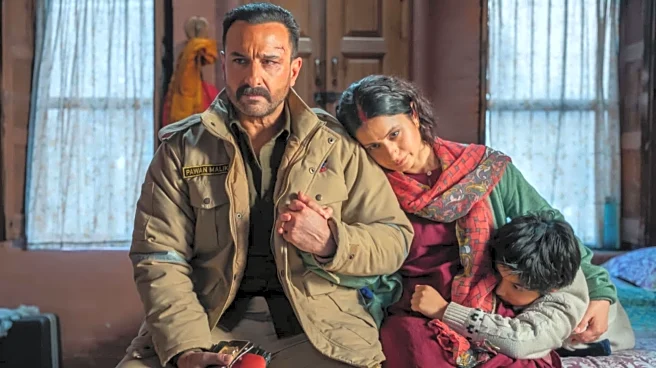
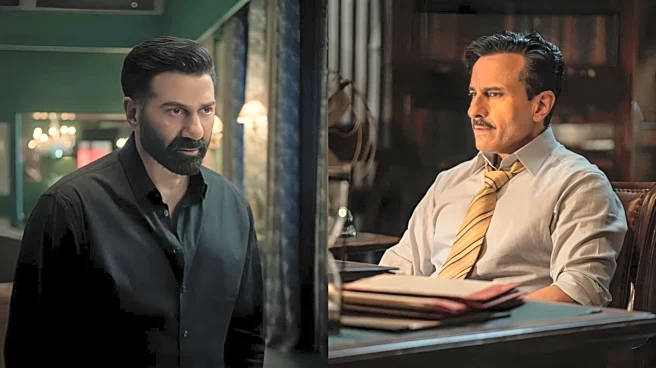
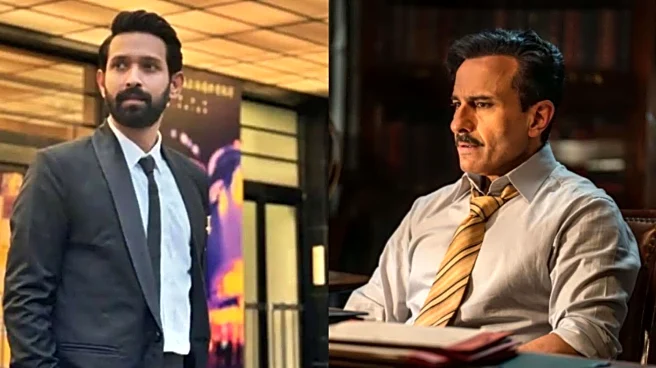
15 August 1947, India became free from British colonial rule. Little more than two years later, on 25 January 1950, the Election Commission of India (ECI) was established. A country that had been looted and plundered by the British, and had witnessed the bloodiest partition, was about to hold its first election with nothing but faith.Sukumar Sen was appointed Chief Election Commissioner on 21 March 1950. The hopes of conducting and executing an election by 1951 rested on Sen. He was the key figure who would turn constitutional democracy into a working system. While many remain unfamiliar with the country’s first Chief Election Commissioner, an upcoming Netflix period drama, Hum Hindustani, will see Saif Ali Khan portray Sukumar Sen.
Sukumar Sen: India’s First Chief Election Commissioner
Born in 1899, Sen graduated from Presidency College, Calcutta (now Kolkata), and then from the University of London, where he was also awarded a gold medal in Mathematics. In 1921, he joined the Indian Civil Service (ICS). He was eventually appointed Chief Secretary of West Bengal and then made Chief Election Commissioner.
"For no officer of state, certainly no Indian official, has ever had such a stupendous task placed in front of him. Consider, first of all, the size of the electorate: 176 million Indians aged twenty-one or more, of whom about 85 per cent could not read or write. Each one had to be identified, named and registered," wrote historian Ramachandra Guha in the book
India After Gandhi.He added, "The registration of voters was merely the first step. For how did one design party symbols, ballot papers and ballot boxes for a mostly unlettered electorate? Then, sites for polling stations had to be identified, and honest and efficient polling officers recruited. Moreover, concurrent with the general election would be elections to the state assemblies." He was aided by two Regional Election Commissioners, along with one Chief Election Officer for each state. With 173 million electors and 1,874 candidates, the country’s first parliamentary election after independence, for 489 seats in Lok Sabha, was conducted by the ECI. India’s historic first general election took place between 25 October 1951 and 21 February 1952. It marked the birth of the world’s largest democracy. It spanned 68 phases and elected 489 Lok Sabha members, with Jawaharlal Nehru becoming the first democratically elected Prime Minister.
The sheer magnitude of the elections was jaw dropping. A total of 196,084 polling booths were set up, of which 27,527 were reserved for women. There were two million steel ballot boxes, which cost a total of Rs 1,22,87,349. About 16,500 clerks were appointed on six-month contracts to type and collate the electoral rolls, and 380,000 reams of paper were used to print them. While in the West party names were used, in India symbols were used. Indian scientists also developed an ink to prevent impersonation.Former President of India Pranab Mukherjee described Sen as "chosen to play obstetrician and to deliver Indian democracy’s first crop of nearly three thousand elected representatives. Realising, with surprising un-ICS humility, that democracy likes its mechanics to be as self-effacing as possible, the Chief Election Commissioner became an unseen, undogmatic influence, patiently judicial in his attitude to parties but insistent in regard to the machine he wielded".
/images/ppid_a911dc6a-image-177034203239573252.webp)



/images/ppid_a911dc6a-image-177031962798790119.webp)

/images/ppid_a911dc6a-image-177015162777085379.webp)

/images/ppid_a911dc6a-image-177012852999894944.webp)
/images/ppid_a911dc6a-image-177012504027318640.webp)