A
secret cremation is not free. Someone has to buy the firewood, and firewood leaves a receipt. That small, bureaucratic truth is what a mild-mannered bank employee named Jaswant Singh Khalra grasped in the early 1990s, and it is what eventually cost him his life. Thirty years on, his story has reached a mass audience through a film the Indian state spent years trying to bury, and the man at its centre is worth knowing on his own terms.
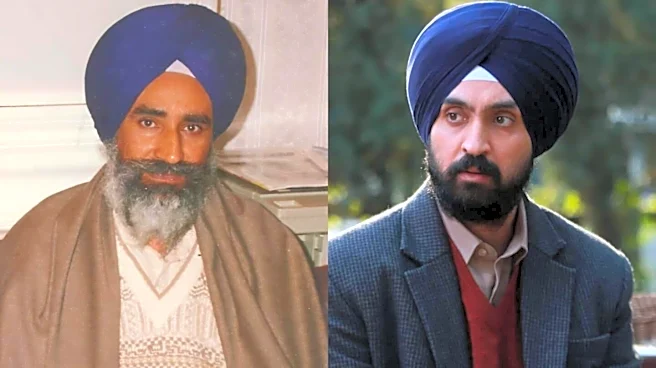
Who Was Jaswant Singh Khalra?
He was not a lawyer, a journalist or a politician. He was a bank manager, and it was that ordinary discipline, an instinct for records and paper trails, that pulled him into something extraordinary. While searching for colleagues who had gone missing during Punjab's insurgency years, he found municipal files in Amritsar listing the names, ages and addresses of people who had been quietly killed and then cremated by the police.
The more he dug, the wider the picture grew, spreading across several districts. The National Human Rights Commission later released a list of identified bodies cremated by police in Amritsar, Majitha and Tarn Taran between June 1984 and December 1994, and both it and the Supreme Court of India certified the data as valid. Khalra believed the real toll of illegal killings and cremations across Punjab could run beyond 25,000.
What Was He Actually Uncovering?
The backdrop was the bruised aftermath of Operation Blue Star, Indira Gandhi's assassination and the 1984 anti-Sikh violence, a stretch when Punjab police were empowered to detain suspects almost at will on suspicion of terrorism. They stood accused of staging shootouts and burning bodies to erase the evidence. Khalra's insight was to realise the cover-up had left a trail of its own. The municipal ledgers he found were, in effect, the state's own confession, written in its own hand.
Why Did He Refuse To Stay Silent?
Khalra did not simply hand over his findings and step aside. He carried them abroad, to Canada, to human rights forums, to anyone who would listen, knowing precisely what that exposure could cost him. In his final speech to a Canadian audience, he spoke openly of his readiness to die to make the truth known. Within months, he was proved right. He was abducted, tortured and killed, and the police initially tried to pass it off as though the man had simply vanished of his own accord.
Did Anyone Ever Face Justice?
Slowly, and at real cost, yes. It took ten years to bring the case to trial. Six Punjab police officials were convicted for the abduction and murder, and in 2007 the Punjab and Haryana High Court upheld five of those convictions, enhancing the sentences to life imprisonment, while a sixth official was acquitted. The Supreme Court confirmed the convictions in November 2011. His widow, Paramjit Kaur Khalra, has spent the decades since demanding a full accounting for the thousands of families still waiting to learn the fate of their own missing.
Why Was The Film About Him So Hard To Release?
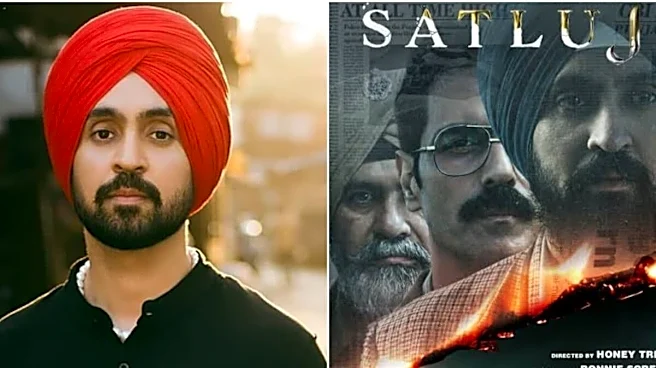
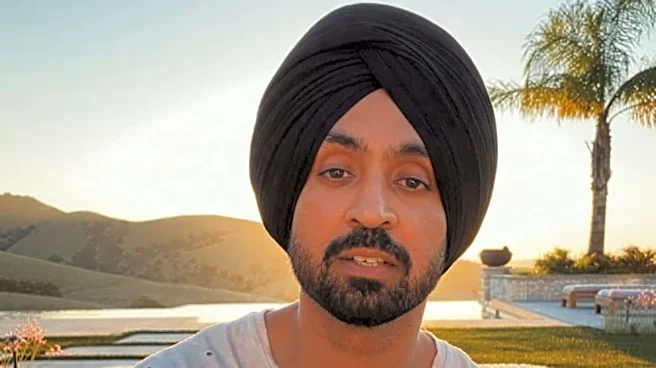
That unfinished reckoning is exactly why a film on Khalra was always going to struggle to reach an Indian screen. Directed by Honey Trehan and starring Diljit Dosanjh as Khalra, the project began as Ghallughara, invoking the historic massacres of Sikhs, before becoming Punjab '95. Submitted to the Central Board of Film Certification in 2022, it was met with demands for edits and a change of title, with requested cuts eventually reported at 127. Some accounts say the cuts went as far as barring any mention of Punjab or even Khalra's name. The film was pulled from the Toronto International Film Festival in 2023 amid claims that political rather than artistic considerations drove the decision.
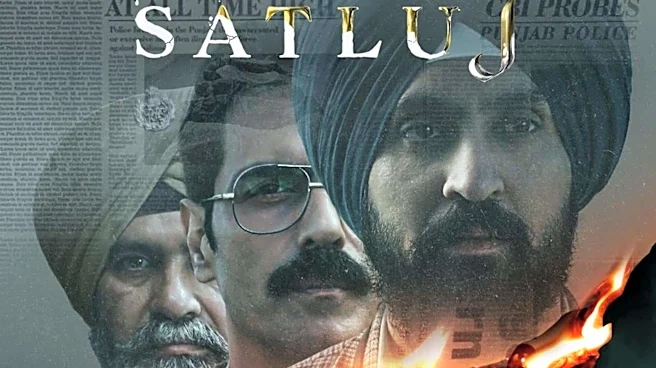
After nearly three years in limbo, ZEE5 Global agreed to stream it uncut, but only under a new, softer title: Satluj, after the river that runs through Punjab. Dosanjh, who had warned he would remove his name from the credits if the film were cut, confirmed the released version was the same one shown at festivals. Even then it did not survive: within roughly forty-eight hours of its Indian premiere, ZEE5 withdrew it from the Indian catalogue, citing only unspecified current developments, while leaving it available abroad.
Also Read: Japan Still Honours The Calcutta Judge Who Stood Alone At Its War Crimes Trial There is a bitter symmetry in that final title. A river carries on beneath whatever name is printed on the map, exactly as Khalra's ledgers outlasted every effort to make them disappear. The Satluj still runs past the districts where the bodies were counted, and the receipts he found are still there, waiting, the way inconvenient arithmetic always is.
/images/ppid_a911dc6a-image-178332844184470145.webp)

/images/ppid_a911dc6a-image-178309602688394316.webp)
/images/ppid_a911dc6a-image-178317652260442548.webp)



/images/ppid_59c68470-image-178331502387830531.webp)


/images/ppid_a911dc6a-image-178330608102988111.webp)
/images/ppid_a911dc6a-image-178331302242093132.webp)

/images/ppid_a911dc6a-image-178326753012455001.webp)