When Tipu Sultan — the ruler of Mysore history remembers as the Tiger of Mysore — fell defending Srirangapatna in 1799, the moment did not simply end a reign. It dismantled a household. It displaced a family.
And it set in motion a long, unceremonious exile whose consequences would unfold far beyond the battlefield, slipping quietly into the lives of generations that followed. The Fourth Anglo–Mysore War ended with British victory, but the aftermath was carefully choreographed. Tipu’s immediate family — his sons, dependants and close kin — were removed from Mysore and sent eastward to Calcutta, then the administrative heart of British India. Officially, this was containment. In reality, it became erasure through distance. Over time, what was meant to be temporary exile hardened into permanence. Generations later, Tipu Sultan’s descendants blended into the social and cultural life of Bengal. They learnt new languages, adopted new rhythms, and built lives far removed from courtly splendour. Yet fragments of another identity endured — surnames that hinted at lineage, mosques established by displaced royals, burial grounds that anchored memory, and family stories passed down not as triumph but as inheritance.
Today, Tipu’s bloodline survives not in palaces or titled estates, but in ordinary homes across Kolkata and parts of Karnataka. It stands as a quiet reminder that royal histories rarely end in neat conclusions. More often, they simply relocate.
What is the deeper meaning of “Jamboo Savari” in Tipu Sultan’s legacy?
For many, the phrase “Jamboo Savari” conjures images of spectacle — elephants draped in silk, the clang of ceremonial weapons, drums announcing authority. In Mysore, such processions were never decorative excess. They were political grammar. They communicated power, order and legitimacy in a world where sovereignty had to be seen to be believed. Under Tipu Sultan, pageantry carried sharp intent. Court rituals were carefully designed assertions of rule, especially in a region where colonial pressure was constant and confrontation inevitable. The procession was not celebration alone; it was warning. Today, Jamboo Savari exists largely as memory and metaphor. For Tipu’s descendants, its grandeur survives only through stories. The elephants are gone, the banners folded away. What remains is quieter — family names that still carry history, mosques built during years of displacement, annual remembrances observed without spectacle. The procession no longer moves through palace gates, but the lineage continues, unannounced yet unbroken.
Where did Tipu Sultan live, rule and fight — and what remains of those places?
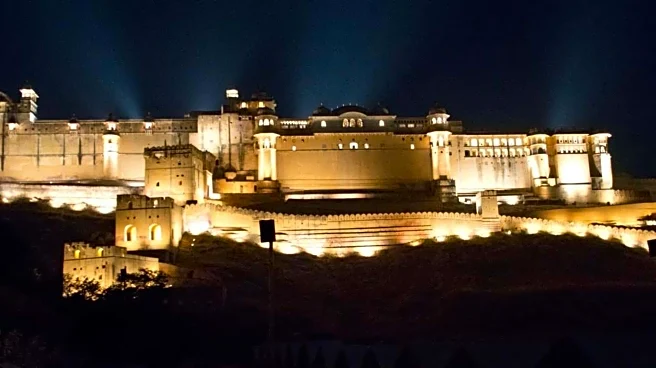
Tipu Sultan ruled from Srirangapatna, an island fortress encircled by the Cauvery River. It was the political and military nerve centre of Mysore — a city shaped as much by defence as by ambition. Fort walls, palaces and armouries reflected a ruler deeply invested in innovation and symbolism. French military influence, Persian aesthetics and indigenous craftsmanship coexisted within his court, giving Mysore a distinctly global character for its time. Today, Srirangapatna feels less like a city and more like a remembered moment. Crumbling gateways, abandoned armoury spaces, fragments of palace walls and the Gumbaz — Tipu’s mausoleum — allow visitors to piece together the final stand of a ruler who chose resistance over submission. Unlike gold and weapons that could be carried away, these structures remain anchored to the land, holding their silence.
What made the Mysore armoury under Tipu Sultan so extraordinary?
Tipu Sultan believed warfare was inseparable from science. His armouries housed advanced rocket artillery that surpassed European equivalents of the era, alongside finely forged swords, firearms, shields and experimental weaponry. This was not indulgence; it was strategic foresight. Equally distinctive was Tipu’s obsession with symbolism. The tiger appeared everywhere — carved into sword hilts, engraved along blades, shaped into gun barrels. It was not ornamentation. The tiger was a statement. In Tipu’s imagination, power needed to be both feared and remembered.
What is Tipu’s Tiger — and why does it still provoke fascination?
Among all objects linked to Tipu Sultan, none captures attention quite like Tipu’s Tiger — a life-sized wooden automaton showing a tiger overpowering a European soldier. Operated through an internal system of pipes and bellows, it emits growls and cries when activated. It was far more than mechanical novelty. Tipu’s Tiger was political theatre rendered in wood and sound — a visceral expression of resistance, mocking colonial authority and reinforcing Tipu’s refusal to bow. Removed from Srirangapatna after his death, the automaton today exists far from its original context, admired for craftsmanship but detached from the fury that shaped it.
Why were Tipu Sultan’s throne pieces and swords auctioned worldwide?
After 1799, the dismantling of Tipu Sultan’s court was deliberate. His gold throne was broken apart. Its components — gem-studded finials, ceremonial swords, royal insignia — were dispersed, gifted, sold, and eventually surfaced in private collections and auction houses across the world.
These objects testify to the remarkable skill of Mysore’s artisans — intricate gold repoussé work, gemstone setting, Persian-influenced calligraphy. Yet they also expose uncomfortable truths. Each auctioned piece exists as both luxury artefact and displaced relic, sparking ongoing debates about ownership, ethics and the legacy of colonial extraction.
Who are Tipu Sultan’s descendants today — and how do they live?
Unlike many princely families absorbed into colonial privilege, Tipu Sultan’s heirs were denied continuity. In Kolkata and Karnataka, his descendants lead largely ordinary lives — as professionals, traders, caretakers of mosques and family burial sites.
Some preserve genealogies and oral histories; others choose anonymity. Royalty, for them, is not status or spectacle. It is memory — carried quietly, without entitlement and often without recognition.
How luxurious was Tipu Sultan’s court — and how does it compare to today’s reality?
By any measure, Tipu Sultan’s court was opulent. Gold thrones, silk-lined chambers, jewelled weapons, Persian carpets and imported fragrances filled his palaces. European visitors wrote of Mysore’s refinement — a rare blend of Islamic aesthetics and South Indian grandeur. That world disappeared almost overnight. What followed was not gradual decline but abrupt normalcy. The contrast between Tipu’s opulence and his descendants’ present lives is stark — and perhaps the most honest measure of colonial disruption.
How should Tipu Sultan’s legacy be understood today?
Tipu Sultan’s legacy resists simplification. It lives simultaneously in museum galleries and auction catalogues, in ruined forts and family graveyards, in everyday homes across Kolkata and Karnataka. His story is not only about resistance or loss, but about displacement, adaptation and survival. The Jamboo Savari no longer moves through palace corridors, yet history continues to walk beside us — in surnames that echo royalty, in objects scattered across continents, and in stone walls that refuse to crumble quietly. To remember Tipu Sultan is to accept that history survives not just in gold and monuments, but in lives reshaped by what came after.
/images/ppid_a911dc6a-image-176560162924457455.webp)




/images/ppid_a911dc6a-image-177088522728382126.webp)
/images/ppid_59c68470-image-177088509203227042.webp)

/images/ppid_59c68470-image-177088512602071040.webp)
/images/ppid_59c68470-image-177088515585183979.webp)
/images/ppid_59c68470-image-177088504440359883.webp)
/images/ppid_a911dc6a-image-177088508859041936.webp)
/images/ppid_a911dc6a-image-177088504145317785.webp)