/images/ppid_59c68470-image-177843003793073318.webp)


/images/ppid_a911dc6a-image-177821547859535219.webp)
What is the story about?
The annual Puri Rath Yatra, one of India’s biggest and most revered religious festivals, will be held in Puri on July 16, 2026. The festival marks the ceremonial journey of Lord Jagannath, Lord Balabhadra and Devi Subhadra on grand wooden chariots from the Jagannath Temple to the Gundicha Temple.
Preparations for the world-famous chariot festival are already underway, with traditional rituals and large-scale administrative planning progressing in parallel ahead of the nine-day event that attracts lakhs of devotees from India and abroad.
Chariot Construction Reaches Key Milestone
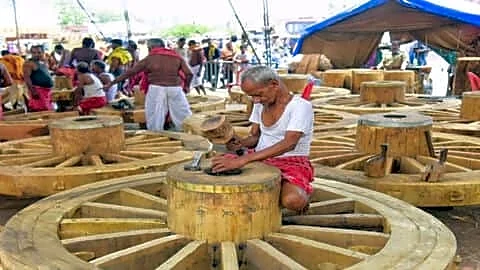
As part of the ongoing preparations, an important stage of chariot construction was completed on May 10 during the Bhauri festival rituals. According to reports, the ritual of joining the Akhs to the Nahak wheels of the three chariots was carried out following traditional customs at the Rathkhala construction yard in Puri.
The ceremony began after the Puja Panda servitors brought the Ajnamala from the Jagannath Temple. Vishwakarma Maharana and Bhoi servitors then carried out the Chakra-Akh assembly process. One Akh was attached to each pair of wheels of the three chariots as part of the ritual process.
Temple traditions state that a total of 42 wheels and 21 Akhs will be prepared for the three chariots this year. The construction process had formally started on Akshaya Tritiya and is considered one of the most significant phases leading up to the Rath Yatra.
Senior officials, including Shrimandir Administration Chief Administrator Arvind Padhi, Puri District Magistrate Divya Jyoti Parida, Superintendent of Police Prateek Singh and ADG Saumendra Priyadarshi, were present during the ceremony.
Traditional Craftsmanship Continues at Rathkhala
According to temple sources, construction work on the three ceremonial chariots is progressing steadily with strict adherence to centuries-old rituals and craftsmanship practices.
Reports said 18 wheels for the three chariots have already been completed. Rupakar servitors are currently engaged in detailed wood carving work on sal wood blocks for the chariots. Artisans are carving Narasimha figures on wooden components, which are considered important symbolic and decorative elements of the chariots.
At the same time, Ojha Kamar servitors are working at the temporary blacksmith workshop to forge iron components needed for assembling the giant wooden structures. Essential parts such as pandari, tumb bala, ar kanta and pandari chabi are being prepared for structural support and stability.
Temple authorities said all work is being supervised by designated servitors while following established customs and rituals linked to the annual festival.
Massive Security and Crowd Management Plans in Place
A high-level review meeting on Rath Yatra preparations was held in Puri on May 7 under the chairmanship of RDC (Central Range) Sudhansu Mohan Samal to ensure smooth conduct of the festival.
Officials discussed several aspects of festival management, including security, law and order, drinking water supply, sanitation, health services, transport and crowd movement.
Authorities said around 220 platoons of police force will be deployed during the festival along with units of the NSG, RAF, ODRAF and NDRF. Anti-drone systems will also be installed to restrict unauthorised drone activity.
For surveillance and crowd monitoring, nearly 200 CCTV cameras will be installed along the Badadanda, the main route of the Rath Yatra. An integrated control room will function around the clock to monitor crowd movement and coordinate emergency response.
Water, Sanitation and Transport Arrangements
Officials said 185 “drink from tap” facilities and 26 mobile water tankers will be deployed during the festival for devotees visiting Puri. Around 1,600 temporary toilets will also be installed across the town as part of sanitation measures.
Authorities have additionally decided to cover all open drains in Puri before the festival begins. Health and electricity departments have also been directed to strengthen preparedness for the large gathering.
To manage the expected rush of pilgrims, East Coast Railway officials said around 400 special trains will operate during the nine-day festival. Additional ticket booking counters will also be opened outside Puri railway station to ease passenger movement.
With preparations gathering pace, anticipation is steadily building for the grand Rath Yatra celebrations that remain deeply linked to Odisha’s religious and cultural heritage.
Preparations for the world-famous chariot festival are already underway, with traditional rituals and large-scale administrative planning progressing in parallel ahead of the nine-day event that attracts lakhs of devotees from India and abroad.
Chariot Construction Reaches Key Milestone
As part of the ongoing preparations, an important stage of chariot construction was completed on May 10 during the Bhauri festival rituals. According to reports, the ritual of joining the Akhs to the Nahak wheels of the three chariots was carried out following traditional customs at the Rathkhala construction yard in Puri.
The ceremony began after the Puja Panda servitors brought the Ajnamala from the Jagannath Temple. Vishwakarma Maharana and Bhoi servitors then carried out the Chakra-Akh assembly process. One Akh was attached to each pair of wheels of the three chariots as part of the ritual process.
Temple traditions state that a total of 42 wheels and 21 Akhs will be prepared for the three chariots this year. The construction process had formally started on Akshaya Tritiya and is considered one of the most significant phases leading up to the Rath Yatra.
Senior officials, including Shrimandir Administration Chief Administrator Arvind Padhi, Puri District Magistrate Divya Jyoti Parida, Superintendent of Police Prateek Singh and ADG Saumendra Priyadarshi, were present during the ceremony.
Traditional Craftsmanship Continues at Rathkhala
According to temple sources, construction work on the three ceremonial chariots is progressing steadily with strict adherence to centuries-old rituals and craftsmanship practices.
Reports said 18 wheels for the three chariots have already been completed. Rupakar servitors are currently engaged in detailed wood carving work on sal wood blocks for the chariots. Artisans are carving Narasimha figures on wooden components, which are considered important symbolic and decorative elements of the chariots.
At the same time, Ojha Kamar servitors are working at the temporary blacksmith workshop to forge iron components needed for assembling the giant wooden structures. Essential parts such as pandari, tumb bala, ar kanta and pandari chabi are being prepared for structural support and stability.
Temple authorities said all work is being supervised by designated servitors while following established customs and rituals linked to the annual festival.
Massive Security and Crowd Management Plans in Place
A high-level review meeting on Rath Yatra preparations was held in Puri on May 7 under the chairmanship of RDC (Central Range) Sudhansu Mohan Samal to ensure smooth conduct of the festival.
Officials discussed several aspects of festival management, including security, law and order, drinking water supply, sanitation, health services, transport and crowd movement.
Authorities said around 220 platoons of police force will be deployed during the festival along with units of the NSG, RAF, ODRAF and NDRF. Anti-drone systems will also be installed to restrict unauthorised drone activity.
For surveillance and crowd monitoring, nearly 200 CCTV cameras will be installed along the Badadanda, the main route of the Rath Yatra. An integrated control room will function around the clock to monitor crowd movement and coordinate emergency response.
Water, Sanitation and Transport Arrangements
Officials said 185 “drink from tap” facilities and 26 mobile water tankers will be deployed during the festival for devotees visiting Puri. Around 1,600 temporary toilets will also be installed across the town as part of sanitation measures.
Authorities have additionally decided to cover all open drains in Puri before the festival begins. Health and electricity departments have also been directed to strengthen preparedness for the large gathering.
To manage the expected rush of pilgrims, East Coast Railway officials said around 400 special trains will operate during the nine-day festival. Additional ticket booking counters will also be opened outside Puri railway station to ease passenger movement.
With preparations gathering pace, anticipation is steadily building for the grand Rath Yatra celebrations that remain deeply linked to Odisha’s religious and cultural heritage.