/images/ppid_59c68470-image-176813502911128745.webp)

Bihu is an important festival for Assamese people and marks important stages in the agricultural cycle. Three different Bihu festivals are celebrated in a year – Magh Bihu, also known as Bhogali Bihu, Bohag
Bihu and Kati Bihu.
Magh or Bhogali Bihu comes in the middle of January – in the month of Magh – hence the name. It marks the last day in the month of Pooh, or Pausha. This is the same day as Makar Sankranti and signals the beginning of the Sun’s journey northwards – Uttarayan.
When is Bhogali Bihu 2026?
As per the Drik Panchang, this year, Magh Bihu falls on January 15. This coincides with the day of Makar Sankranti – the day the Sun enters the zodiac zone of Makar (Capricorn).
Celebration of Magh Bihu
Magh Bihu or Bhogali Bihu is celebrated with great fervour by the Assamese people. The celebrations begin a day before the Bihu, known as Uruka. The people of a village gather in what is called a Bhelaghor – a temporary structure made of bamboo, wood, hay and stumps of paddy.
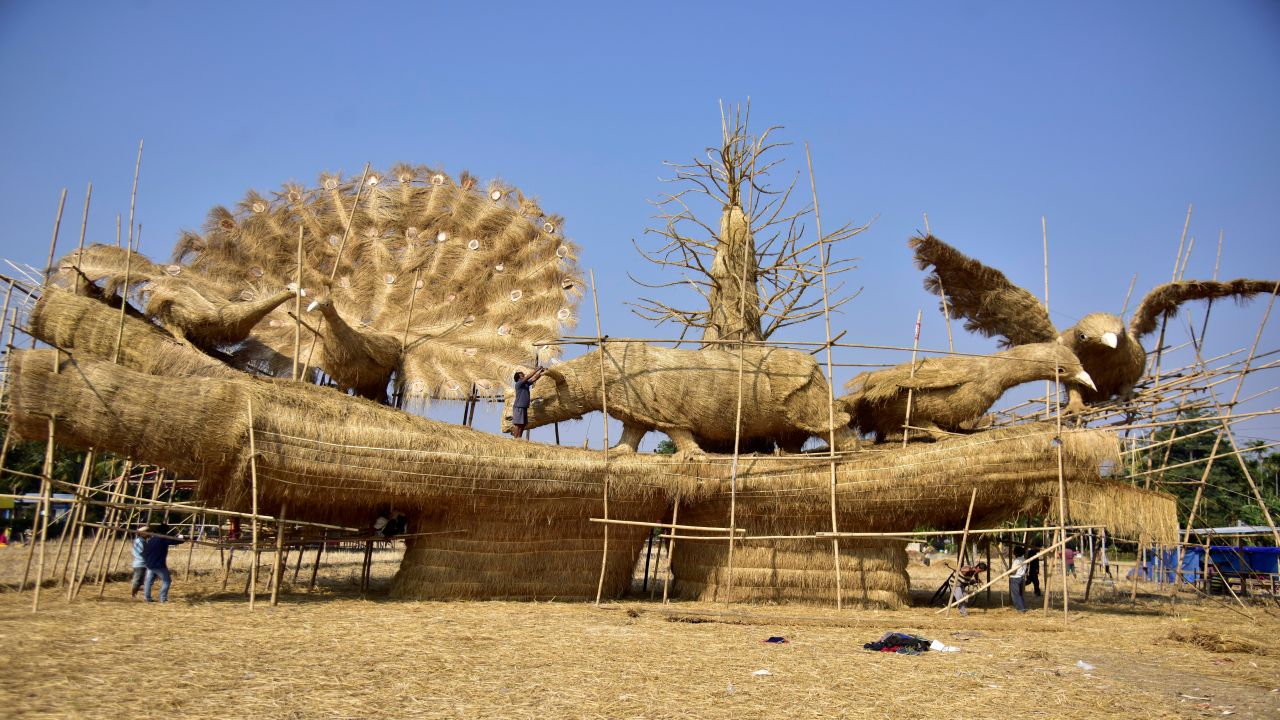
A worker prepares a makeshift cottage called "Bhelaghar", which is made of bamboo and straw, as part of celebrations ahead of the Magh Bihu festival in Morigaon district, in the northeastern state of Assam, India, January 4, 2019. REUTERS/Anuwar Hazarika
Uruka also sees people of the village fishing together, and their catch is then cooked into delicacies for the Uruka feast.
Another interesting feature of this festival is the erection of Meji – a towering heap of bamboo, wood and hay. On the day of the Bihu, the Meji is burned with offerings of ghee, rice, pulses and even some prepared snacks. For some Assamese communities, the burning of Meji also signifies ancestor worship.
The Meji burning also involves placing a bamboo filled with water in the heap. It burns with an explosion, which is meant to signify the end of winter and the beginning of Magh.
Special food of Magh Bihu
Apart from the rituals, Magh Bihu is also known for its association with special food items that are prepared for the day. The main variety of these delicacies is pithas. These are pastries prepared with rice flour, which is flattened and filled with various types of stuffings. These may include coconut and jaggery or sesame. The pithas are then steamed. A popular variety of pitha is the one that is fried.
The sunga pitha is a special variety where the pitha batter is filled into bamboo shoots, which are then roasted over fire. Once the outer shell cracks, it is removed to reveal a well-cooked delicacy.
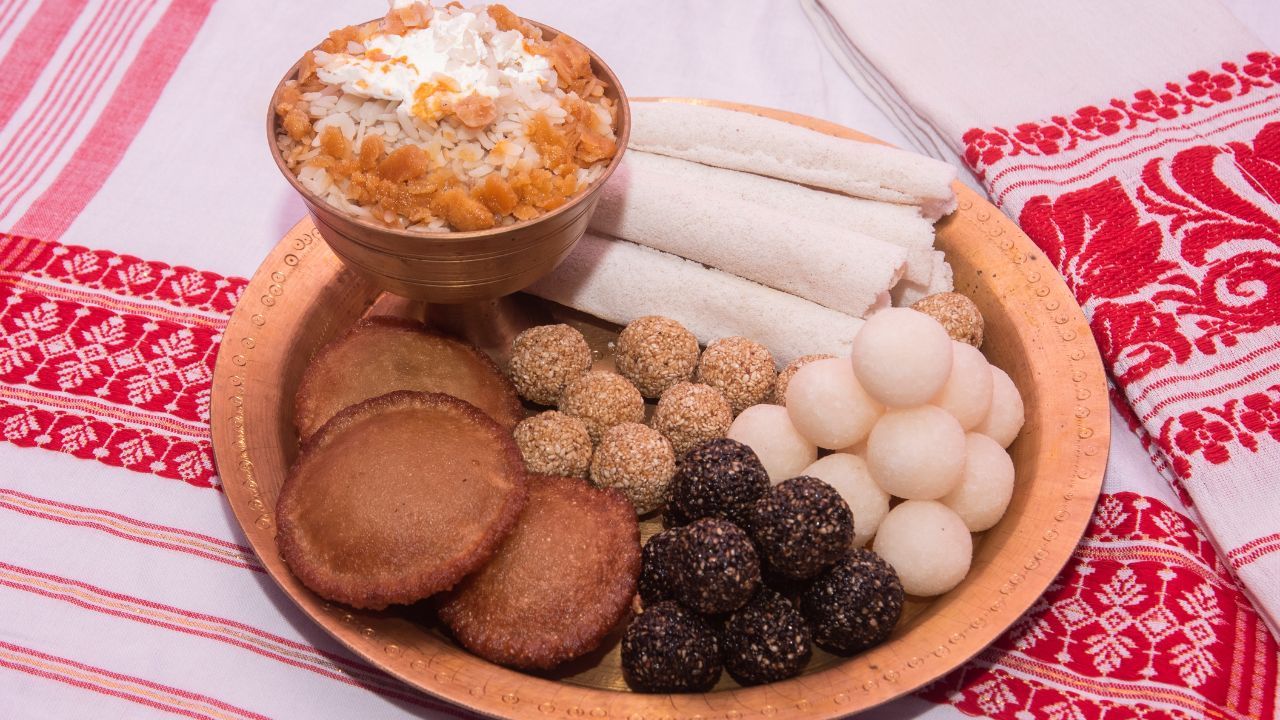
Image: Canva
Jolpan (set meals) are another feature of the festival’s food. Various combinations of delicious food items are served and eaten on the day. This could include Sandoh-guri (porridge) and komal-saul (made with rice).
This is a festival to celebrate nature’s bounty and express gratitude to the elders.
/images/ppid_a911dc6a-image-177101752951095973.webp)




/images/ppid_a911dc6a-image-177101403147018469.webp)
/images/ppid_a911dc6a-image-177101053501199609.webp)
/images/ppid_59c68470-image-177101003680064644.webp)