/images/ppid_59c68470-image-178023502983746768.webp)


/images/ppid_59c68470-image-17799875350212177.webp)
/images/ppid_a911dc6a-image-178003286555380592.webp)
What is the story about?
Aiming to foster a holistic environment in and around tourist sites in various cities, the Centre has envisioned creation of destination management authorities, 100 to begin with, across the country, which would be administered by state-level officials, Union Tourism Minister Gajendra Singh Shekhawat has said.
In an exclusive interview to PTI Videos on Wednesday, he also said that the aim of this move is to not just build a sense of ownership for heritage and other tourism sites among all stakeholders associated with a destination, but also promote a sense of ’jan andolan’ and ’jan bhagidari’ (mass involvement) among the local community.
Historic cultural sites in India, beyond the centrally protected monuments (currently 3,686 across the country), despite theirs immense tourism potential, often fail to draw tourists in large numbers due to encroachment, congestion and/or lack of civic amenities in the areas adjoining these sites.
Centrally protected monuments which are maintained by the Archaeological Survey of India (ASI) have a 100-metre prohibited zone around such sites, and a further 200-metre of a regulated zone from the prohibited limits.
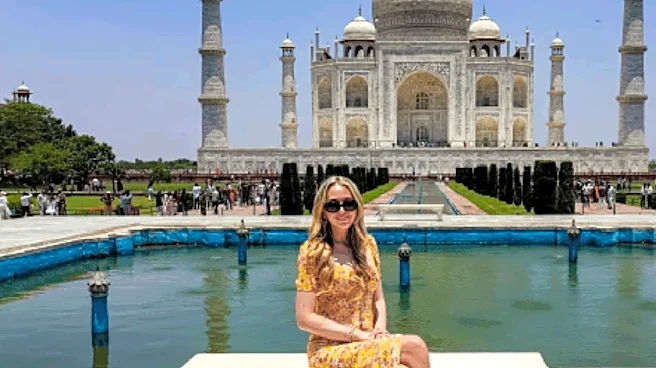
For ASI sites, ranging from the iconic Hampi ruins in south India to the Mughal-era marble marvel Taj Mahal in the north, the responsibility is of the Centre to maintain their sanctity.
The ASI, headed by a director general, comes under the purview of the culture ministry. However, the upkeep of state protected monuments is primarily the responsibility of states. And, because for such sites, there is no legal regulation as such to protect the areas around its periphery, so cases of encroachment like human dwellings and urban clusters spring up, Shekhawat, also the Union culture minister, said.
He emphasised that even in western countries, such issues come up, though among their citizens, there is a sense of social consciousness, a social awareness that ”this monument is an economic generator, an economic powerhouse for our city”. ”Therefore, it’s our responsibility to ensure that the environment around it (destination) is better. The entire ecosystem works for it,” the minister added. Shekhawat underlined that India as a society, also has to move forward in this direction.
”This kind of awareness is emerging across the country as well. But now, it’s not just the government’s responsibility to maintain the destination. Managing a destination is a responsibility of the destination. That’s why the prime minister has given us a new vision, a new path, suggesting creation of destination management authorities, which would help in synchronisation and synthesis of an entire ecosystem related to a destination,” he said.
The minister said the best example, perhaps of such destination management is the authority associated with Ekta Nagar, the site of the Statue of Unity near Kevadia in Gujarat.
The built environment of Ekta Nagar is different from other populated places, but having learned from that experience, ”we have urged states to create such DMOs (Destination Management Organisations) for their prime destinations,” he added. ”Two weeks ago, we held a meeting in which we sat with states’ secretaries, and detailed presentations were made. Why is it required, how it can be done, what will be its roadmap, what will be its implementation strategy, what kind of powers should they have, what kind of quasi-judicial powers should they have, all these points were shared with the states’ representatives,” the Union minister said.
”I’m glad the states have accepted it (the idea) with great enthusiasm that they will make them at their respective destinations. I think when it’s done, it will be a comprehensive one,” he added.
He cited the example of Indore, wherein all stakeholders came together and resolved to make their city the cleanest city in the country (as per the annual Swachh Survekshan rank).
Asked how many DMOs will be set up in the country and who will head them or manage them at the local level, Shekhawat said, ”States have to establish these DMOs. Each state has envisioned it in a different way. Some have decided to appoint an independent senior bureaucrat of that city.” ”I believe that once we start with the 100 or so travel destinations in the country, in some places, if we begin with most travelled destinations, then at such places, senior bureaucrats have been independently appointed as such officers. In some places, a district magistrate has been empowered by making him or her a DMO authority. Each state has implemented such a framework in its own place,” he said.
Shekhawat said in a country as diverse as India, it’s not possible to have the same system everywhere, and hence each state will establish DMOs for their chosen destinations according to the local framework.
In an exclusive interview to PTI Videos on Wednesday, he also said that the aim of this move is to not just build a sense of ownership for heritage and other tourism sites among all stakeholders associated with a destination, but also promote a sense of ’jan andolan’ and ’jan bhagidari’ (mass involvement) among the local community.
Historic cultural sites in India, beyond the centrally protected monuments (currently 3,686 across the country), despite theirs immense tourism potential, often fail to draw tourists in large numbers due to encroachment, congestion and/or lack of civic amenities in the areas adjoining these sites.
Centrally protected monuments which are maintained by the Archaeological Survey of India (ASI) have a 100-metre prohibited zone around such sites, and a further 200-metre of a regulated zone from the prohibited limits.
For ASI sites, ranging from the iconic Hampi ruins in south India to the Mughal-era marble marvel Taj Mahal in the north, the responsibility is of the Centre to maintain their sanctity.
The ASI, headed by a director general, comes under the purview of the culture ministry. However, the upkeep of state protected monuments is primarily the responsibility of states. And, because for such sites, there is no legal regulation as such to protect the areas around its periphery, so cases of encroachment like human dwellings and urban clusters spring up, Shekhawat, also the Union culture minister, said.
He emphasised that even in western countries, such issues come up, though among their citizens, there is a sense of social consciousness, a social awareness that ”this monument is an economic generator, an economic powerhouse for our city”. ”Therefore, it’s our responsibility to ensure that the environment around it (destination) is better. The entire ecosystem works for it,” the minister added. Shekhawat underlined that India as a society, also has to move forward in this direction.
”This kind of awareness is emerging across the country as well. But now, it’s not just the government’s responsibility to maintain the destination. Managing a destination is a responsibility of the destination. That’s why the prime minister has given us a new vision, a new path, suggesting creation of destination management authorities, which would help in synchronisation and synthesis of an entire ecosystem related to a destination,” he said.
The minister said the best example, perhaps of such destination management is the authority associated with Ekta Nagar, the site of the Statue of Unity near Kevadia in Gujarat.
The built environment of Ekta Nagar is different from other populated places, but having learned from that experience, ”we have urged states to create such DMOs (Destination Management Organisations) for their prime destinations,” he added. ”Two weeks ago, we held a meeting in which we sat with states’ secretaries, and detailed presentations were made. Why is it required, how it can be done, what will be its roadmap, what will be its implementation strategy, what kind of powers should they have, what kind of quasi-judicial powers should they have, all these points were shared with the states’ representatives,” the Union minister said.
”I’m glad the states have accepted it (the idea) with great enthusiasm that they will make them at their respective destinations. I think when it’s done, it will be a comprehensive one,” he added.
He cited the example of Indore, wherein all stakeholders came together and resolved to make their city the cleanest city in the country (as per the annual Swachh Survekshan rank).
Asked how many DMOs will be set up in the country and who will head them or manage them at the local level, Shekhawat said, ”States have to establish these DMOs. Each state has envisioned it in a different way. Some have decided to appoint an independent senior bureaucrat of that city.” ”I believe that once we start with the 100 or so travel destinations in the country, in some places, if we begin with most travelled destinations, then at such places, senior bureaucrats have been independently appointed as such officers. In some places, a district magistrate has been empowered by making him or her a DMO authority. Each state has implemented such a framework in its own place,” he said.
Shekhawat said in a country as diverse as India, it’s not possible to have the same system everywhere, and hence each state will establish DMOs for their chosen destinations according to the local framework.
/images/ppid_59c68470-image-178023503384179568.webp)

/images/ppid_59c68470-image-178020752264456683.webp)
/images/ppid_a911dc6a-image-178011342430333308.webp)

/images/ppid_a911dc6a-image-178020922360970789.webp)
/images/ppid_a911dc6a-image-17801244450108768.webp)