/images/ppid_59c68470-image-176813753748061782.webp)

Pongal 2026 is a lively four-day harvest festival deeply associated with Tamil culture. It will be celebrated from January 14 to 17, along with Makar Sankranti, a harvest festival observed all over India.
It is a tribute to nature, the God of the Sun (Surya), farmers, and cows for a bountiful harvest season and is marked by thankfulness, tradition, and get-togethers of the local community.
The key dates for Pongal 2026 are:
- Bhogi Pongal – January 13 (Tuesday)
- Thai Pongal (Main Day) – January 14 (Wednesday)
- Mattu Pongal – January 15 (Thursday)
- Kaanum Pongal – January 16 (Friday)
The festivities commence on January 13 with Bhogi Pandigai, considered a day of preparation for cleansing and revival. Household members in Telangana, Andhra Pradesh, and Tamil Nadu wake up early to thoroughly clean their homes, discard old and unnecessary things, and set bonfires that symbolise discarding the past and welcoming new things.
The main part of the event is preceded by the Bhogi Mantalu fire that symbolises the cultural purity. According to the Tamil solar calendar, the Sun's movement into the sign of Capricorn (Makara) aligns with the first day of Thai Pongal, thus making January 14 very favourable.
Timing and Auspicious Moments
The Sankranti moment, which occurs on Thai Pongal when the Sun enters the sign of Capricorn, is observed to be the most auspicious time for sacrifices and rituals. In 2026, this moment occurs in the afternoon, around 3:13 PM IST.
Devotees typically prepare the ritual Pongal meal around daybreak and present it soon after Sankranti to maximise benefits. Traditionally, celebratory music and prayers fill the air as colourful kolam (rangoli) decorates dwellings.
Rituals: From Bhogi to Kaanum
The first day, Bhogi Pongal, is dedicated to gratitude and rejuvenation. Families purge their houses, get rid of outdated or unnecessary goods, and ignite a bonfire to symbolically let go of the negative of the past and create room for success.
Thai Pongal is dedicated to giving homage to Lord Surya, the Sun God, for a bountiful crop. Freshly harvested rice, milk, and jaggery are cooked together in a painted clay pot. Families chant "Pongalo Pongal," praising wealth and success, as the milk boils over, a moment known as "pongal". Offerings are given to Surya before the food is distributed among family members and neighbours.
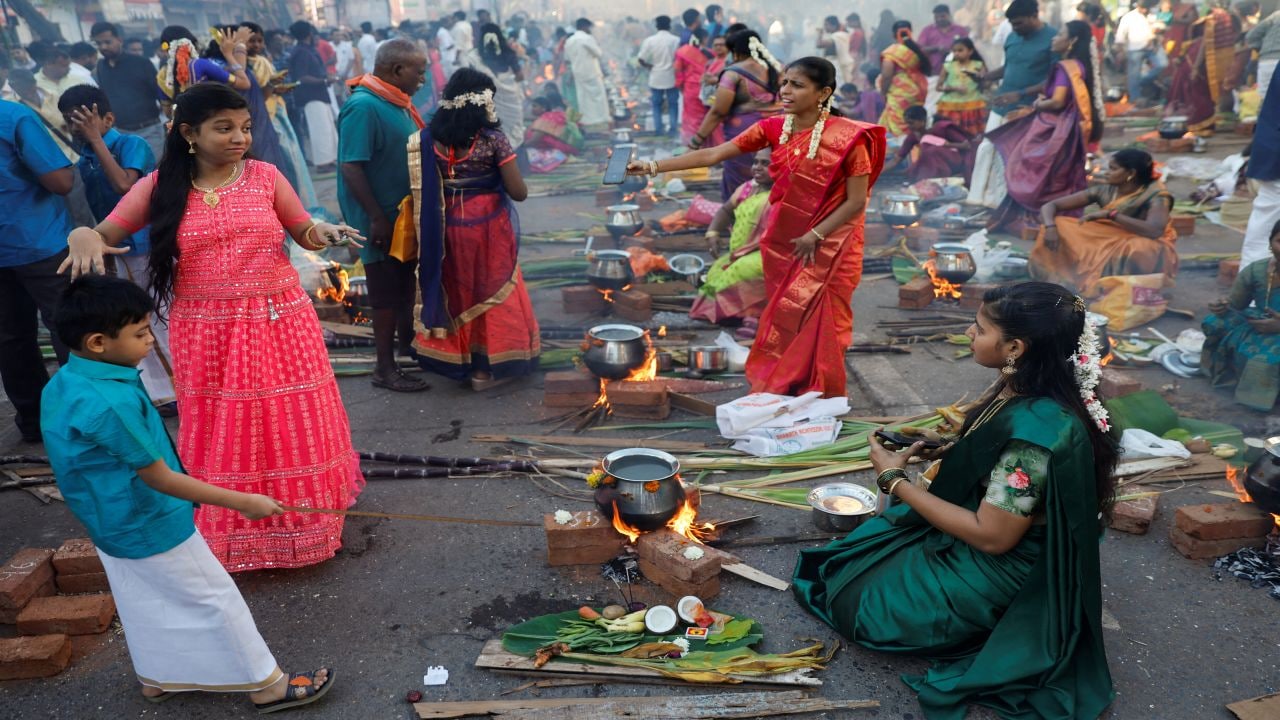
Devotees cook a rice dish as an offering to the Hindu sun god during Pongal celebrations on a street in Mumbai, India, January 15, 2024. REUTERS/Francis Mascarenhas
Mattu Pongal, the third day, honours the cattle that are vital to farming life, including cows, bulls, and bullsocks. The animals are fed special foods, given baths, and decorated with garlands and painted horns. "Jallikattu" and other traditional bull-taming games are included in the festivities in various places.
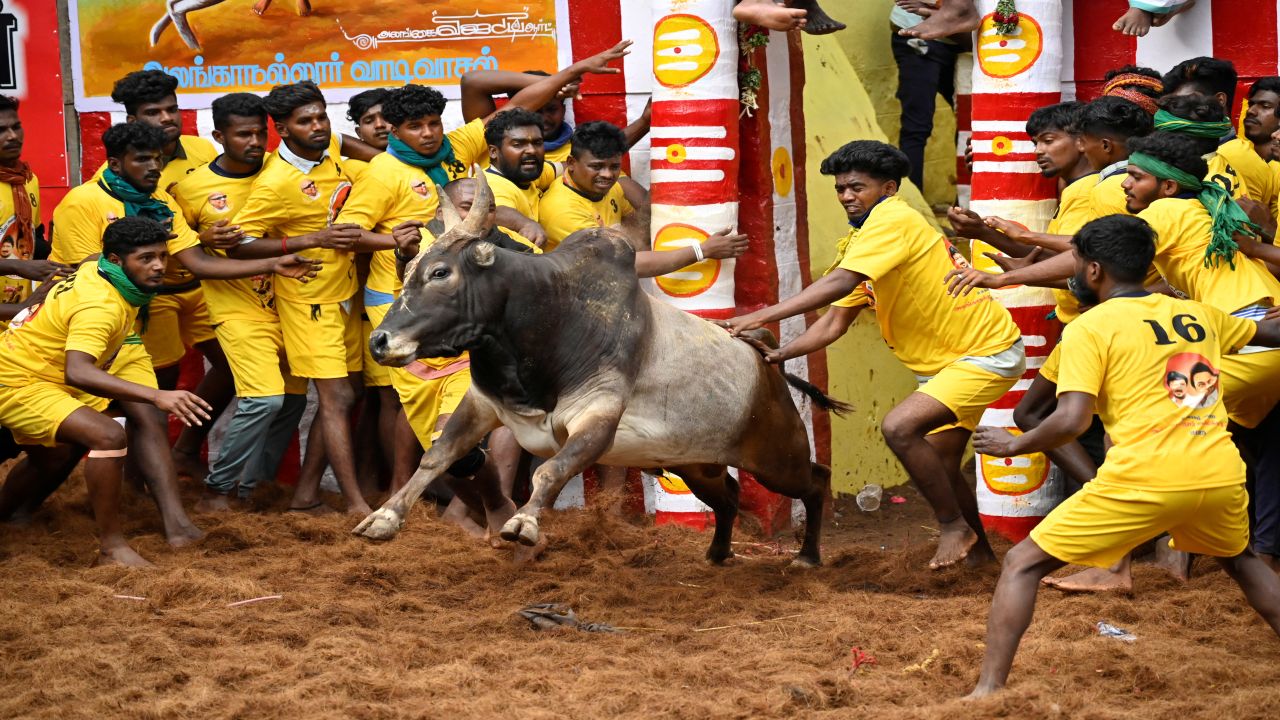
Villagers try to control a bull during a bull-taming festival, known as "Jallikattu" and is a part of south India's harvest festival of Pongal, on the outskirts of Madurai town, in the southern state of Tamil Nadu, India, January 16, 2025. REUTERS/Riya Mariyam R
The last day, Kaanum Pongal, is celebrated with social visits, trips, and family get-togethers. After days of ceremony and eating, it is a time to unwind, exchange gifts, and deepen ties within the community.
Significance of Pongal
Pongal is a symbol of respect for the natural world, the abundance of agriculture, and the life-giving force of the Sun. The Tamil term pongu, which means "to overflow," is the source of the festival's name, which expresses hopes for success, wealth, and life's boundless pleasures.
Pongal is a colourful expression of cultural history and seasonal cycles, a fusion of spirituality, community, and tradition that is extensively observed not just in Tamil Nadu but also by Tamil communities in Sri Lanka, Malaysia, Singapore, and other places.
/images/ppid_a911dc6a-image-177094683533915067.webp)

/images/ppid_59c68470-image-177094509331581965.webp)
/images/ppid_59c68470-image-177094504615411398.webp)
/images/ppid_a911dc6a-image-177094403738091205.webp)