/images/ppid_59c68470-image-178957002862199789.webp)




What is the story about?
Chanakya, the Mumbai-based textile and embroidery house, is marking 40 years of craft and creative practice with a series of exhibitions in the city. Founded in 1986, Chanakya has grown from an embroidery atelier into a global creative practice, with enduring relationships with more than 50 international fashion houses.
One of the highlights of Chanakya's anniversary programme is En Route, an exhibition that explores mapping and discovery between the Vatican Apostolic Library in Rome and the Dr Bhau Daji Lad Museum in Mumbai. The works were presented at the Vatican Apostolic Library in 2025 and are now being shown in India for the first time. At the centre of the exhibition are four scroll-like works that interpret, through cartographic impressions and embroidery techniques, the journeys of six intrepid nineteenth-century women who challenged conventions.
Karishma Swali, Creative Director of Chanakya International and Chanakya School of Craft, explains that the scrolls were designed to map not just the women's journeys, but also the clothes they wore and the traditions of their time. “What we created were these wonderful, long, scroll-like maps. They're about 5 metres each, and each of them sort of maps the journey, but also maps what they were wearing at the time, what traditions existed within those times.”
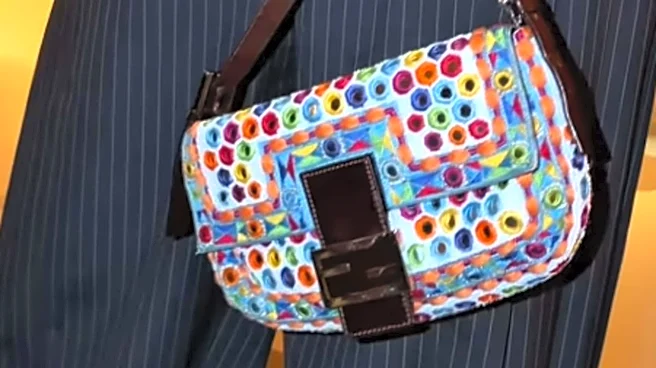
Also read: Kiran Mazumdar-Shaw, Harsh Goenka have a problem with Fendi's ₹8.3 lakh bag
The exhibition also features two globes, each representing an idea central to Chanakya's practice. One is titled Vasudhaiva Kutumbakam, referring to the idea of one world family and the interconnectedness of people. The second, Aantarik Vishwa, looks inward. It was created by women from the Chanakya School and Foundation as their interpretation of their own worlds, incorporating ideas of rivers, temples, home and finding one's own voice.
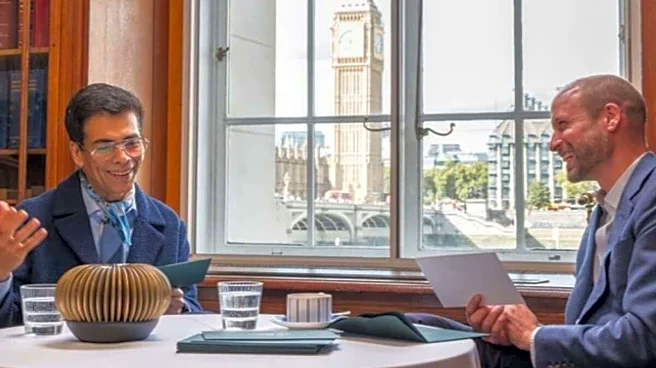
The project also has strong links to the international fashion world. Maria Grazia Chiuri, Chief Creative Officer at Fendi, was instrumental in bringing the project to Chanakya. The collaboration grew out of a shared interest in India's rich textile heritage and the preservation and evolution of traditional techniques. Maria Grazia Chiuri says, “This incredible heritage that is in India, but also in Italy. But some technique we lost, so immediately I says Karishma, we have to find a way to move this tradition in modern way for the future.”
The collaboration reflects Chanakya's wider approach of taking traditional craft techniques and placing them within contemporary creative contexts. The organisation has worked with more than 50 international fashion houses over the years.
The women featured in the scrolls are central to the exhibition's narrative. One of the stories that stayed with Swali was that of Gertrude Bell, whose journey and experiences are represented through the textile work. “An incredible story that stayed was Gertrude Bell, because she chose to do it on a bicycle, and no one used the bicycle at that time. And she encountered challenges,” Swali added.
The story also became a way of looking at how clothing and fashion intersected with the lives of these women. As Chiuri noted in the exhibition conversation, some of these women had to change the way they dressed and adapt their clothing to navigate unfamiliar environments.
Also read: Why does Oktoberfest still have only six beer breweries?
There is another layer to the exhibition: the women who created the work. The Chanakya Foundation was established in 2015, followed by the Chanakya School of Craft in 2016. The School provides formal craft education to women, with free tuition and materials, along with a monthly travel honorarium. Its 18-month curriculum covers more than 300 craft techniques. Since its founding, the School has educated more than 1,400 women.
This creates a parallel between the women whose journeys are being documented and the women who are documenting those journeys through craft. Chanakya was founded by Vinod Shah in Mumbai in 1986, with a focus on the transmission and evolution of craft.
Today, the organisation spans fashion, art, education, research and textile-making. It has also developed a conservation unit and an archive containing around 150,000 material explorations and 10,000 historical textiles and artefacts.
The 40th anniversary programme features three exhibitions in Mumbai — En Route at the Dr Bhau Daji Lad Museum, Garden of Gestures at Chanakya Ateliers, and Belong at Experimenter-Colaba.
For Chanakya, the journey from the Vatican to Mumbai is also a reflection of its larger philosophy: that craft is not static. It can preserve history, tell stories and continue to evolve through the hands of a new generation.
One of the highlights of Chanakya's anniversary programme is En Route, an exhibition that explores mapping and discovery between the Vatican Apostolic Library in Rome and the Dr Bhau Daji Lad Museum in Mumbai. The works were presented at the Vatican Apostolic Library in 2025 and are now being shown in India for the first time. At the centre of the exhibition are four scroll-like works that interpret, through cartographic impressions and embroidery techniques, the journeys of six intrepid nineteenth-century women who challenged conventions.
Karishma Swali, Creative Director of Chanakya International and Chanakya School of Craft, explains that the scrolls were designed to map not just the women's journeys, but also the clothes they wore and the traditions of their time. “What we created were these wonderful, long, scroll-like maps. They're about 5 metres each, and each of them sort of maps the journey, but also maps what they were wearing at the time, what traditions existed within those times.”
Also read: Kiran Mazumdar-Shaw, Harsh Goenka have a problem with Fendi's ₹8.3 lakh bag
The exhibition also features two globes, each representing an idea central to Chanakya's practice. One is titled Vasudhaiva Kutumbakam, referring to the idea of one world family and the interconnectedness of people. The second, Aantarik Vishwa, looks inward. It was created by women from the Chanakya School and Foundation as their interpretation of their own worlds, incorporating ideas of rivers, temples, home and finding one's own voice.
The project also has strong links to the international fashion world. Maria Grazia Chiuri, Chief Creative Officer at Fendi, was instrumental in bringing the project to Chanakya. The collaboration grew out of a shared interest in India's rich textile heritage and the preservation and evolution of traditional techniques. Maria Grazia Chiuri says, “This incredible heritage that is in India, but also in Italy. But some technique we lost, so immediately I says Karishma, we have to find a way to move this tradition in modern way for the future.”
The collaboration reflects Chanakya's wider approach of taking traditional craft techniques and placing them within contemporary creative contexts. The organisation has worked with more than 50 international fashion houses over the years.
The women featured in the scrolls are central to the exhibition's narrative. One of the stories that stayed with Swali was that of Gertrude Bell, whose journey and experiences are represented through the textile work. “An incredible story that stayed was Gertrude Bell, because she chose to do it on a bicycle, and no one used the bicycle at that time. And she encountered challenges,” Swali added.
The story also became a way of looking at how clothing and fashion intersected with the lives of these women. As Chiuri noted in the exhibition conversation, some of these women had to change the way they dressed and adapt their clothing to navigate unfamiliar environments.
Also read: Why does Oktoberfest still have only six beer breweries?
There is another layer to the exhibition: the women who created the work. The Chanakya Foundation was established in 2015, followed by the Chanakya School of Craft in 2016. The School provides formal craft education to women, with free tuition and materials, along with a monthly travel honorarium. Its 18-month curriculum covers more than 300 craft techniques. Since its founding, the School has educated more than 1,400 women.
This creates a parallel between the women whose journeys are being documented and the women who are documenting those journeys through craft. Chanakya was founded by Vinod Shah in Mumbai in 1986, with a focus on the transmission and evolution of craft.
Today, the organisation spans fashion, art, education, research and textile-making. It has also developed a conservation unit and an archive containing around 150,000 material explorations and 10,000 historical textiles and artefacts.
The 40th anniversary programme features three exhibitions in Mumbai — En Route at the Dr Bhau Daji Lad Museum, Garden of Gestures at Chanakya Ateliers, and Belong at Experimenter-Colaba.
For Chanakya, the journey from the Vatican to Mumbai is also a reflection of its larger philosophy: that craft is not static. It can preserve history, tell stories and continue to evolve through the hands of a new generation.




/images/ppid_59c68470-image-178953752744233488.webp)