/images/ppid_59c68470-image-17891975284205884.webp)




What is the story about?
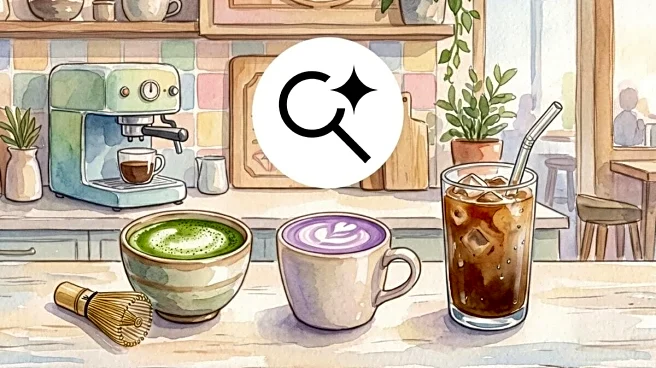
Walk into a café in Mumbai, Delhi or Bengaluru today and chances are the menu has moved well beyond the usual coffee-and-tea lineup. Don’t get me wrong, they’re still very much around and so is matcha, but the familiar green drink now shares space with shades of purple and brown: ube lattes and hōjicha teas that are quickly becoming part of the conversation.
So, what exactly are these new contenders? Ube is a naturally purple yam popular in Filipino cuisine, particularly in desserts, with a mildly sweet, creamy flavour. Hōjicha, on the other hand, is a Japanese green tea that is roasted, giving it a deeper, toastier and nuttier taste than the more grassy and intense matcha. One is colourful and sweet, the other is earthy and mellow, but both are now finding their way into lattes, desserts and increasingly adventurous café menus.
For Gen Z, the café order has become less about sticking to one familiar favourite and more about discovering what is new. A drink needs to taste good, of course, but being unusual, customisable and Instagram-friendly doesn't hurt either.
And while matcha may have started the Japanese tea wave, consumers are now exploring what else the category has to offer.
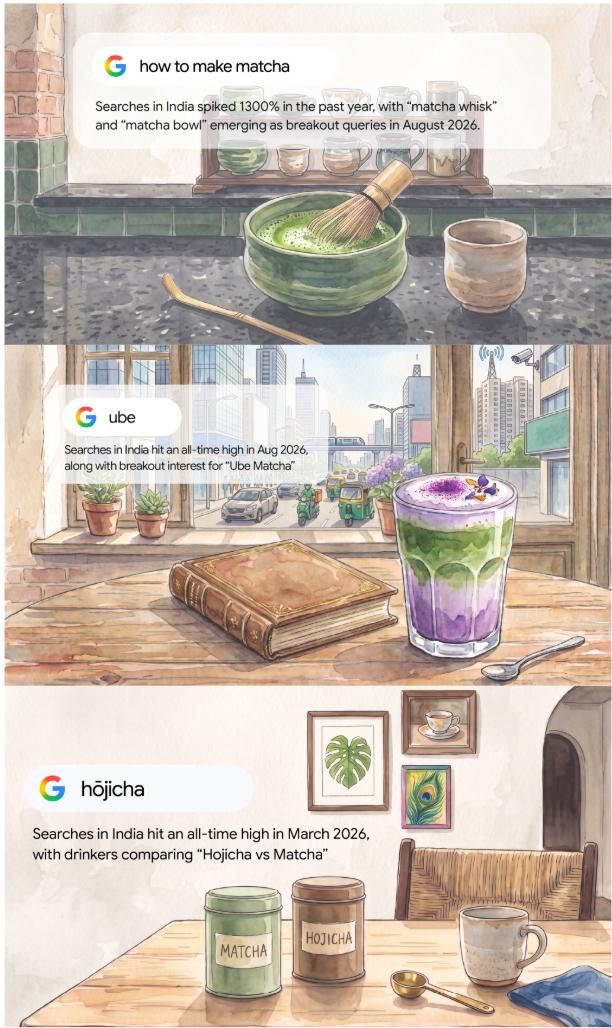
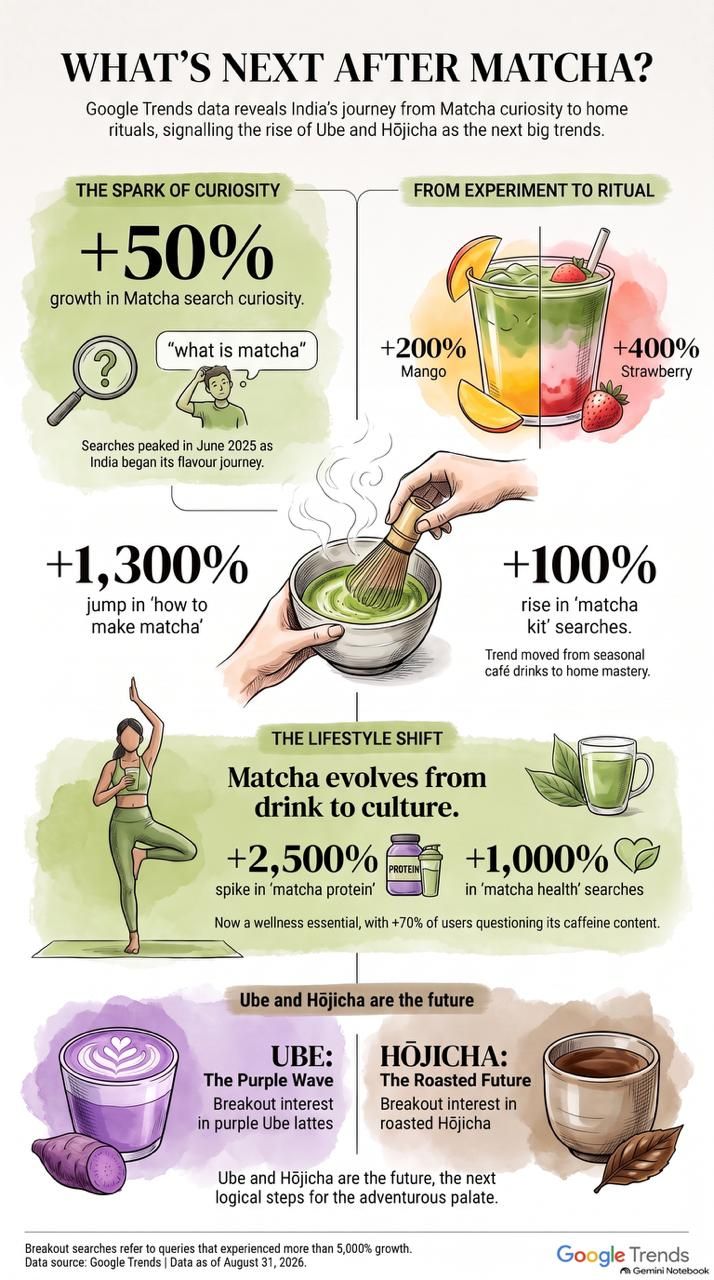
According to Google Trends, matcha continues to command strong curiosity in India, with searches for “how to make matcha” jumping 1,300% over the past year. Searches around matcha whisks and bowls also saw breakout interest in August 2026, suggesting that the trend has moved beyond cafés and into consumers' homes.
But perhaps the more interesting shift is what people are searching for alongside it.
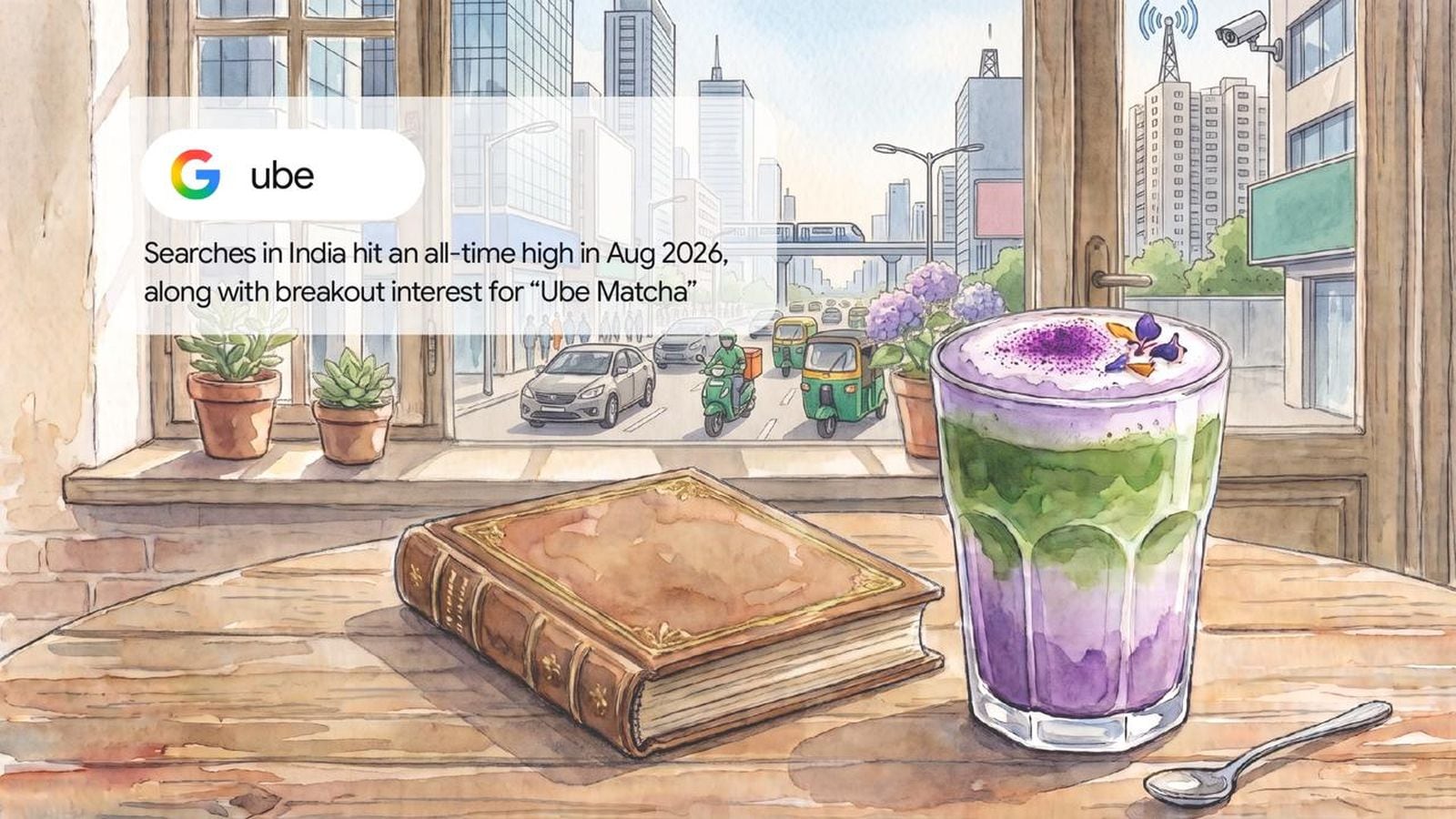
Search interest is also building around ube lattes, ube cafés and combinations such as ube matcha and ube coconut.
The ube-matcha combination is particularly telling. Rather than completely abandoning the drink that started the craze, consumers are finding ways to remix it.
That is perhaps how Gen Z's beverage culture works best: one trend doesn't necessarily replace another; it becomes an ingredient in the next one.
If ube is bringing colour to the café counter, hōjicha is taking a quieter route. And Indian consumers appear to be getting curious.
Hōjicha hit an all-time search high in March 2026, followed by another breakout surge in August. Searches for “hōjicha vs matcha”, “what is hōjicha” and “hōjicha latte” are also gaining traction.
The “hōjicha vs matcha” search is perhaps the clearest sign of all. Consumers are no longer simply discovering Japanese tea; they are comparing their options.
Matcha has arguably moved beyond the traditional definition of a food trend. It has become part of a wider lifestyle culture showing up in drinks, desserts, beauty products, fashion and even home rituals.
Data reflects that expansion. Searches around matcha have moved far beyond simply finding a latte, with consumers looking up ways to make it at home, the tools needed to prepare it and increasingly creative flavour combinations.
For Gen Z, novelty is part of the appeal. Today's strawberry matcha could be tomorrow's ube latte, followed by a hōjicha latte the next week. The drink becomes something to discover, customise, photograph, share and eventually recreate at home.
That's why the next big café trend may not be about finding the one drink that replaces matcha.
It may simply be about finding the next one worth trying.
For now, matcha still has the crown. But ube and hōjicha are making a pretty strong case for a seat at the table.
So, what exactly are these new contenders? Ube is a naturally purple yam popular in Filipino cuisine, particularly in desserts, with a mildly sweet, creamy flavour. Hōjicha, on the other hand, is a Japanese green tea that is roasted, giving it a deeper, toastier and nuttier taste than the more grassy and intense matcha. One is colourful and sweet, the other is earthy and mellow, but both are now finding their way into lattes, desserts and increasingly adventurous café menus.
For Gen Z, the café order has become less about sticking to one familiar favourite and more about discovering what is new. A drink needs to taste good, of course, but being unusual, customisable and Instagram-friendly doesn't hurt either.
And while matcha may have started the Japanese tea wave, consumers are now exploring what else the category has to offer.
According to Google Trends, matcha continues to command strong curiosity in India, with searches for “how to make matcha” jumping 1,300% over the past year. Searches around matcha whisks and bowls also saw breakout interest in August 2026, suggesting that the trend has moved beyond cafés and into consumers' homes.
But perhaps the more interesting shift is what people are searching for alongside it.
Search interest is also building around ube lattes, ube cafés and combinations such as ube matcha and ube coconut.
The ube-matcha combination is particularly telling. Rather than completely abandoning the drink that started the craze, consumers are finding ways to remix it.
That is perhaps how Gen Z's beverage culture works best: one trend doesn't necessarily replace another; it becomes an ingredient in the next one.
If ube is bringing colour to the café counter, hōjicha is taking a quieter route. And Indian consumers appear to be getting curious.
Hōjicha hit an all-time search high in March 2026, followed by another breakout surge in August. Searches for “hōjicha vs matcha”, “what is hōjicha” and “hōjicha latte” are also gaining traction.
The “hōjicha vs matcha” search is perhaps the clearest sign of all. Consumers are no longer simply discovering Japanese tea; they are comparing their options.
Matcha has arguably moved beyond the traditional definition of a food trend. It has become part of a wider lifestyle culture showing up in drinks, desserts, beauty products, fashion and even home rituals.
Data reflects that expansion. Searches around matcha have moved far beyond simply finding a latte, with consumers looking up ways to make it at home, the tools needed to prepare it and increasingly creative flavour combinations.
For Gen Z, novelty is part of the appeal. Today's strawberry matcha could be tomorrow's ube latte, followed by a hōjicha latte the next week. The drink becomes something to discover, customise, photograph, share and eventually recreate at home.
That's why the next big café trend may not be about finding the one drink that replaces matcha.
It may simply be about finding the next one worth trying.
For now, matcha still has the crown. But ube and hōjicha are making a pretty strong case for a seat at the table.