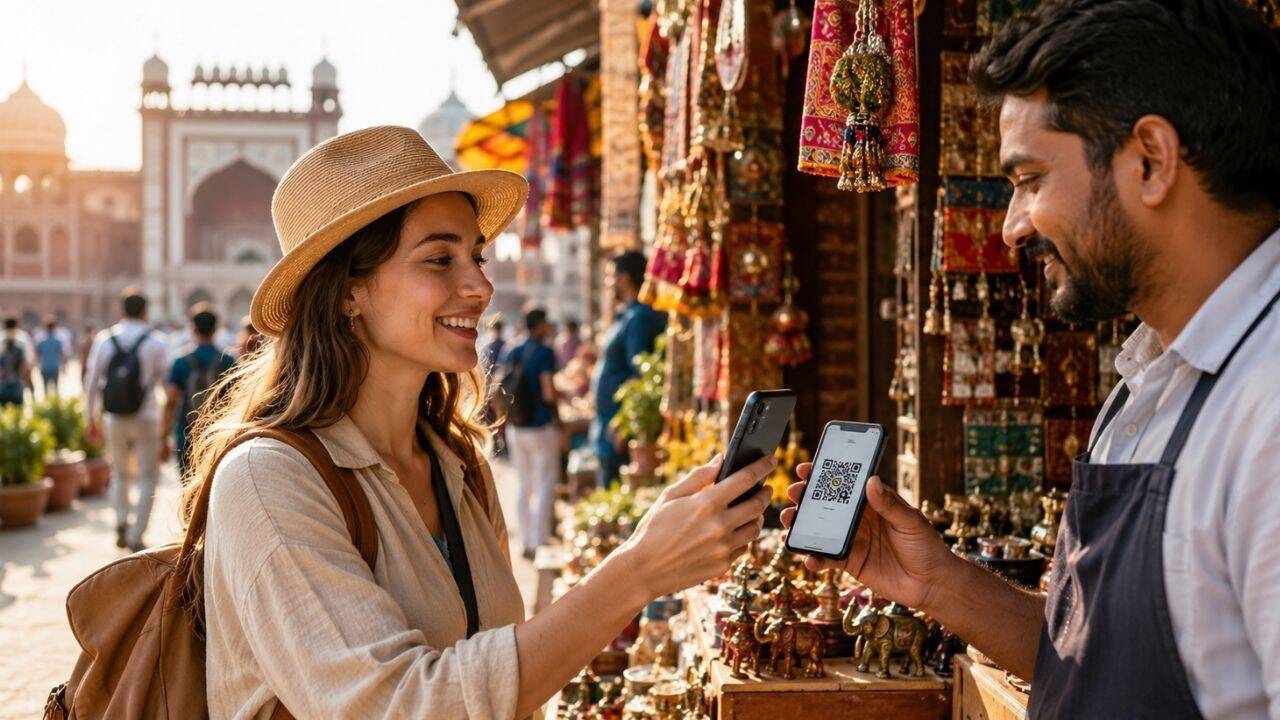








Travelling in India just got a lot easier for foreign visitors! This comes in as a new UPI Global Reverse Acceptance system has been launched, which lets
international tourists pay Indian shopkeepers and businesses using the payment apps they already use back home. Meaning, there is no need to open an Indian bank account or download a local payment app. This development comes as a big shift from how things usually work, especially when foreign travellers had to rely mostly on cash or cards, deal with currency exchange counters and often struggle at small shops that only accepted UPI. So, How Does The Payment System Work? The idea is pretty simple. Foreign tourists can scan a UPI QR code at any participating merchant in India using their own home-country payment app. The transaction is then processed digitally in the background, and the traveller pays in the same easy way they would at home. The best bit? You need no paperwork, no local SIM-linked app, and no need to carry large amounts of cash. Also Read: The Self-Proclaimed Micronation of Verdis has a 21-Year-old President and its Own Passport This move comes from NPCI International, the arm of the National Payments Corporation of India that works on taking UPI beyond Indian borders. The goal is to connect India's payment network with payment systems used in other countries, so that money can move smoothly between them. Right now, the service is open to tourists from a set list of countries that are already part of this global payments network. These include Singapore, the UAE, Nepal, Bhutan, Mauritius, Sri Lanka, Qatar and France. Travellers from these countries can start using the service as soon as they land in India, right from street food stalls to retail stores that display a UPI QR code. The Verdict For tourists, the benefits are multiple. They spend less time worrying about currency exchange, carry less cash, and don't need to set up local banking arrangements just for a short trip. Payments become as quick as tapping a phone. Also Read: Ravi Kishan Says Gorakhpur Feels Like Spain: 5 Places That Prove The City Has Its Own European Charm Also, for Indian merchants, this opens up a new customer base without any extra effort. Shopkeepers don't need new equipment or a separate system - their existing UPI QR code works for both Indian and foreign customers. This could be especially useful in tourist-heavy cities and markets, where a large share of daily footfall comes from international visitors. The launch also fits into a bigger picture. UPI started out in 2016 as a domestic digital payment tool, built mainly to make transactions easier within India. In under ten years, it has grown into one of the backbones of India's Digital Public Infrastructure, handling an enormous number of real-time transactions every day.