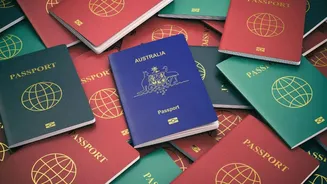









Henley Passport Index: If you’ve ever wondered how far your passport can take you without the hassle of applying for a visa, the latest Henley Passport Index 2026
has the answers, and for India, the news is slightly better than last year. In 2025, India had fallen five places to 85th position but in 2026, as per the latest research by Henley Passport Index, India now ranks 80th worldwide, with visa-free access to 55 destinations, currently on par with Algeria. Strongest Passport In The World Goes To... Unsurprisingly, Singapore continues its reign at the top, granting its citizens visa-free or visa-on-arrival access to 192 countries, making it the most powerful passport in the world. Close behind, Japan and South Korea share second place with access to 188 destinations. Third place is held jointly by Denmark, Luxembourg, Spain, Sweden, and Switzerland, each offering access to 186 destinations. A large group of European nations—including France, Germany, and Netherlands—occupy fourth place with 185 destinations, while the top five is rounded off by countries such as United Arab Emirates with 184 destinations. At the opposite end of the spectrum, Afghanistan remains the weakest passport in the world. Afghan citizens can access just 24 destinations visa-free, underscoring the vast disparity in global mobility rights. Pakistan also improved five spots in the 2026 ranking, from 103 in 2025 to 98 in 2026, but continues to offer access to just 31 destinations. The Big Picture For Indian Travellers India’s improved ranking is a positive sign, especially as bilateral agreements and regional diplomacy continue to evolve. While the jump in rank reflects steady improvement, it comes with mixed signals. In 2025, Indian passport holders could travel visa-free to 57 destinations, slightly more than this year’s count despite the lower ranking. This highlights how global passport standings can shift year to year as other countries renegotiate access or improve their own mobility scores. For now, Indian travellers will still need careful planning, paperwork, and patience—but the slow upward trend suggests that broader travel access, while distant, is not entirely out of reach.