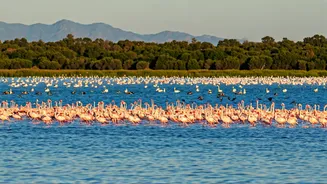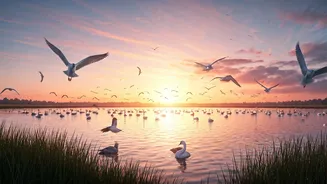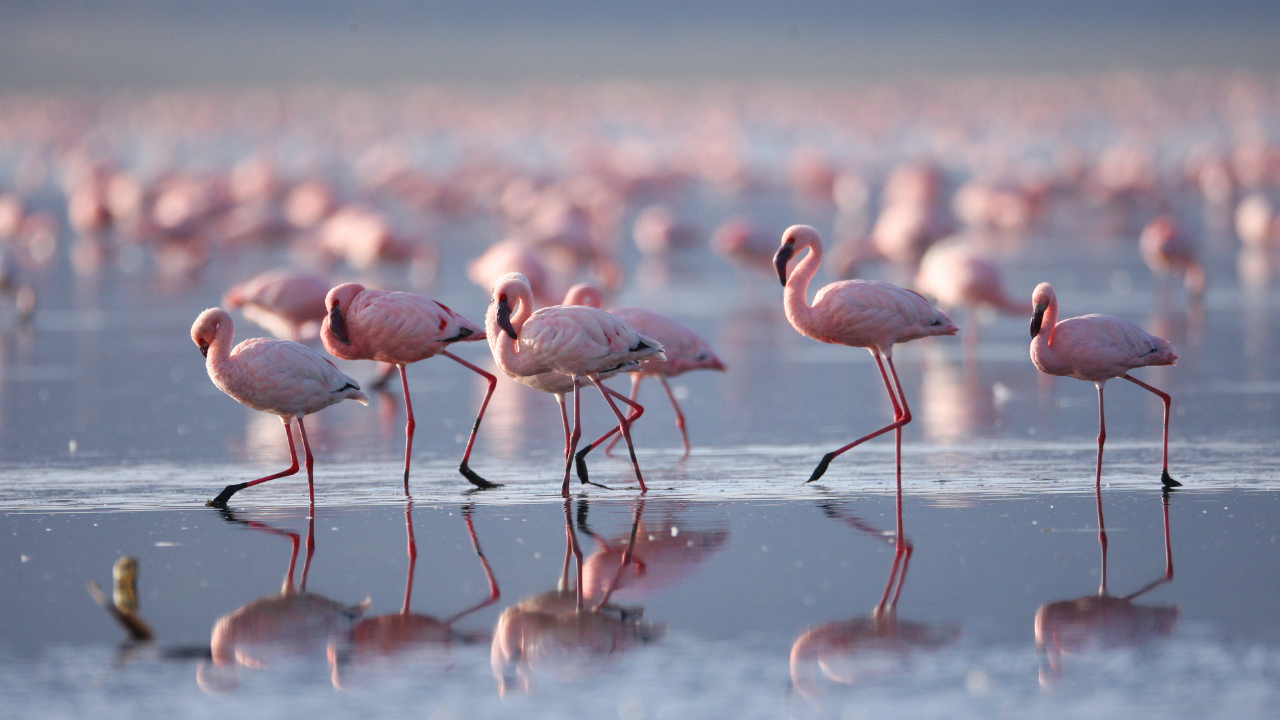

This winter, Sambhar Lake in Rajasthan has transformed into a scene straight out of a dream. The salt lake is alive with thousands of migratory flamingos,
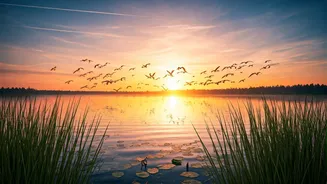
their pink feathers softening the water’s surface. It’s strange—so calm and quiet yet absolutely buzzing with life. Sambhar sits not far from Jaipur. It’s the biggest inland salt lake in India, and every year, birds fleeing the bitter cold up north settle here for a while. This year, though, flamingos have flocked to the lake in even greater numbers. Huge groups wade through the shallow, salty water, their reflections turning the lake into a living painting. The flamingos don’t have an easy journey. Many start in Russia, Siberia, Mongolia—places that feel worlds away. They follow the Central Asian Flyway, a major migration route. Sambhar Lake is a crucial stop along the way. Here, they find food, safety, and a place to rest before moving on. This year, the lake is in especially good shape. More rain means higher water levels, and there’s plenty of algae and tiny organisms for the birds to eat. Both Greater and Lesser Flamingos seem right at home. They’re joined by flocks of ducks and other migratory birds. The main wave usually arrives in October, and this season, the numbers are impressive—people estimate between 200,000 and 250,000 flamingos are scattered across the lake. Of course, this spectacle draws in birdwatchers, photographers, and anyone with a love for nature. You’ll see them lining the banks, watching quietly as flamingos feed, rest, and sometimes all lift off at once, so the sky and water both light up pink. There’s a kind of peace to it—a touch of magic people remember long after they leave. But Sambhar Lake is more than just visually stunning. It’s a Ramsar wetland site, recognised around the world for its importance to wildlife. Every winter, this place acts as a lifeline for these migratory birds, a habitat they rely on to survive. With the flamingos here, Sambhar turns into a reminder of how quietly spectacular nature can be. For a few months each year, the harsh desert blushes pink, and anyone who sees it gets a glimpse of something rare—and unforgettable.