







What is the story about?
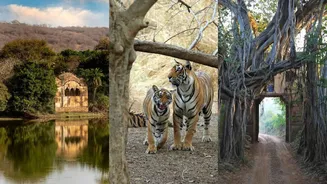
One of India’s most celebrated wildlife destinations, Ranthambore National Park is where history, wilderness, and big-cat sightings come together. Located
in Rajasthan’s Sawai Madhopur district, the park is best known for its high density of Bengal tigers as well as ruins and dry deciduous forests that make animal spotting relatively easier compared to other reserves like Corbett National Park. Here’s a clear, no-fluff guide that answers all your questions about Ranthambore National Park
When Is The Best Time To Visit Ranthambore National Park?
As is true for most national parks in India, the best time to visit Ranthambore is from October to April. The park opens in October after the monsoon and remains accessible until June, but the most balanced wildlife experience is between November and April. Rising temperatures around March and April push animals towards water bodies making tiger sightings improve significantly. While summer months of May and June bring peak sightings, it often gets too hot for gypsy and canter rides.Is Ranthambore Open In Summer?
Yes, May and June offer some of the best tiger sightings, but temperatures can exceed 45°C. Safaris are shorter and physically demanding, but rewarding for serious wildlife enthusiasts.Which Safari Zones Are Best For Tiger Spotting In Ranthambore?
Ranthambore is divided into 10 safari zones, each with distinct terrain and tiger territories. All zones are allocated randomly at booking, but some have earned reputations for consistent sightings.Zone 3: The most popular tiger zone
Often considered the star zone, Zone 3 is known for lakes, open grasslands, and historic structures. It has been home to some of Ranthambore’s most photographed tigers over the years, including Machli, who was called the Queen of Ranthambore.
Zone 2: Scenic and promising
Rocky terrain and dense forests define Zone 2, making sightings slightly more challenging, but rewarding when they happen.
Zone 4 and Zone 5: Balanced and reliable
These zones are excellent for first-time visitors. Zone 4 offers dramatic landscapes near Rajbagh ruins, while Zone 5 combines forest cover with open areas near lakes.
Buffer zones (6–10): Worth considering
Once considered secondary, buffer zones have improved significantly due to tiger relocation and growing populations. They’re less crowded and often deliver surprise sightings but are, at the end of the day, very sparse when it comes to forests.
How To Book A Ranthambore Safari?
Safari bookings are managed by the Rajasthan Forest Department and open 90 days in advance. The regular safari is three-hour long and happens twice a day, morning and evening. You can either opt for a jeep safari (6-seater, INR 2000 per passenger) or a canter safari (20-seater, INR 1400 per passenger). The latter is certainly cheaper.Where To Stay In Ranthambore National Park?
Accommodation around Ranthambore ranges from forest-facing luxury lodges to practical safari resorts. If budget is no bar, then pick Aman-i-Khas, an ultra-luxury tented experience or Suján Sher Bagh, run by the Sujan group that has colonial-style tents and a strong conservation focus. A new entrant, the Oberoi Vanyavilas is the pinacle of service, opulent villas, and curated wildlife experiences.For more mid-range and boutique stays, you can opt for Khem Villas, Aamaghati Resort, Nahargarh Ranthambore and Bookmark Resorts' Jogi Mahal.