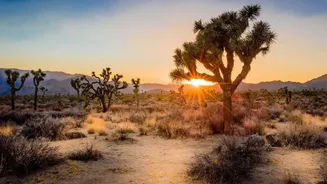

When you think of a National park in India, what is the first thing that comes to your mind? Probably lush forests, intense greenery and flowing rivers.
What if we tell you, there is a national park, which is located in the heart of Rajasthan and it is not like your usual parks. Instead, it is located inside a desert. Yes, you read that right. Desert National Park is the only national park in India that exists inside a desert. Spread across the golden sands of Jaisalmer and Barmer districts, this park is a proof that life is possible even in the harshest conditions.
More About Desert National Park
For the unversed, Desert National Park is within the great Thar desert, which covers an area of 3,162 sq km. According to reports, around 44% of the total park area has sand dunes. However, that does not mean that there is nothing to see and experience. In fact, this destination has a very interesting ecosystem.One of the key aspects of this area is the presence of fossils from the Jurassic period. While researched have different and conflicting views of the desert's age, what we know for sure is that this desert is several thousand years old. As of now, it has scanty vegetation yet abundant birdlife. So much so that bird lovers from all over the world come here following the birds.
Another fascinating aspect about this national park is how perfectly its ecosystem has adapted to the extreme weather conditions. Summers here can cross 45°C easily, while winters can be surprisingly cold. Rainfall is scarce and also unpredictable. Yet, plants and animals have evolved and have their own clever ways to survive. Most animals here are nocturnal. Meaning, they stay hidden during the day and come out after sunset when the temperature drops.
The park is also an ideal spot for migratory birds. Most of them are raptors. Avid bird-watchers come here to get a good look of the short-toed eagle, tawny eagle and spotted eagle. As soon as the winter begins, migratory birds also start entering the region. You can expect demoiselle cranes and MacQueen's bustard. However, none of them are as famous as the critically endangered great Indian bustard.