





What is the story about?
There was a time when Indian travellers escaped to the hills the moment summer became unbearable. But this year, even the mountains are sweating. Videos
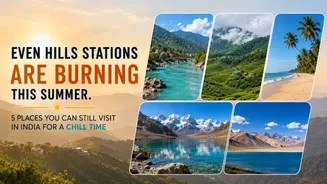
of tourists carrying portable fans in Shimla, overheated roads in Mussoorie, and unusually warm nights in Manali have made one thing clear: the heatwave has climbed uphill too. Still, not every cool-weather destination has lost its charm. If your idea of a summer holiday involves misty mornings, cold winds, hot chai, and sleeping without an air conditioner humming all night, there are still a few places in India where summer feels like summer should. Here are five places that are still giving travellers a genuine break from the heat.
1. Tawang, Arunachal Pradesh
Far away from crowded tourist circuits, Tawang still feels untouched by the chaos of peak summer travel. Sitting high in the Eastern Himalayas, this town stays pleasantly cold even in May and June. Day temperatures remain comfortable, while nights can get surprisingly chilly.The roads to Tawang are dramatic, winding past waterfalls, snow patches, and prayer-flag-covered mountain passes. Once you arrive, the pace of life slows down instantly. The massive Tawang Monastery, glacial lakes, and cloud-covered valleys make the journey worth every sharp turn on the road. It is not the easiest destination to reach, which is probably why it still feels peaceful.
2. Munsiyari, Uttarakhand
While popular Uttarakhand towns are packed with tourists and traffic jams, Munsiyari remains quieter, cooler, and far more raw. Located near the borders of Tibet and Nepal, this tiny mountain town offers stunning views of the Panchachuli peaks without the commercial chaos.The air here feels genuinely crisp. Mornings begin with mountain fog rolling over pine forests, while evenings are perfect for bonfires and sweaters. Trekkers love it, but even slow travellers who simply want silence and cool weather will enjoy staying here for a few days. Unlike many hill stations now filled with cafés blasting loud music, Munsiyari still feels deeply connected to nature.
3. Yusmarg, Kashmir
Most travellers head straight to Gulmarg or Pahalgam, but Yusmarg is the kind of place that quietly surprises people. Located around two hours from Srinagar, it remains cooler than many mainstream hill stations and is far less crowded.Wide green meadows, icy streams, grazing horses, and pine forests make the entire landscape look almost unreal during summer. Even afternoon walks feel refreshing here because the breeze rarely disappears. For travellers exhausted by packed tourist spots, Yusmarg offers something increasingly rare in India during peak summer: calm.
4. Kalpa, Himachal Pradesh
Himachal’s famous tourist towns may be struggling with rising temperatures, but Kalpa still manages to hold onto its cool mountain charm. Located in the Kinnaur region, this small village overlooks the dramatic Kinnaur Kailash range and remains pleasant through most of summer.The roads are long and winding, but that distance works in Kalpa’s favour. You will not find endless crowds or chaotic mall roads here. Instead, there are apple orchards, wooden homes, icy winds, and some of the clearest night skies you will ever see.
It is the kind of place where people accidentally end up extending their stay.
5. Haflong, Assam
Often called the 'Switzerland of the East,' Haflong remains one of Northeast India’s most underrated summer escapes. Surrounded by rolling hills, lakes, and dense greenery, this small town stays relatively cool even when much of the country feels unbearable.The weather here is softer rather than freezing, making it ideal for travellers who want relief from extreme heat without dealing with harsh mountain cold. Slow train rides, rain-soaked landscapes, and peaceful viewpoints give Haflong an old-school charm that many commercial hill stations have lost.
As heatwaves continue to push temperatures higher across India, travellers are starting to realise that altitude alone no longer guarantees cool weather. The real escape now lies in choosing places that are less crowded, less commercialised, and still closely tied to nature.