








Monitored wildlife populations have declined by an average of 73% since 1970, but nature's recovery remains within reach if the world acts quickly, according
to WWF's Living Planet Report 2026. The report draws on the Living Planet Index, compiled by the Zoological Society of London (ZSL), which tracked 35,803 populations of 5,790 vertebrate species between 1970 and 2022. The figure is an average change in population size, not a count of animals lost. Habitat loss, driven largely by agricultural expansion, is the most frequently reported cause, followed by overexploitation and climate change. The steepest falls were in Latin America and the Caribbean (95%), Africa (80%) and Asia and the Pacific (49%). Freshwater populations fared worst, down 85%, compared with 69% on land and 59% at sea. WWF says the stakes are economic as well as environmental, because half of global GDP depends on nature in some way. It points to a UK government national security assessment published earlier this year, which found that "every critical ecosystem is on a pathway to collapse, threatening UK national security and prosperity". WWF said summer heat in the UK and Europe underscored this, causing wildfires and shrivelling crops, with the UK harvest estimated to be the worst on record. Tanya Steele, chief executive at WWF-UK, said nature loss "is not just a crisis for wildlife" but is "already sending us the bill" through growing risks to food security, water supplies, the economy and resilience to climate shocks. The summer's extreme weather, she said, was "a stark reminder of what's at stake". "We stand at a fork in the road," she said. The world can keep paying the rising price of nature loss or invest in recovery, so that people and wildlife can thrive together. "The window to secure that future is closing fast, but successful conservation efforts from tuna to tigers show that we can succeed." Governments, businesses and communities, she added, must pull together to transform food, energy and finance.
Signs of recovery
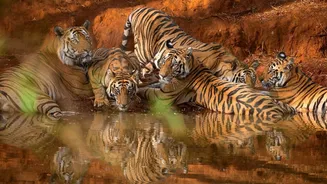
While it's a situation of crisis, but there is still hope. Around half of the populations in the index are stable or increasing, and the report, subtitled The Science of Hope, argues that decline is not inevitable. The report states that, tigers are one of the clearest examples. "In 2010, only around 3,200 wild tigers remained, and the species seemed to be sliding toward extinction. By 2025, the population had grown to roughly 5,700, an increase of more than 70%." Atlantic and Pacific bluefin tuna, which were collapsing after decades of overfishing, have recovered to the point where neither is now considered threatened. The report also states that , "Southern African elephants are stable or growing in many of the places where local communities lead the management of the land they share with them. In 2025, the green sea turtle became the first marine turtle ever to be downlisted from Endangered to Least Concern, after 50 years of work across more than 80 nesting countries."Dr Louise McRae of ZSL's Institute of Zoology said: "Behind every global statistic is evidence of wildlife populations rebounding and habitats recovering, driven by people working together to reverse biodiversity loss."
However, WWF stresses that these successes remain fragile and that conservation cannot succeed alone.
Tipping points
The report says the answer lies in triggering "positive tipping points" in the systems that drive nature loss. One is already under way in energy, where falling prices for solar, wind and battery power are driving a shift away from fossil fuels. This was not inevitable, the report argues, but the result of deliberate policy and investment.Food must be next, it says. Soybeans grown in formerly wild areas of Brazil and Argentina feed British chickens, whose numbers have tripled in 50 years. National food strategies and an overhaul of farm subsidies are the main levers, while finance is still at an early stage.
Read More:Magic Or FOMO: What Is Driving India's Unmanageable Pilgrimage Crowds?
WWF is urging leaders to expand clean energy, support nature-friendly farming, demand credible transition plans from major businesses, keep deforestation out of UK supermarket supply chains, and direct investment towards restoring nature.
Conservation works. But we cannot restore nature globally without fixing our food, energy and finance systems.