







What is the story about?
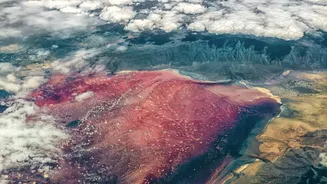
Lake Natron is located in Northern Tanzania near the Kenyan border. Its blood-red water makes the lake feel like it's out of the world. Its breathtaking
and eerie atmosphere attracts travellers and photographers alike. It is an ecological wonder and a blend of both natural beauty and adventure.
Uniqueness of Lake Norton
On the surface, Lake Natron does not appear to be a lake but seems like a design belonging to a different planet. Its bright crimson and pink water is due to salt, minerals, and salt-loving microorganisms, haloarchaea and cyanobacteria—microbes that grow in highly salty conditions and give the lake its bright colors. Geographically, Lake Natron is a part of the East African Rift System, which is an area determined by tectonic and volcanic activity. The local Ol Doinyo Lengai volcano, the so-called Mountain of God, has been supplying the basin with its sodium carbonate (and other minerals) through the underground hot springs. Having no access to the sea, these minerals collect and form the highly alkaline water, which can have a pH level up to 10.5 as well as a temperature that can be even more than 40-60°C.“Turning Things to Stone”: Myth and Reality
Lake Natron has acquired an international fame, which claims that it has the power to turn animals to stone. Hypodermic shots of calcified bird and bat remains on its banks have served to promote this myth; however, what is actually occurring is scientific and very fascinating. The waters of the lake are not magic and do not immediately petrify living beings. Instead, animals that perish in the lake or along the lake shores get preserved by calcification, the equivalent of the mummification of ancient Egypt, due to the high concentration of sodium carbonate. The salts dry up over time and crystallize around the remains, forming stone-like figures that appear to be in a frozen state.This phenomenon was further highlighted by photographer Nick Brandt in his book Across the Ravaged Land, where he produced hauntingly posed snapshots of birds and bats that were left in the care of nature to be preserved in its own mineral recipe.
Thriving Breeding Heaven for Wildlife
Ironically, it is not an inhospitable environment, as there is also no life. The lesser flamingos, which are one of the iconic birds in Africa, breed in Lake Natron. The saline habitat favors the blooms of cyanobacteria, which is a major source of food for these flamingos, and the harsh chemistry in the lake discourages predators, thus making it one of the safest nesting sites on the continent. The flamingos flock to Natron Lake in hundreds of thousands during their breeding season, turning the red waters of the lake into a spectacular feast of pink and crimson—a spectacular show, which attracts photographers, birdwatchers, and even well-travelled adventurers.Ignites the Desire to Travel
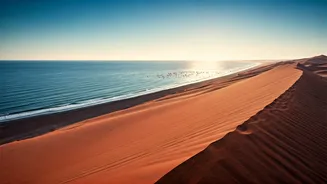
Lake Natron is not just a weird place but also a representation of the great ecological diversity of this planet. Its naked beauty, alien colors, and hostile setting provide a traveling experience like no other. From the flamingo colonies that appear to turn the water pink to the ash-colored deserts created by the geological features of ancient times, Natron is truly the place that breaks the rules and ignites the imagination.In short, Lake Natron is a nature paradox, which is lethal and at the same time hosts an abundance of life, odd but incredibly beautiful. The fact that it has red waters, petrified remains, and flocks of flamingos makes it an interesting piece of travel content that would definitely appeal to readers and create the desire to travel.