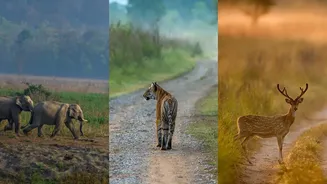






For many Indians, a first brush with the wild begins at Jim Corbett Tiger Reserve. As India's oldest national park, it was established in 1936 as Hailey
National Park. Renamed after renowned conservationist Jim Corbett in 1955, it's located in Uttarakhand's Nainital district. While tigers are undoubtedly the prime attraction of Corbett National Park, the area is home to a colourful palette of wildlife that is less explored. In fact, there are birds aplenty including cinereous vultures, rosy minivets, spot-bellied eagle owls and lesser fish eagles, among many others. Rich in its avifauna, Corbett houses around 600 species of Indian and migratory birds. You can find night birds, water birds, grassland birds and also woodland birds. Beyond birding, you can also visit the various other landmarks of the national park.
Best Time To Visit Jim Corbett Tiger Reserve
The park is open from mid-October to mid-June, but not all months are created equal. October to November is fresh and green after the monsoon but December to February is certainly one of the best seasons for crisp morning safaris. Wildlife sightings can be rewarding, but pack layers.Safari Zones Inside Corbett
Jim Corbett is divided into several zones, each offering a unique experience:Dhikala Zone: The crown jewel of Corbett. Vast grasslands, river views and some of the best tiger and elephant sightings. Dhikala is also the only zone that allows overnight stays inside the core area, making it the most coveted.
Bijrani Zone: This zone is famous for its scenic beauty and high chances of tiger sightings. Morning safaris are particularly rewarding here.
Jhirna Zone: Open throughout the year, this zone offers a more relaxed atmosphere with a variety of wildlife, including elephants and deer. The Jhirna Zone features open grasslands and scrub vegetation, and is quite different from the other zones of Corbett.
Dhela Zone: A relatively new zone, Dhela is known for its biodiversity and is perfect for those seeking a less commercialised experience.
Kota Tourist Zone: This is a recent expansion at the park. Set within the Ramnagar Forest Division, this new addition was officially inaugurated on March 22 last year and has rapidly gained popularity.
Garjiya Zone: Located closer to the city of Ramnagar, this zone is sparsely populated with tigers but can, on occasion, be a good viewing point. The entry gate to the Garjiya zone is the Ringora gate, which is about 3 kilometres away from the city of Ramnagar.
Durga Devi Safari Zone: This part of the forest is renowned for its stunning landscapes, lush forests, and diverse wildlife. It is also perfect for birdwatchers, with a wide variety of avian species. The zone also houses diverse wildlife, including the majestic tiger.
How To Book Safari At Corbett National Park
Safaris can be booked online through the official Jim Corbett website. Opt for either jeep or canter safaris, with jeeps offering a more intimate experience. Ensure you book in advance, especially during the peak season, to secure your preferred time slot and zone. Jeep Safaris cost INR 7500 / Jeep ( Maximum 6 Persons & 1 children (b/w - 5 to 12 years) are allowed in one jeep). You can also take Dhikala Canter Safari rides, which cost INR 3000 / person (Canter has 16 seats).How to Reach Jim Corbett National Park
By Road: A 7-8 hour drive from Delhi via Noida, Kashipur, and Ramnagar.By Train: Take a train to Ramnagar, the nearest railway station, connected to major cities like Delhi, Varanasi, Haridwar, and Lucknow.
By Bus: Reach Ramnagar by bus from Delhi, Haridwar, Dehradun, etc.
By Air: Take a flight to Pantnagar, followed by a 2-hour drive to the park.
Most Famous Tigers Of Corbett
One of the most magnificent tigers you can see in Corbett is ‘Pedwali’, and recently her babies, rightly called ‘Pedwali Cubs', were also spotted in the park. Then there's Corbett royalty, Riddhi, who is also sometimes spotted on kills. Romeo, a sub-adult male tiger in the Dhikala zone of Jim Corbett, is also quite famous. This bold young tiger kept the grasslands buzzing with excitement throughout the last season.Best Hotels In Jim Corbett National Park
Staying in and around Jim Corbett Tiger Reserve is as much a part of the safari experience as the jungle drives themselves. Accommodation ranges from atmospheric forest rest houses to high-end wildlife lodges and comfortable mid-range resorts clustered around Ramnagar, the park’s main gateway. For purists, the Dhikala Forest Rest House remains the most sought-after stay—basic but unforgettable, with sweeping grassland views and the rare privilege of being inside the core zone. Outside the park, luxury jungle lodges along the Kosi and Ramganga rivers are aplenty. The best hotels in Corbett include:Aahana - The Corbett Wilderness
On the northeastern boundary of Corbett lies Aahana, nestled in the lush Patlidun valley. This eco-friendly property, founded by Kamal Tripathi, shares its boundary with the Bijrani zone of the park and combines sustainability and luxury in a nifty package.
Taj Corbett Resort & Spa
Spread across 11 acres of land, with 75 rustically designed cottage-style rooms and suites, this property is a personalised sanctuary from the hustle-bustle of mundane routines.
voco Jim Corbett
India’s first voco hotel, spread over 13.5 acres right by the Kosi River in Dhikuli, is a must visit for couples who don’t mind the buzz of wildlife yet the quietude of this riverside retreat. Its location, at the foothills of the Mailani range, afford you gorgeous views surrounded by lush greenery (and the tigers of Corbett).
The Golden Tusk
This boutique property lies on the banks of the monsoon River Dhela, just a 5-minute drive from the Jhirna and Dhela Safari zones. Peppered with well-appointed suites, luxury tents and villas that make it the perfect family retreat, The Golden Tusk also offers a variety of indoor and outdoor activities to keep you buzzing during your stay.