
When we think of national parks in India, what is the first thing that comes to our mind? We think of dense forests with no human presence, just wild animals
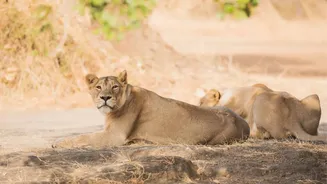
roaming around freely. In most cases, that image is very true. We all know that over the years, villages have been relocated out of protected areas to allow wildlife to thrive undisturbed. But what if we tell you that there is one national park in India where this rule does not fully apply! Yes, you read that right. Gujarat’s Gir National Park stands out as a rare example where local communities continue to live inside the protected forest. Gir National Park and Wildlife Sanctuary, also known as Sasan Gir, is a wildlife sanctuary near Talala Gir in Gujarat. It was established in 1965 in the erstwhile Nawab of Junagarh's private hunting area, with a total area of 1,412 km2 (545 sq mi). The national park is well-known around the world for its Lion Breeding Programme which creates and maintains breeding centres. Gir also carries out studies of the behaviour of the Asiatic lions and also practices artificial insemination. The Story Of Forest Which Is Shared With People Long before Gir was declared a national park in 1965, the forest was home to the Maldhari community. For the unversed, these are the traditional pastoral groups who depend on cattle rearing for their livelihood. Their small settlements, which are known as nesses, are scattered across parts of the forest. For generations, the Maldharis have lived in close contact with nature, understanding animal behaviour and seasons in ways few outsiders can. When Gir became a protected area, the forest was not empty land which needed saving, it was already a living landscape. Instead of forcing an immediate relocation, authorities allowed many Maldhari families to stay. According to them, their lifestyle had not harmed the forest in the past. This one feature makes Gir a truly unique space. It is almost strange as to how people and predators share space. Asiatic lions move freely through the forest and often pass close to Maldhari homes. For visitors, this sounds risky. On the other hand, for the Maldharis, it is normal. They have learned how to live cautiously and respectfully alongside wildlife. Yes it is true that livestock loss does happen but it is often accepted as part of living in lion territory. Over the years, many Maldhari families have also voluntarily moved out of the core forest areas with government support. These relocations have provided better access to schools, healthcare, and many more things. This is always a choice. Relocation in Gir has largely been gradual and consensual, it has never been sudden or forced. Some families still remain inside the protected forest today, making Gir one of the very few national parks in India where human settlements continue within its boundaries. More About Gir National Park To experience the magic of Gir, visitors can embark on thrilling jeep safaris inside the park. Unlike other national parks, Gir does not have zones; it has 13 routes, which are randomly assigned to the jeeps. Devalia Interpretation Zone: If you don’t want to take chances, Gir has a section called Devalia Safari Park, a fenced-off part of the sanctuary where bus safaris guarantee a glimpse into this wild haven. Here, you and your kids can explore the park's diverse landscapes, from dry deciduous forests to grasslands, and get a chance to spot leopards, antelopes, and a plethora of bird species.