





There was a time when travel itineraries were being built around monuments and museums. Today, however, a growing tribe of travellers is navigating cities
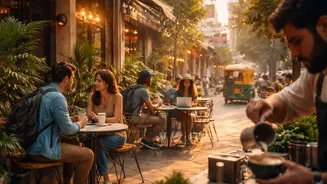
through a very different lens - coffee. Yeah, who would have thought? From bookmarking cafes on Instagram to picking neighbourhoods which are located close to a popular brew bar - coffee is quietly reshaping the way we plan our trips. And this shift, in no way, is accidental. It hints towards a deeper change in how people are now perceiving travel. In fact, for many younger and globally exposed travellers, the goal is not just to see a place but to feel it. And cafes have emerged as one of the most intimate ways to do so. Also Read: Why Young People Want to Travel With Strangers? The Rise Of Cafe-led Itineraries Miguel Villaquiran, Co-founder and India CEO of Libertario Coffee, has witnessed this evolution firsthand in the capital city. He says that travellers today are increasingly building their trips around cafes rather than traditional landmarks. "People don’t just want to see a city anymore. They want to experience how it lives," he explains. In neighbourhoods like GK2, cafes have become cultural anchors, they are more like spaces that reflect the mood, creativity and aspirations of a city. He says that at his cafe, Libertario, it is not uncommon to meet travellers from across India and the world who had the cafe saved on their list even before booking flights. In fact, some even arrive straight from the airport, luggage in tow. Others choose their accommodation based on walking distance to the cafe.. These are not casual visits but intentional stops. Rajat Luthra, CEO of Third Wave Coffee, echoes this observation. According to him, cities like Bengaluru, Mumbai and Hyderabad have developed such strong cafe cultures that travellers actively research coffee spots before arriving. When Cafe Becomes A Landmark What is fascinating is how these cafes are beginning to function like modern landmarks. It is not because of their size of history - but because of what they represent. A thoughtfully designed cafe signals taste, community and cultural awareness. At the same time, it tells travellers something about the people who live there - what they value, how they spend their time and the kind of experiences they seek. Villaquiran recalls a turning point, "The moment people began walking in with luggage" - that was when he realised Libertario had moved beyond being a neighbourhood cafe to becoming a destination. The idea of relevance over convenience is the key here. Travellers are no longer just looking for a quick coffee fix. In fact, they are seeking spaces that feel intentional. A place where every detail - from music to menu - contributes to the overall experience. One of the most powerful ways coffee culture is shaping travel is by slowing it down. Yes it is true that traditional tourism often follows a checklist - visit the monument, take the photo, move on. On the other hand, cafe culture, encourages you to sit, observe, listen and absorb. Luthra points out that cafes offer a more immersive way to engage with a city. They are places where locals and visitors come together - creating a shared cultural space. You might overhear conversations, notice work habits or simply delve into the rhythm of everyday life unfold. Villaquiran, on the other hand, describes cafes as "lenses into local culture." Through design, music, crowd and menu philosophy, they reveal how a city breathes. In many ways, they act as modern-day salons - basically, spaces where ideas are exchanged within communities. A Way Of Travel As someone who travels frequently, I have experienced this shift personally. Before any trip, I now save a list of cafes. And these are not just the popular ones, but the ones that feel distinct or personal. Sometimes, my mornings are planned around a particular pour-over and then there are days I choose a neighbourhood because it promises a couple of interesting coffee spots. And more often than not, these cafe visits become the most memorable parts of my trip. Not because of the coffee alone but because of the feeling - of being momentarily part of a place, of being able to slow down and absorb, of being able to see the city through its locals. And lets be real, there is something uniquely grounding about spending some lone time at a cafe in a new city, watching life unfold around you. It is a pause that turns travel into experience - something that all of us need, every once in a while. A Surge In Coffee Tourism And Its Future Personally speaking, the rise of coffee tourism feels deeply personal. It has completely transformed the way I travel. For once, I no longer rush from one spot to another. Instead, I try finding that one cafe which allows me to slow down and take in a city at my own pace. And I think that is exactly where this trend is headed - towards more meaningful and unhurried experiences, towards slowing down and taking it all in. Maybe in the future, we might get a chance to experience elaborate coffee trails or travel plans being built entirely around brews, but at its heart, it will remain simple. Because honestly, it is about finding small, honest moments in unfamiliar places - and sometimes, all it takes is a really good cup of coffee!