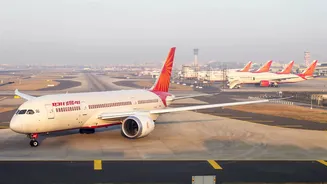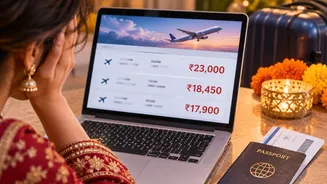






For many Indians, Diwali means going home. And like every year, flying home costs more this time around. A LocalCircles survey found that 54% of air travellers
going home this festive season are paying over 50% more than they paid in 2025. The survey got nearly 20,000 responses from air travellers across 277 districts. On several busy routes, fares have jumped by 200% or more. The pain is real on the ground. In Ahmedabad, one-way airfares to Delhi have touched ₹23,000. The survey also found that one-way fares into Bihar are about three to four times the fares on the return leg, which shows how sharply prices rise on routes where everyone is flying in the same direction. Flyers should not expect relief soon. Civil Aviation Minister K Rammohan Naidu said last month that the government will not cap fares this festive season. But this year, the surge is not driven by demand alone.
Why Are Airfares Soaring?
The biggest reason is fuel. Because of the war in West Asia, international jet fuel prices rose steeply. According to the Union Cabinet, the price of aviation turbine fuel (ATF) went up nearly 2.5 times, from ₹60.50 per litre in March 2026 to ₹142 per litre in May 2026. Fuel makes up about 40% of an airline’s total operating cost, and when prices swing wildly, this share can go up to 60%. Airlines are passing these higher costs on to passengers.The second reason is the closure of Pakistan’s airspace. Islamabad recently extended its ban on Indian aircraft until 24 November. Both countries shut their airspace to each other’s planes after the Pahalgam terror attack in April 2025. Indian airlines now take longer routes to Europe, North America and Central Asia, which means more fuel and higher costs. Early reports estimated that the closure could cost Indian airlines an extra ₹307 crore every month.
The third reason is dynamic pricing. Airfares are not fixed. They change based on demand and how many seats are left, so the same flight can cost very different amounts depending on when you book.
The issue has also reached the courts. The Supreme Court refused to urgently hear a plea seeking a mechanism to cap domestic fares during festivals, where the petitioner’s lawyer said fares had risen by as much as 700%. Meanwhile, the Centre has notified the Bharatiya Vayuyan Niyam, 2026. The new rules take effect from 1 January 2027 and let the Centre direct airlines on fares in extraordinary situations, if public interest demands it.
What Exactly Are Flyers Paying For?
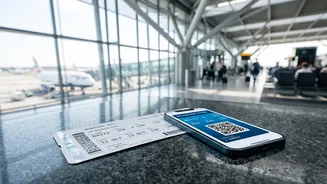
Your ticket price has two parts: Air Transportation Charges and Taxes & Fees.Air Transportation Charges include the base fare, which is what the airline charges to fly you from one city to another before taxes. Then there is the fuel surcharge, which passes higher fuel costs on to you. The Common User Terminal Equipment charge, which differs from airport to airport, pays for shared systems like check-in counters, computer terminals and boarding-pass systems. A Regional Connectivity Scheme fee, introduced by the government, funds flights to unserved and underserved areas.
Under Taxes & Fees, the most common charge is the User Development Fee on departures and arrivals, which pays for airport upgrades. The Aviation Security Fee covers security services at airports. GST is charged by the government, and the rate depends on the type of ticket, such as economy or business class. Finally, booking platforms usually add a convenience fee for processing your ticket.
Which Day To Book And Which To Avoid?
The day you fly matters more than the day you book. Data from HappyFares shows Tuesday and Wednesday departures are the cheapest for domestic flights, up to 18% below Friday fares on the same route. Friday is the day to avoid, as it sees the highest mix of business and leisure demand. Travel platform ixigo says there is no single weekday that always gives the cheapest fare, and that for festivals, starting to track prices early is what counts.For Diwali, which falls on 8 November this year, flying on Diwali day or the day before usually costs 20-40% less than flying on the Friday before. Coming back three to five days after Diwali can be 15-25% cheaper than returning on Bhai Dooj.