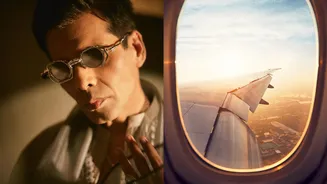









When Karan Johar recently laid bare his experience of travel anxiety, he struck a chord with countless frequent flyers and nervous travellers. In an emotionally
honest post, he revealed that his restlessness begins long before take-off, he aims to reach the airport hours early, often before even the ground staff have arrived. Once he’s in the lounge, he admits checking his passport and boarding pass over and over. On the plane, every announcement, flight duration, weather or turbulence warnings, becomes a trigger for unease. “If we are told it’s a smooth ride I can breathe,” he wrote; otherwise, he finds himself tensed, constantly monitoring the map, unable to relax. For many people, such feelings are far from rare. Travel anxiety, whether triggered by fear of flying, turbulence, heights, enclosed spaces, or simply the uncertainty of travel, affects a significant portion of travellers. The physiological responses can resemble panic: racing heart, sweating, restlessness, dread. The good news? There are practical, evidence-backed strategies that can help manage travel anxiety, whether you’re a first-time flier or someone who flies often. Here are some of the most effective approaches: Recognise and accept your anxiety. Knowing that what you’re feeling is anxiety, a normal reaction to uncertainty, can be calming by itself. Understanding triggers (turbulence, noises, confined space, motion) helps you prepare mentally. Prepare and plan ahead. Having a checklist, packing early, knowing the itinerary, and arriving at the airport with time to spare can reduce stress. Predictability often reduces the fear of “the unknown.” Grounding techniques & breathing exercises: Simple practices such as deep breathing or sensory grounding (for example, noticing 5 things you see, 4 things you feel, 3 you hear, 2 you smell, 1 you taste) can calm the mind when anxiety spikes during take-off or turbulence. Distractions & comfort items. This can be your favourite music, podcasts, a familiar scarf or book. These small comforts can shift focus away from fear and help you feel safer. Normalize and talk about it. This really does help. Like Karan Johar did, many travellers find relief simply by acknowledging the anxiety and realizing they’re not alone. Sharing fears can help destigmatize them and pave the way for coping strategies. It’s worth remembering that travel, for all its uncertainties, remains one of the safest forms of long-distance transport. The discomfort often stems less from objective danger and more from perceived lack of control or unfamiliar sensations. In opening up about his own nervousness, Karan Johar did more than confess a personal struggle, he sparked a broader, compassionate conversation about travel anxiety. For many, his story will serve as a reminder: if you’ve felt that same dread before a journey, you’re not alone, and you’re not wrong. With awareness, planning, and a little self-compassion, travel can, and should, be something to look forward to.