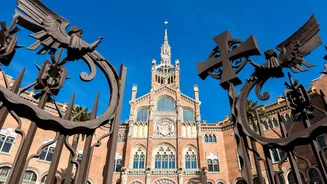







Nestled in the Spanish neighbourhood of El Guinardo in Barcelona, Catalonia, the Hospital de la Santa Creu i Sant Pau stands tall, proud and formidable
holding 600 years of history within its whimsical walls. Whatever it is that comes to your mind when you think of the word 'hospital', stands completely dissipated with the Sant Pau. If the typical hospital houses an abundance of asylum whites, blinding fluorescent lights and an overwhelming sense of functionality that doesn't really leave much space for beauty, entering the gates of the Sant Pau will set some unattainable standards. Built over 30 years at the turn of the 20th century and expansively renovated in 2009, the Sant Pau is one of the most standout works of the Catalan modernisme architect Lluis Domenech i Montaner. The Sant Pau was listed as a Spanish heritage site in 1978 and declared a UNESCO World Heritage Site in 1997 - and a virtual step inside the premise will explain why.
The Build
The Sant Pau happens to be the largest complex, built entirely in the Art Noveau style of architecture right across its 12 pavilions connected through the winding underground galleries. Up until 2009, it was a fully functional hospital. Following the bout of renovation, it has turned into a museum and cultural centre which re-opened in 2014.
Also Read: Paris to Jaipur: Global and Gorgeous Movie Theatres that are Attractions in their Own Right
But long before the hospital complex took shape over the early 1900s, the building we see today was actually the front of six small medieval hospitals merged together dating back to the 15th century. The Casa Convalescencia was later added to the complex in the 17th century. When Domenech stepped in, in 1902, his vision had 48 buildings, 27 of which saw the light of day. Geothermal installations of 400 wells more than 100 metres deep ensured heat supply to the hospital's pavilions. It's ventilation system stood further perfected owing to its location on a slope, draining away the bacteria and viruses with the draft of the wind.
The Aesthetic
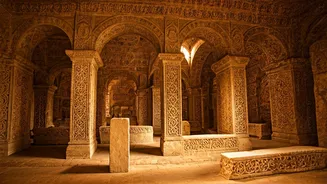
The Sant Pau can best be described as 'whimsical'. The environment is relaxing and tree-lined, and the architecture medieval and Moorish. It being aligned against the North-South axis ensures the sun pooling in and over the walls during the day time. Almost each pavilion has two gardens each while the central promenade stands lined with horse chestnut, linden and orange trees. For flora, laurels, lavenders, rosemary and lemon trees add colour to the landscape. The main entrance to the Sant Pau feels like entering a chapel, what with its domed roof, marble columns and Mosaic-covered ceilings spelling out quite the grand, but calming welcome.
How to Visit the Sant Pau
The Sant Pau's premises are typically open for visitation from 9:30AM in the morning. During summers visiting hours go up to 6:30PM while the winters see them pulled back to 5PM. Tickets come in anywhere between 12 euros to 17 euros. A tour of the place should ideally begin at the Sant Salvador pavilion followed by the garden city model and the Pavilion Sant Rafael, ending at the reception pavilion.